

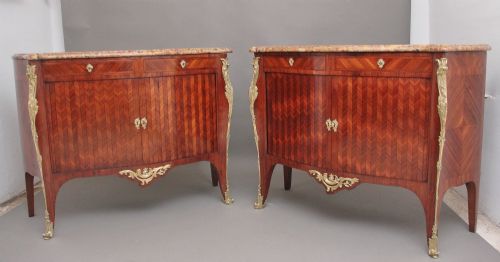
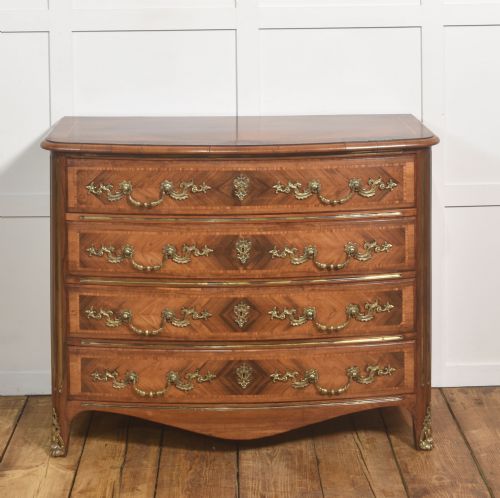
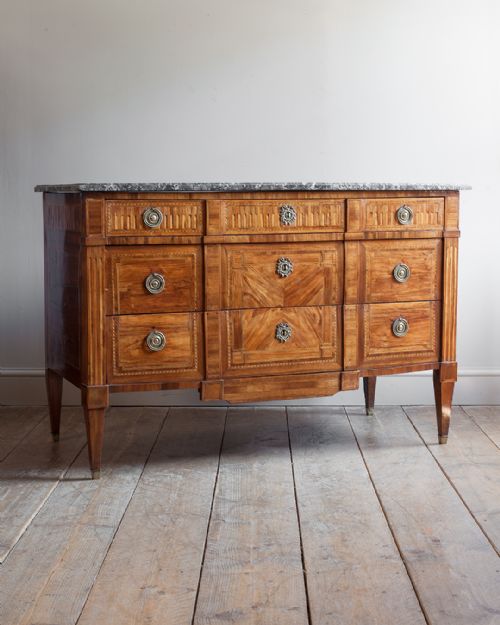


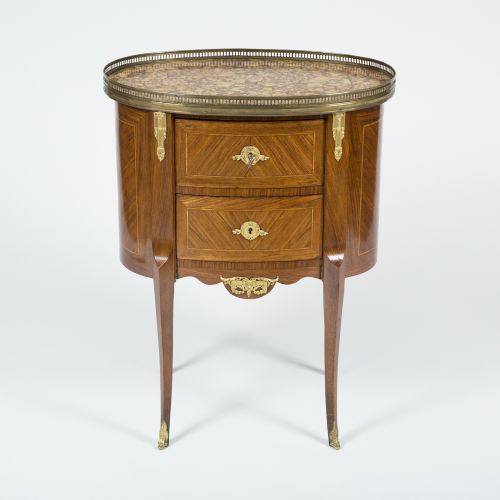

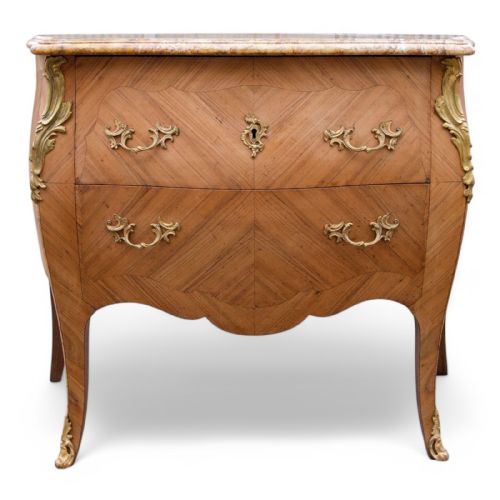


Kingwood Wood Commode
These kingwood wood commode pieces bring French 18th-century elegance to a room through rich veneers and gilt bronze mounts.
Kingwood Wood Commode
A kingwood wood commode is a decorative chest of drawers or bedside cabinet characterised by figured veneers and often topped with marble. When searching for this phrase, collectors encounter various forms ranging from grand 18th-century serpentine chests to later 19th-century revival side cabinets.
The pieces on this page lean heavily towards French design, with Louis XV and Louis XVI styles dominating the selection alongside bedside tables and side cabinets. Walnut and oak often form the underlying structure beneath the kingwood veneer.
Makers such as Maison Millet produced exceptional examples during the 19th century, matching the standard set by earlier periods. Smaller bedside cabinets and side tables appear alongside larger chests of drawers.
How they were made
Craftsmen applied kingwood veneers over a carcase of oak or walnut, frequently arranging the grain to form intricate marquetry patterns. This technique required considerable skill to ensure the wood reacted properly to seasonal humidity changes.
Ormolu and gilt bronze mounts were cast and chased before being applied to corners, handles, and feet to protect the vulnerable edges. Marble tops, including breche d'alep varieties, were cut and polished to fit precisely onto the wooden frames.
Kingwood Wood Commode Retail Price Guide 2026
Typical asking prices for kingwood wood commode among the pieces listed under this phrase on Sellingantiques today, from the lower quarter to the upper quarter. They describe what is for sale here now, not the wider market.
Listings feature pieces spanning from the 18th century through to the 1930s, utilising kingwood, marble, ormolu, and walnut.
What varies in quality
The refinement of the ormolu mounts separates standard production from superior workshop output, as hand-chasing brings out crisp detail in the bronze. Simpler cast mounts lack the depth and sharpness found on pieces by named makers.
Marquetry execution dictates value, with complex floral or geometric patterns requiring meticulous cutting of contrasting woods. The weight and thickness of the marble top also indicate the original tier of production.
Maison Millet
The Kingwood Wood Commode Glossary
- Kingwood
- A dense Brazilian hardwood with striking dark violet and brown figuring, prized for veneering fine furniture. It was widely used in French cabinet making during the 18th and 19th centuries.
- Ormolu
- Gilt bronze mounts applied to the angles and feet of furniture for decoration and protection. The technique involves applying a gold amalgam to cast bronze.
- Marquetry
- Inlaid wood veneers arranged in decorative patterns or pictures on a furniture surface. Craftsmen cut various coloured timbers to fit together precisely.
- Bombe
- A swollen or bulging outline found on the front and sides of certain commodes. This curved form requires advanced woodworking techniques to shape the underlying carcase.
- Breche d'alep
- A type of quarried marble featuring varied brecciated patterns of brown, grey, and cream tones. It frequently forms the heavy shaped tops of French commodes.
Kingwood Wood Commode: Frequently Asked Questions
What is a kingwood wood commode used for?
These decorative chests of drawers and cabinets served primarily in formal rooms for storage and display. Today they function well as focal points in living spaces or as bedside tables.
The marble tops provide a durable surface for lamps and objects while the drawers hold smaller household items.
How do I identify a Louis XV style commode?
Louis XV style pieces are defined by asymmetrical curves, serpentine fronts, and prominent cabriole legs. Ormolu mounts typically accent the corners and apron.
Floral marquetry and bombe shaping also point toward this French revival aesthetic popular during the 19th century.
Are all these commodes from the 18th century?
The selection spans multiple centuries, including genuine 18th-century examples alongside 19th-century revival pieces and early 20th-century bedside cabinets.
Revival furniture often mirrors earlier craftsmanship standards while using construction methods typical of its actual period of manufacture.
How should I care for a marble top commode?
Marble surfaces require simple wiping with a damp cloth and mild soap to prevent staining from liquids. Acidic substances like citrus juice can etch the polished stone.
Keep the kingwood veneer conditioned with appropriate furniture wax and away from direct heat sources to preserve the finish.