


Kingwood Bombe Chest
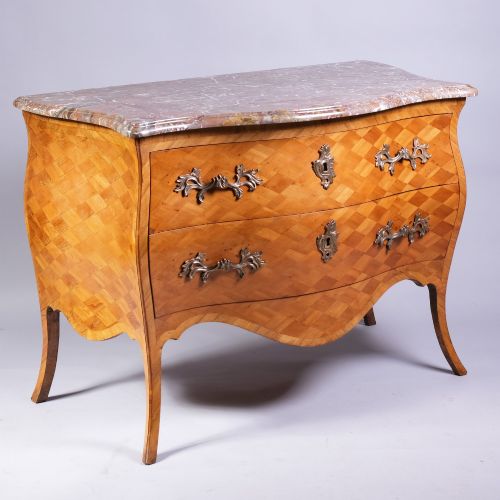
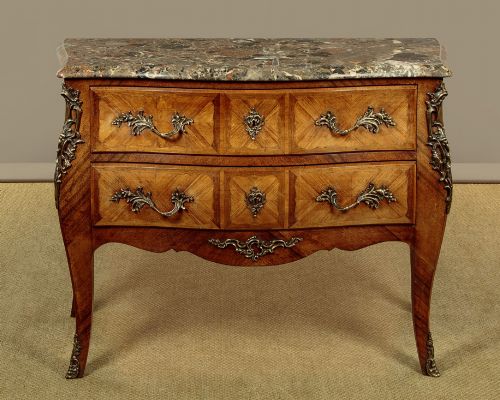
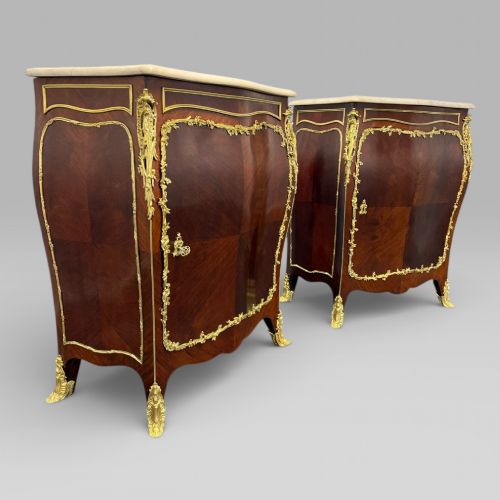
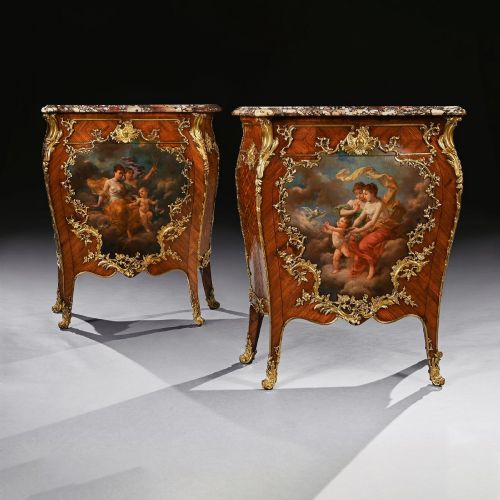
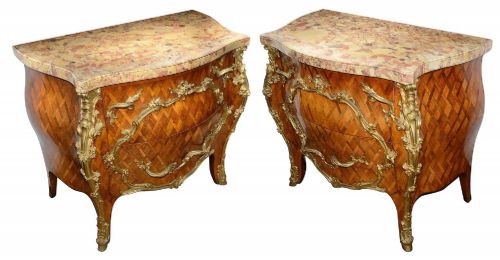
A kingwood bombe chest brings sweeping, curved French elegance into a room through rich timber veneers and heavy gilt metal mounts.
Kingwood Bombe Chest
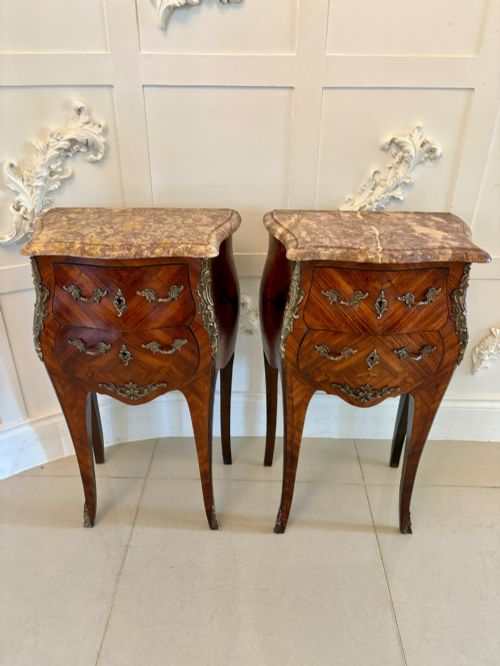
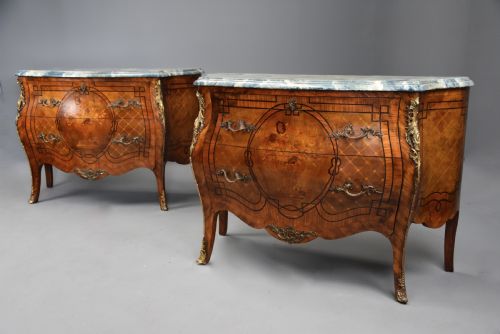
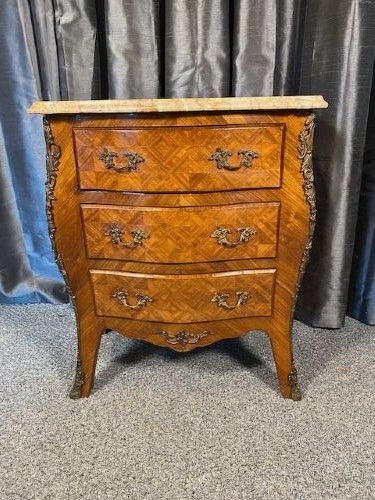
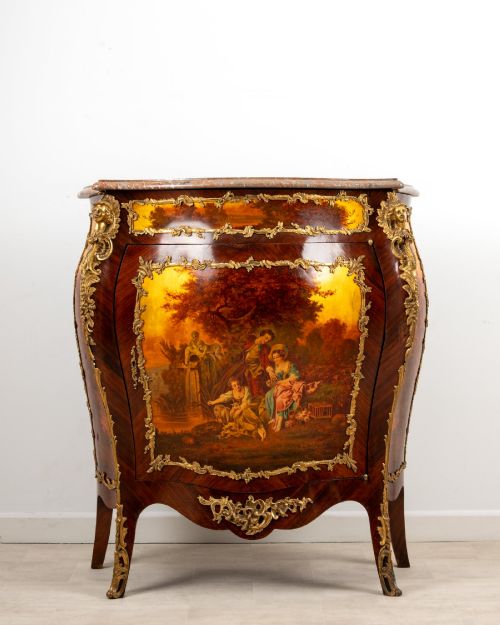
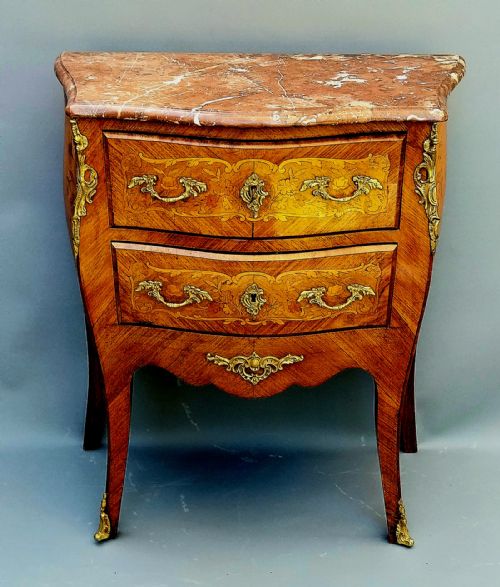
A kingwood bombe chest presents a distinctive swollen or bulging profile, curving outward on the front and sides in the manner of classic French commodes and bedside cabinets. These pieces span from the eighteenth century through to twentieth-century revivals, drawing heavily on French Rococo and Louis styles.
Most examples found here take the form of commodes and bedside tables fitted with marble tops and decorative marquetry. Miniature furniture and larger sideboards also appear, maintaining the characteristic serpentine outline and rich timber surfaces.
What varies in quality
The refinement of the ormolu mounts separates standard production from superior examples, with finer pieces displaying sharply chased details and heavy gilding. The precision of the kingwood veneer work and the fluidity of the swelling curves also dictate the overall distinction of a commode.
Originality of the marble top and the integrity of the underlying timber carcase influence the standing of each piece. Cabinets retaining their authentic mounts and undisturbed patination represent the upper tier of this furniture.
Miniature commodes in the collection prove that eighteenth-century master craftsmen also practised the delicate art of making tiny, perfect furniture for practice or display.
E. Kahn·Germain Landrin
The Kingwood Bombe Chest Glossary
- Bombe
- A swelling, outward-curving contour found on the front and sides of furniture. This convex shape defines eighteenth-century French cabinetmaking styles.
- Kingwood
- A dense, heavy South African and South American timber displaying rich dark brown grain with golden streaks. It was widely used for fine veneering.
- Ormolu
- Gilt bronze mounts applied to furniture edges, handles and feet for decoration. The technique involves coating cast bronze in a layer of gold.
- Marquetry
- Decorative patterns formed by fitting together contrasting pieces of wood veneer. Artisans utilised this method to create floral and geometric designs on drawer fronts.
- Commode
- A low chest of drawers originating in France. These pieces typically feature decorative mounts and marble surfaces.
Kingwood Bombe Chest: Frequently Asked Questions
What is a bombe chest?
A bombe chest is a storage piece featuring sides and fronts that bulge outward in a sweeping, convex curve. These forms originated in France during the eighteenth century.
Craftsmen veneered these curved frames in exotic timbers like kingwood and walnut, often finishing them with marble tops and cast ormolu mounts.
How do I style a kingwood commode?
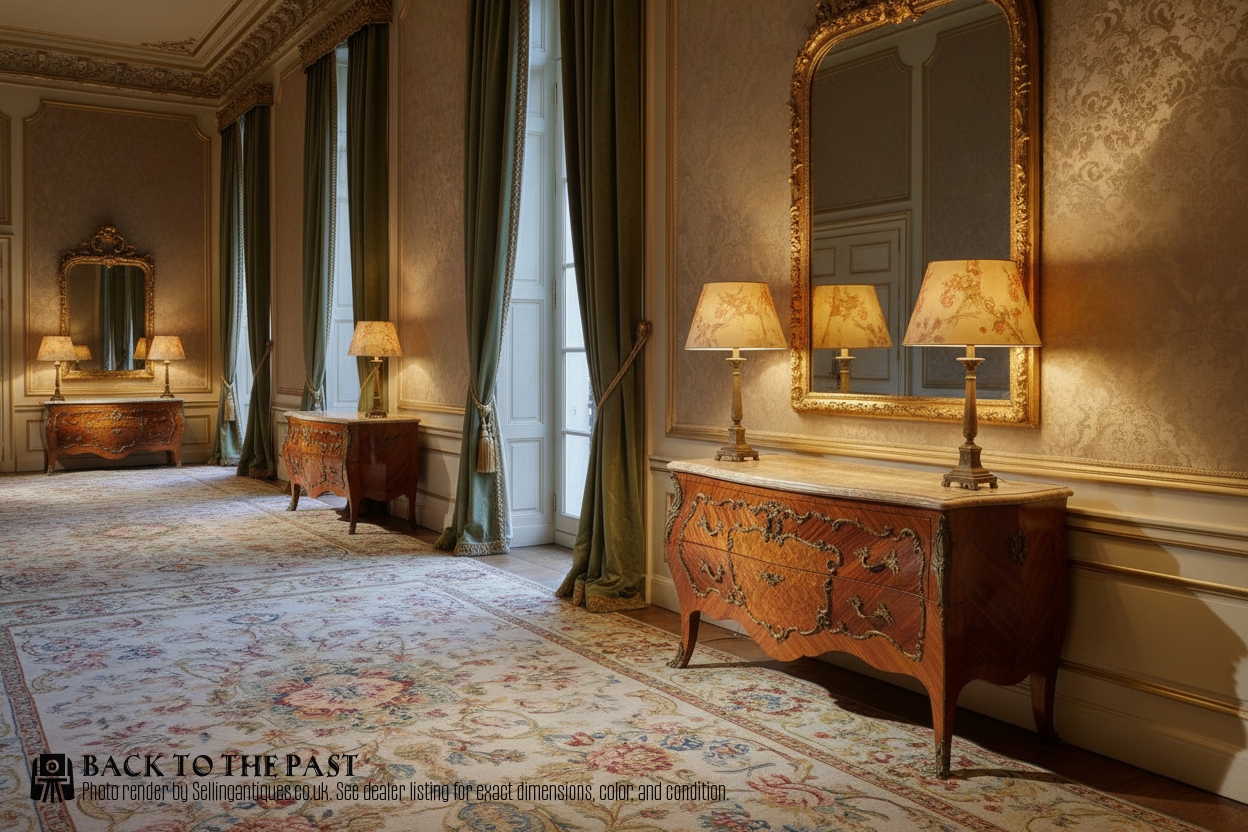
A kingwood commode works well as a focal point in a hallway, living room or bedroom where its rich timber grain and mounts can be appreciated. Pairing it with simple walls allows the curved silhouette to stand out.
The marble top provides a durable surface for lamps, mirrors or decorative objects without risking the polished timber beneath.
Are these chests eighteenth century?
Pieces originate from various periods, spanning from the seventeen-fifties through nineteenth-century revivals up to the nineteen-thirties. Eighteenth-century examples feature period construction and authentic age patination.
Revival pieces from the nineteenth and twentieth centuries emulate these earlier Louis styles using traditional veneering and casting techniques.
What is kingwood?
Kingwood is a dense, hard tropical timber known for its dark brown colouring and distinct golden or violet veining. It was a favoured material for high-end French cabinetmakers.
Due to its density, artisans sliced it into fine veneers to pattern the curved surfaces of commodes and cabinets.