



Jointed Lay Figure
A jointed lay figure serves as an adjustable studio model for artists capturing human form and drapery.
Jointed Lay Figure
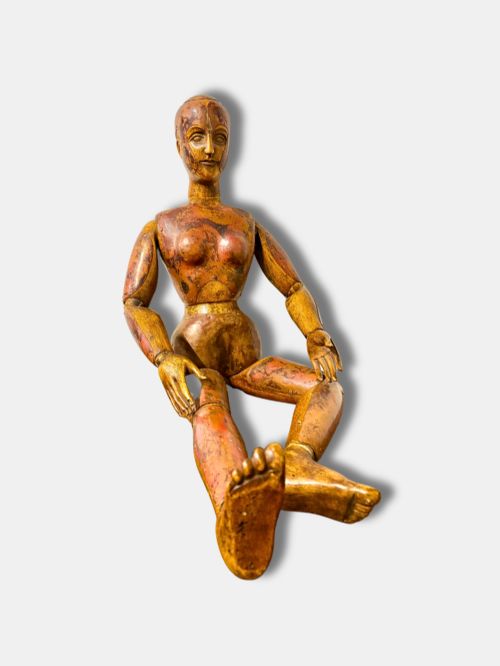
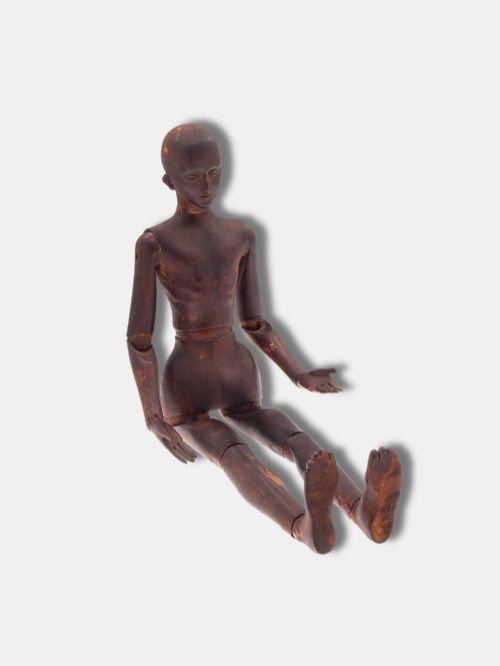
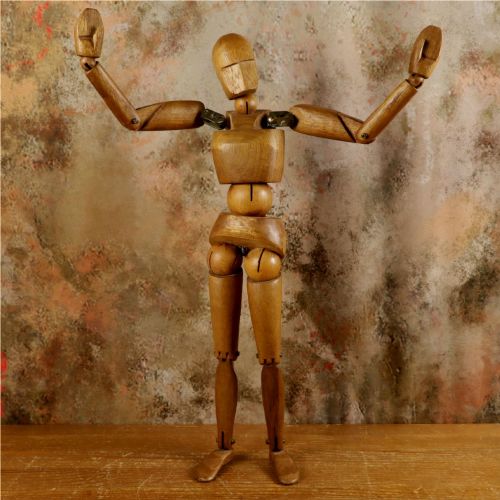
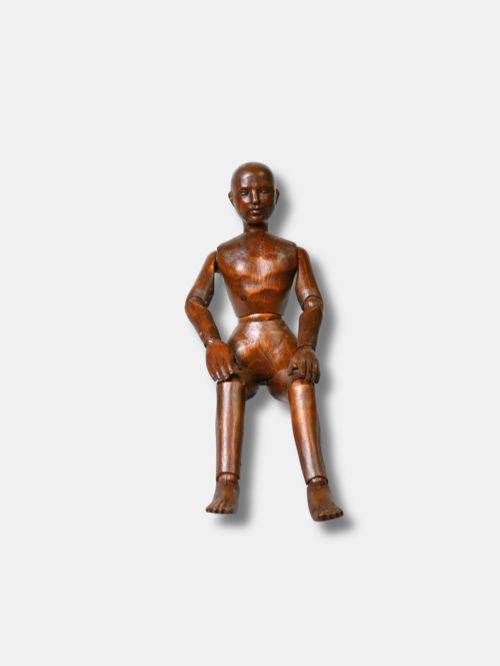
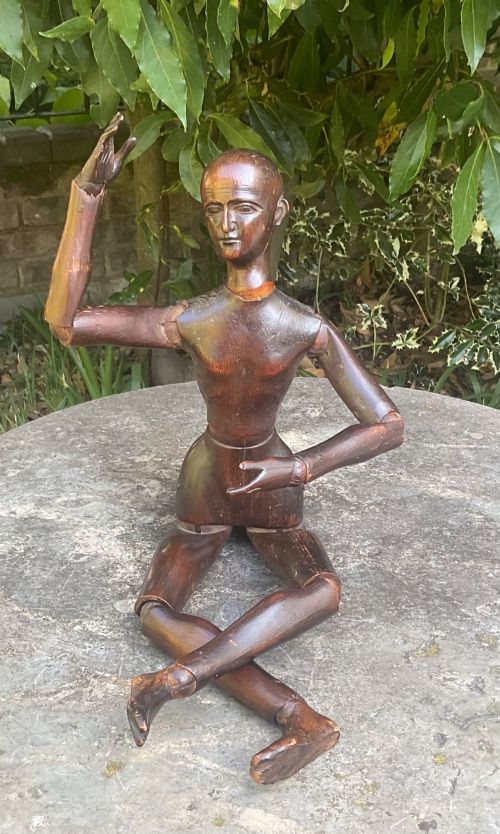
A jointed lay figure provides artists with a movable wooden or metal model for studying posture and drapery. These pieces span the nineteenth and early twentieth centuries, originating from French workshops as well as Nigerian traditions.
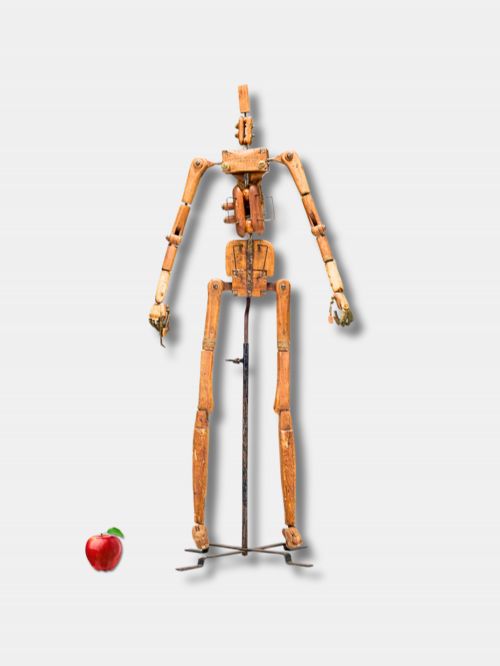
Forms include life-size examples on stands alongside smaller tabletop artist mannequins. French pieces frequently display carved wooden construction or copper-clad surfaces with fully articulated joints.
Makers shaped these items as decorative objects and practical studio tools. Buyers encounter both carved wood and metal variations reflecting Victorian and Art Nouveau aesthetic influences.
How they were made
Artisans carved these figures primarily from hardwoods and teak, shaping limbs and torsos to replicate human movement. Metal components and pins secured the intricate joints that allowed the mannequins to hold specific poses.
Certain French and European examples incorporated copper cladding over structural cores for added durability. Carvers detailed the wooden surfaces carefully to suggest musculature and proportion.
Makers mounted larger figures on wooden stands to support their weight during studio use. Smaller doll-like mannequins relied on internal wiring or wooden pivots for articulation.
Jointed Lay Figure Retail Price Guide 2026
Typical asking prices for jointed lay figure among the pieces listed under this phrase on Sellingantiques today, from the lower quarter to the upper quarter. They describe what is for sale here now, not the wider market.
A stoic wooden companion that holds a pose far longer than any human model ever could.
What varies in quality
The sophistication of the carving and the complexity of the articulation dictate the standard of each figure. Superior examples retain smooth movement across every joint alongside finely proportioned limbs.
Choice of materials influences the character of the piece, with dense carved hardwoods and unusual copper-clad surfaces marking distinct levels of craftsmanship. The inclusion of an original stand adds significant structural completeness.
Francois-pierre Guillois
The Jointed Lay Figure Glossary
- Articulated
- Having joints designed to permit motion. This mechanical design allowed artists to position the figure into realistic anatomical poses.
- Lay figure
- An articulated artist model. Studios utilised these wooden or metal mannequins to assist with lighting and garment studies.
- Mannequin
- A dummy used for displaying clothing or studying form. In an artistic context, these objects served painters and sculptors.
- Teak
- A dense tropical hardwood. Makers selected this material for its durability and suitability for intricate carving.
Jointed Lay Figure: Frequently Asked Questions
What is a jointed lay figure?
A jointed lay figure is a movable wooden or metal mannequin utilised by artists to study human anatomy, posture, and clothing folds.
These pieces range from small tabletop figures to life-size examples mounted on stands, created primarily during the nineteenth and early twentieth centuries.
How did artists use them?
Artists positioned the articulated limbs of these figures to replicate complex poses over extended periods. This removed the need for a human model to hold a difficult stance while the painter or sculptor worked.
They proved especially useful for mapping light, shadow, and heavy drapery on garments.
How should I clean my figure?
Dust the wooden or metal surfaces gently with a dry, soft cloth to prevent accumulation. Avoid using water, liquid cleaners, or polishes that might damage the historic finish or weaken the joints.
Keep the figure away from direct sunlight and severe humidity changes to protect the wood and metal components.
How do I identify French examples?
French lay figures often exhibit distinct nineteenth-century carving styles, sometimes incorporating copper cladding or specific proportions typical of continental studios. Documentation or stylistic traits associated with known makers can also confirm origin.
Examine the construction methods and materials, as regional workshops favoured particular hardwoods and assembly techniques.