
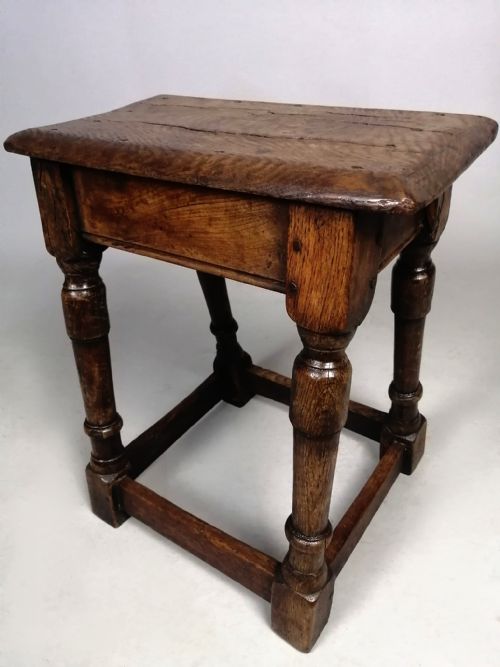
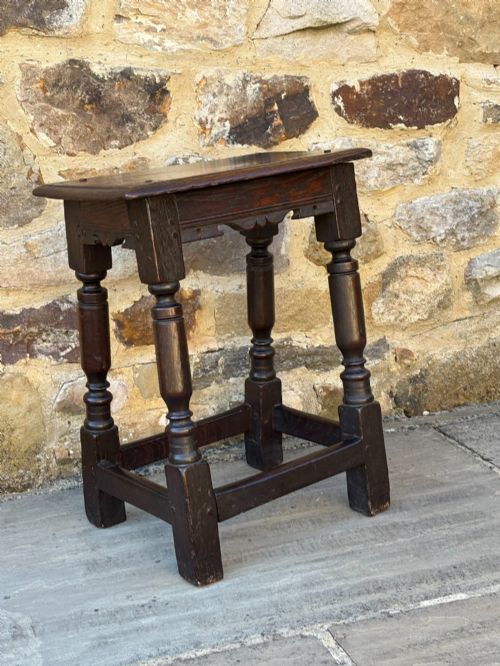
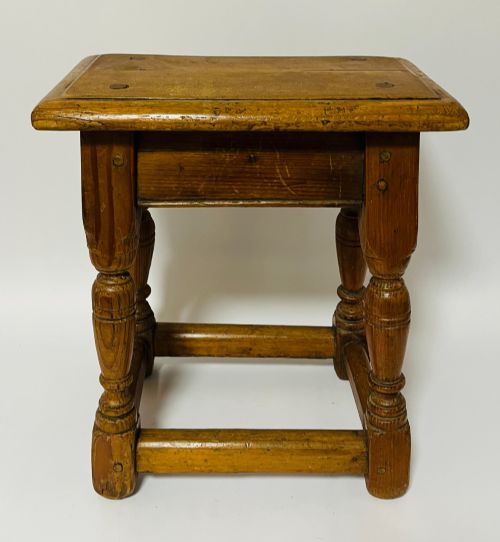
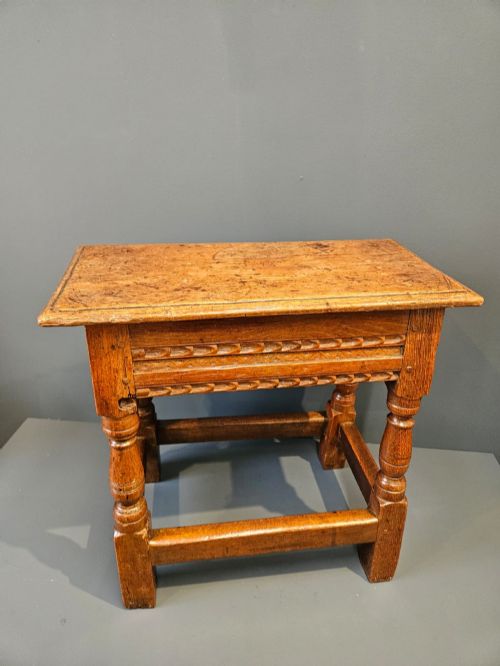


Joined Stool
A joined stool offers sturdy timber framing and historic character, grounding a room with genuine seventeenth-century presence.
Joined Stool
A joined stool is a solid timber seat constructed with pegged joinery rather than simple nailing. When you search for joined stool, you encounter robust seating designed for domestic life centuries ago.
The pieces on this page span from the seventeenth century through the Georgian era and later nineteenth-century revivals. Most examples take the form of standard stools or back stools, alongside occasional side tables and close stools.
Makers shaped these items primarily in oak, complemented by elm, pine, and occasional tapestry upholstery. Regional variations range from South Yorkshire pieces to Welsh country examples and Ipswich forms.
Construction and Materials
Carpenters built joined stools primarily using native oak, frequently supplemented with elm or pine for secondary timbers and boards. Pegged construction ensured the frame remained rigid without relying on metal fixings.
Frames utilised mortise and tenon joints secured by wooden pegs, creating the signature durability that allowed these items to survive centuries of domestic use. Iron elements appear occasionally in specific functional variants like close stools.
Listings feature oak, elm, and pine construction across periods spanning the seventeenth century to the Georgian era.
Assessing Quality
Quality rests in the integrity of the original pegged framework and the proportion of the timber. Untouched surfaces and minimal replacement to the structural tenons distinguish superior examples from heavily restored pieces.
Regional execution and age dictate the character of the piece, from early seventeenth-century column leg variants to later Georgian country interpretations. Original height and unaltered stretchers preserve the historical proportion.
The Joined Stool Glossary
- Joined stool
- A wooden seat constructed by a joiner using pegged mortise and tenon joints rather than simple carpentry. This method provided exceptional strength for domestic seating.
- Back stool
- An early form of chair featuring a wooden backrest attached to a joined stool base. These examples offer additional support while retaining the sturdy frame.
- Close stool
- A specialised variant enclosing a chamber pot, often built as a cabinet or box form on a stool frame. These functional pieces represent domestic interiors of the seventeenth century.
- Pegged construction
- A method of securing joints by driving wooden pins through overlapping timbers. This technique accommodates wood movement while maintaining structural rigidity.
- Jacobean
- A design style spanning the early to mid-seventeenth century, characterised by solid oak construction and restrained geometric carving. Pieces from this period display heavy timber proportions.
Joined Stool: Frequently Asked Questions
How were joined stools used?
These pieces served primarily as sturdy seating around the domestic table before chairs became common for every household member. Their flat tops also allowed them to function as small side tables or stands for household items.
In specialised forms like close stools, they provided discreet domestic sanitation. Their robust timber build meant they could be moved easily around the hall or chamber as needed.
How do I care for antique oak furniture?
Keep timber pieces away from direct heat sources and sudden temperature shifts to prevent the old oak from splitting. Maintain the finish with occasional applications of traditional beeswax rather than modern silicon polishes.
Allow a natural patina to develop by handling the wood gently and dusting with a dry cloth. Stable room conditions ensure the pegged joints remain secure over time.
How can I tell seventeenth-century pieces apart from later styles?
Seventeenth-century examples display distinct tool marks, hand-turned legs, and dense oak timber that shows deep oxidisation. Construction relies entirely on pegged mortise and tenon joints without modern adhesives.
Later Victorian revivals or eighteenth-century interpretations often show lighter pine elements, different turning profiles, or subtle changes in proportion. Examining the underside and peg construction reveals the true age of the timber frame.
Where were joined stools made?
Regional workshops across Britain produced these items, with specific areas developing distinct turning styles and proportions. South Yorkshire and Ipswich are notable centres recorded in traditional cabinet making.
Welsh country makers also produced robust regional variations utilising local oak and elm during the Georgian period. Each location imparted subtle differences in leg profiles and stretcher placement.