



Jockey Horse Print
A jockey horse print brings the history of the turf into a room through framed works that capture the intensity of the race.
Jockey Horse Print
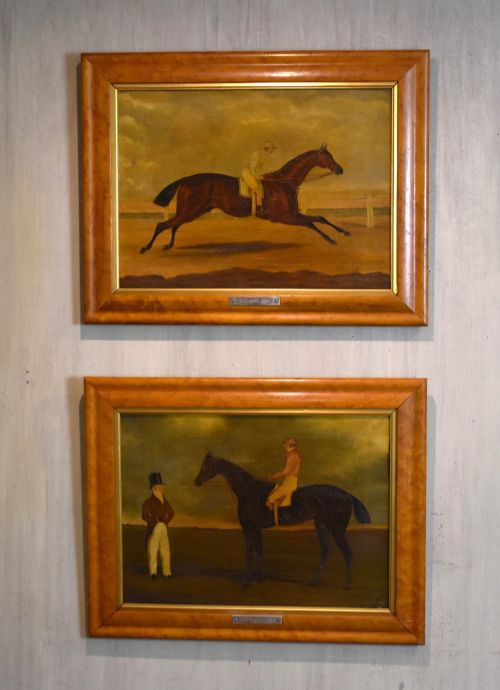
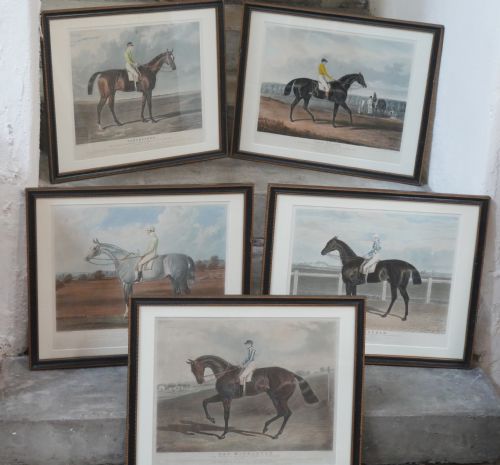
A jockey horse print encompasses framed prints, engravings, aquatints, chromolithographs, and oil paintings depicting equestrian subjects. These pieces record racehorses, jockeys, and racing scenes across several centuries.
The selection ranges from Georgian and Victorian sporting art to twentieth-century works, including individual portraits of famous racehorses and lively track scenes. Buyers will find both single framed pieces and pairs or sets of racing prints.
Origins span British and French traditions, capturing specific racehorses such as Diamond Jubilee and Creeping Molly alongside broader scenes at courses like Newmarket and Longchamp.
Materials and methods
Works are executed on paper using ink, engravings, aquatints, and chromolithography, as well as oil paint on canvas and wood panels. Many prints are preserved beneath glass within wooden frames, occasionally featuring gilt details or birds eye maple surrounds.
The physical construction of these pieces relies on traditional printmaking techniques and canvas stretching suited to nineteenth and twentieth-century workshops. Framing materials often reflect the Victorian period of framing or later restoration choices.
Jockey Horse Print Retail Price Guide 2026
Typical asking prices for jockey horse print among the pieces listed under this phrase on Sellingantiques today, from the lower quarter to the upper quarter. They describe what is for sale here now, not the wider market.
Materials utilised across the collection include paper, glass, wood, ink, gilt, birds eye maple, and oil on canvas.
Assessing quality
Quality rests on the clarity of the printed line or the handling of oil paint by the artist, distinguishing works with sharp detail from softer impressions. The distinction between mass-produced chromolithographs and hand-finished engravings or original oil paintings shapes the character of each piece.
The condition of the paper, the preservation of the ink or pigments against fading, and the integrity of the original frame and glass contribute to the overall standard of the artwork.
John Frederick Herring Snr·Gabriel Dauchot·Alfred Wheeler·John Atkinson·Isaac Cullin
The Jockey Horse Print Glossary
- Aquatint
- A printmaking technique that produces tonal effects similar to watercolour washes by using acid to etch the copper plate. It allows for subtle gradients of shade in sporting scenes.
- Chromolithography
- A colour lithographic process used to produce multi-coloured prints without hand colouring. This method was widely used for publication prints in the nineteenth century.
- Engraving
- A printmaking process where an artist cuts lines directly into a metal plate with a burin. The resulting prints show exceptional crispness and detail in the figures.
- Sporting art
- Genre of fine art that depicts horses, racing, hunting, and other field sports. It forms the primary category for nineteenth-century equestrian imagery.
- Gilt
- A thin layer of gold applied to wood framing to provide a decorative metallic finish. It highlights the decorative border around the artwork.
Jockey Horse Print: Frequently Asked Questions
How do I date an antique racing print?
Dating relies on the paper type, printing technique, and stylistic markers of the frame and mount. Typography and publishing details printed on the margin often provide an exact year.
Examining the reverse of the frame can also reveal past framer labels that narrow down the era of production.
Are these works original or reproductions?
The selection includes original oil paintings, hand-coloured engravings, and period prints from the nineteenth and early twentieth centuries. Each listing specifies the exact medium used by the artist or printmaker.
Modern mass reproductions are absent, as these are period works originating from their respective historical eras.
How should I frame and hang these pieces?
These works require placement away from direct sunlight to prevent the fading of ink, watercolour, and paper over time. Maintaining a stable indoor humidity protects both the wooden frames and the paper substrates.
Many pieces arrive already framed behind glass, ready for hanging in a study or hallway.
What subjects are most common in these prints?
Portraits of famous racehorses with their jockeys up dominate the selection, alongside sweeping course views of Newcastle and Longchamp. Action scenes capturing galloping horses also feature prominently.
These subjects reflect the strong Victorian and Edwardian fascination with British horse racing culture.