


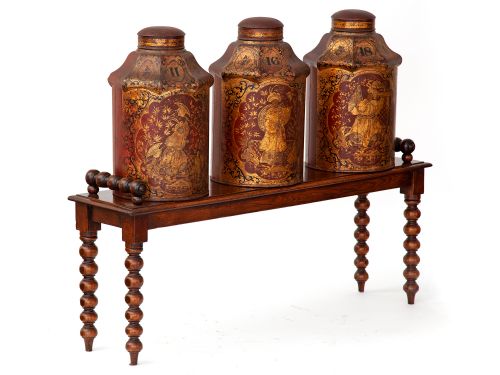


Japanned Metal Tea Tin
A japanned metal tea tin brings a rich palette of black, gold, and lacquer to domestic display while keeping leaf tea dry and fragrant.
Japanned Metal Tea Tin
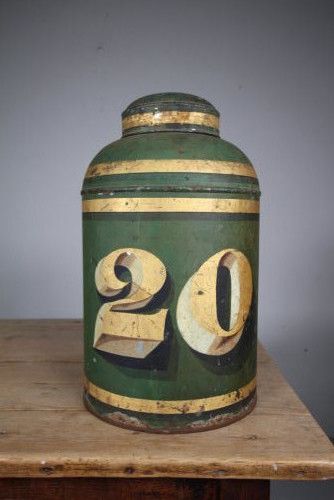
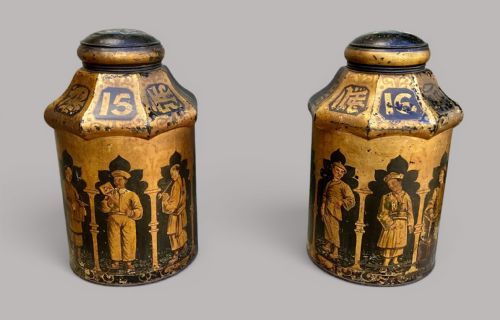
When you search for a japanned metal tea tin, you encounter painted and lacquered vessels designed for domestic storage during the nineteenth century. These objects appear primarily as single canisters, matched pairs, or nested sets created to hold precious tea leaves in style.
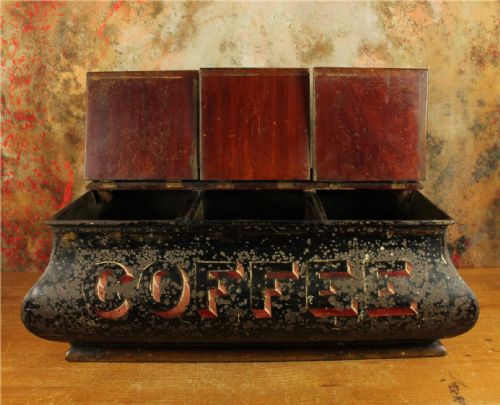
The pieces on this page stem predominantly from the nineteenth century, including specific items from the Victorian, Regency, and William IV periods. Alongside standard tea canisters, the selection encompasses triple compartment storage boxes and serving trays.
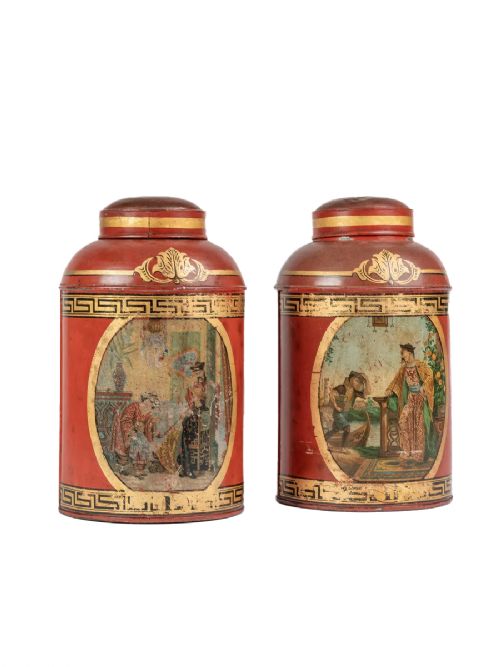
Makers drew heavily on Chinoiserie aesthetics, decorating dark surfaces with gilt pagodas, figures, and botanical motifs. English country houses and commercial spaces alike utilised these durable iron and tinplate containers.
How they were made
Artisans formed these containers from sheet iron and tinplate, building a robust metal carcase suitable for everyday handling. This metal base received layers of dark paint or lacquer to create a smooth ground for subsequent decoration.
Painters applied gold leaf and hand-painted details directly onto the surface to achieve the characteristic Chinoiserie ornamentation. Pontypool workshops became particularly noted for this skilled application of lacquer and pigment on tinware.
One exceptional Victorian toleware masterpiece depicts Esther accusing Haman, proving that tea caddies could double as historical canvases.
What varies in quality
The distinction between ordinary and exceptional examples rests upon the ambition and execution of the hand-painted decoration. Finer pieces display crisp gilt Chinoiserie scenes and sophisticated pictorial narratives that elevate the container from mere storage to fine art.
The preservation of the original black ground and the crispness of the gold leaf dictate the visual impact of the piece. Subtle variations in the depth of the lacquer and the complexity of the painted motifs separate standard utility ware from collector items.
H Meeson
The Japanned Metal Tea Tin Glossary
- Japanned metal
- European lacquerware produced in imitation of East Asian lacquer finishes. It typically involves dark paint layers finished with decorative gilt details.
- Toleware
- Painted or lacquered metalware manufactured in Britain and Europe during the eighteenth and nineteenth centuries. The term encompasses both tea canisters and serving trays.
- Chinoiserie
- A European artistic style reflecting Chinese motifs and imaginary oriental landscapes. It dominates the painted decoration on nineteenth-century tea containers.
- Tinplate
- Sheet iron coated with tin to prevent rusting. This material served as the primary structural foundation for painted tea canisters and storage boxes.
Japanned Metal Tea Tin: Frequently Asked Questions
What did they store inside?
These metal containers held dry leaf tea securely away from moisture and light to preserve its flavour and aroma.
Larger boxes and triple compartment versions allowed households to store multiple varieties of tea in a single decorative chest.
Where were they placed?
Tea tins sat prominently on sideboards, serving tables, and tea cabinets in principal rooms of the house.
Their decorative Chinoiserie surfaces ensured they contributed to the interior display rather than hiding away in pantries.
How do I date them?
Dating relies on stylistic markers from the Regency, William IV, and Victorian eras combined with construction methods.
Hand-painted details and specific regional traits, such as Pontypool production, help narrow the period of origin.
Are sets common?
Matched sets of two or three canisters appear frequently, often designed to fit together for different grades of tea.
Finding a complete set with uniform gilt decoration and original lids represents a particularly cohesive grouping.