




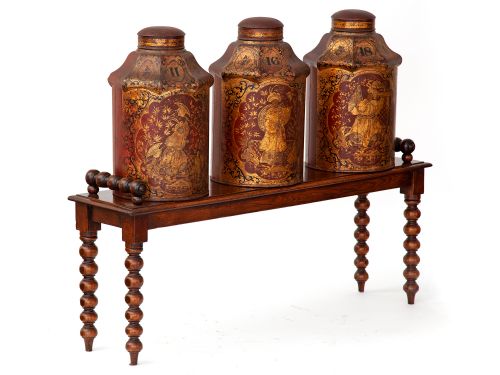
Antique Painted Tin Canister
An antique painted tin canister brings bright colour and hand-finished pattern to a room, offering both practical storage and historical charm.
Antique Painted Tin Canister
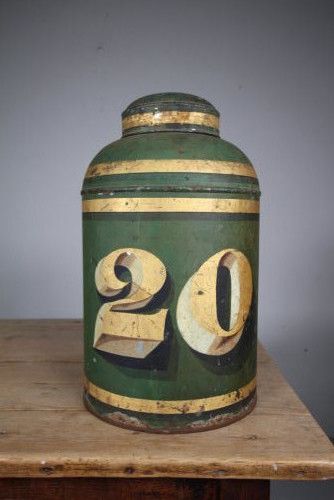
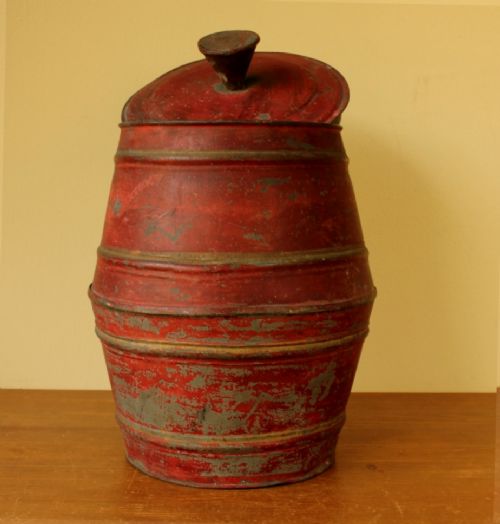
When you search for an antique painted tin canister, you encounter a variety of functional metal vessels designed for storing tea, tobacco, and flour. These items bridge domestic utility and decorative art, originating from domestic kitchens, shops, and formal drawing rooms alike.
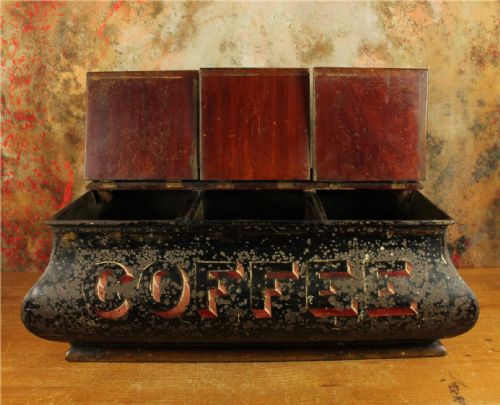
The selections available here span several distinct periods, most notably the nineteenth century, alongside Regency, Victorian, and later twentieth-century iterations. Forms range from simple storage boxes and waste paper bins to converted table lamps and multi-compartment shop tins.
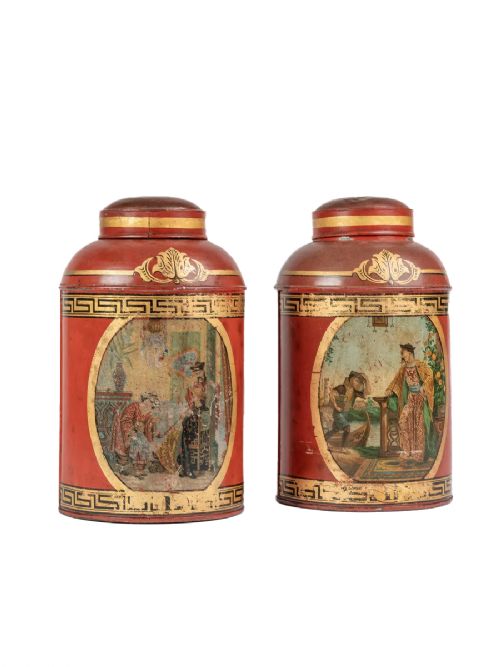
Geographic origins and stylistic influences vary widely across the inventory, encompassing English country pieces, French industrial items, and elaborate Chinoiserie designs. Buyers often find sets of canisters alongside individual statement objects such as novelty tea caddies.
Materials and construction methods
Makers utilised tin, tinplate, iron, and sheet metal as the foundational base for these vessels, frequently incorporating wood and brass details. These durable metals were shaped into canisters, bins, and boxes designed to protect dry goods from moisture and air.
Surfaces were prepared with paint and traditional toleware finishes, often decorated with hand-painted motifs, Chinoiserie scenes, or pagodas. Artisans applied pigments directly onto the metal ground, sometimes sealing the decoration to withstand daily handling in shops and households.
Listings feature nineteen-century toleware, tinplate, and sheet metal vessels, encompassing Chinoiserie tea canisters, tobacco jars, and flour bins.
Evaluating quality and character
The distinction between standard containers and superior pieces rests largely on the preservation and complexity of the original painted decoration. Intricate hand-painted Chinoiserie scenes or multi-layered toleware finishes elevate the visual merit of a canister significantly.
Provenance and maker attribution also influence the standing of a piece, with documented works by established firms commanding particular interest. Additionally, the survival of matching sets or original lids adds considerable cohesion to a group.
Asprey & Co.
The Antique Painted Tin Canister Glossary
- Toleware
- Painted or lacquered metalware, typically tin or sheet metal, associated with decorative domestic objects. The technique gained popularity for producing colourful household items.
- Chinoiserie
- European decorative style reflecting Chinese artistic influences, frequently seen in fantastical landscapes and pagodas. This aesthetic defined many nineteenth-century tea containers.
- Tinplate
- Iron or steel sheet coated with tin to prevent rusting, serving as the primary sheet metal substrate for storage boxes. It provided a stable surface for painting.
- Tea Caddy
- A small box or canister originally used for storing and locking away expensive tea leaves. Regency and Victorian examples often feature elaborate painted finishes.
- Regency
- The British design period spanning the early nineteenth century, known for classical elegance and decorative refinement. Pieces from this era often display sophisticated ornamentation.
Antique Painted Tin Canister: Frequently Asked Questions
What were antique painted tin canisters used for?
These metal vessels primarily served practical storage functions in domestic kitchens, grocery shops, and tea merchants. Households relied on them to keep dry goods such as tea, coffee, tobacco, and flour fresh and dry.
Over time, many of these utilitarian containers transitioned into decorative objects or were repurposed as waste paper bins and table lamps. Their durable construction ensured they survived generations of daily use.
Are these canisters safe for food storage?
Most historical painted containers are recommended for decorative display rather than modern food storage due to the age of the materials and paints. The internal surfaces may carry historical residues or wear that make them unsuitable for consumables.
Collectors generally use them as standalone decorative accents, shelf displays, or dry storage for non-food items. Their visual appeal lies in their historical surface finish rather than modern utility.
How should I care for a painted metal tin?
Maintain painted tin and toleware by keeping them in a stable environment away from direct sunlight and high humidity. Excessive moisture can cause the underlying metal to rust and lift the historic paint layers.
Dust the surface gently with a soft, dry cloth and avoid using chemical cleaning products or abrasive materials. Preserving the original paint finish is the primary goal of proper maintenance.