
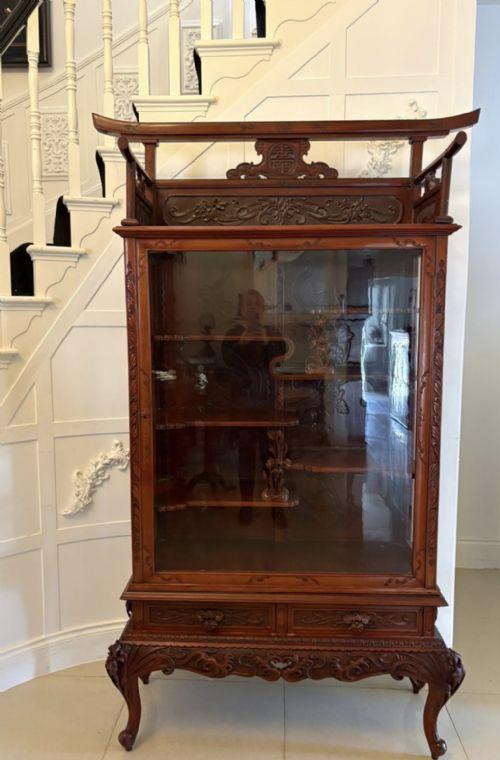
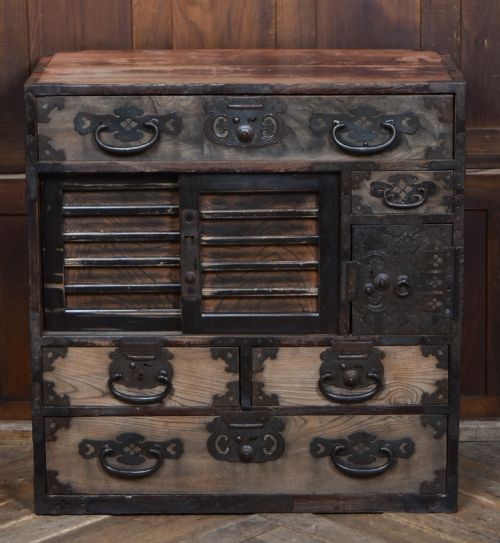
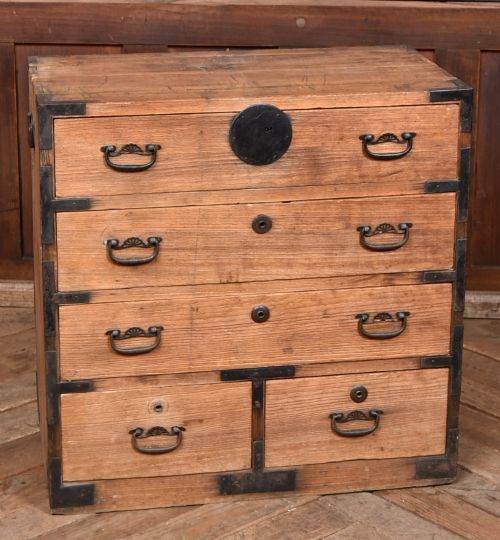
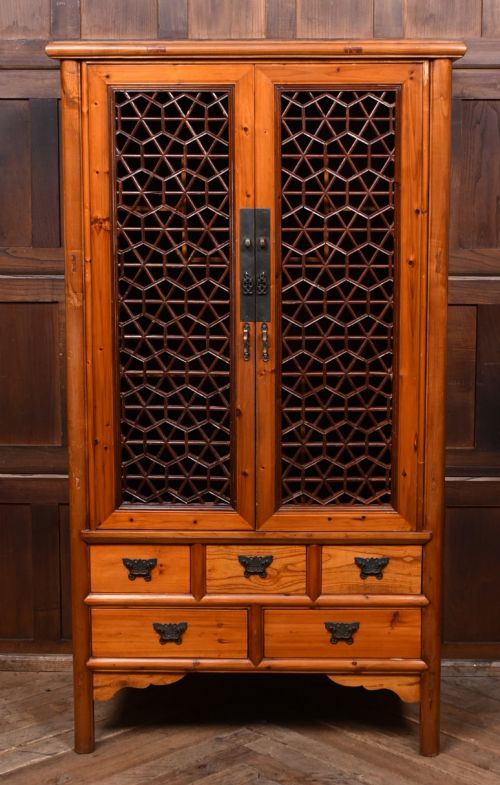


Japanese Wooden Cabinet
A Japanese wooden cabinet brings tactile timber and meticulous joinery into a room, offering functional storage with distinct cultural artistry.
Japanese Wooden Cabinet
The selection ranges from large step chests known as kaidan tansu to smaller black or red lacquered table cabinets and hanging storage units. Makers utilised varied timbers including cedar, pine, and dense hardwoods, often fitted with iron hardware to reinforce the joints and drawers.
Period examples stretch across the Meiji and Taisho eras, occasionally intersecting with Western aesthetic movements through Japonisme interpretations. Each form reflects the specific domestic or commercial needs of its maker, from kitchen storage to merchant accounting.
How they were made
Craftsmen built these cabinets using traditional joinery methods that relied on interlocking timber rather than modern metal fasteners, allowing the wood to expand and contract naturally. Hardwoods like keyaki and softer timbers such as cedar and pine formed the primary carcases, frequently finished with layers of lacquer or left as natural grain.
Forged iron and brass plates, handles, and corner brackets were applied to reinforce high-stress areas on transportable pieces like merchant and ship's tansu chests. Glass panels and intricate Yosegi marquetry occasionally appeared on display cabinets and cylinder desks to showcase advanced decorative techniques.
Listings for this phrase frequently feature nineteenth-century items constructed from cedar, pine, and keyaki hardwood.
What varies in quality
The standard of a Japanese wooden cabinet rests upon the selection of timber, the precision of the underlying joinery, and the integrity of the original hardware. Dense hardwoods like keyaki command attention for their durability and grain pattern compared to simpler pine or cedar constructions.
Surface treatments also dictate worth, distinguishing between simple waxed timber and multi-layered red or black lacquer work that requires meticulous polishing. The complexity of the internal configuration, such as hidden compartments within merchant chests or precise Yosegi parquetry, signals higher workshop ambition.
Gabriel Viardot
The Japanese Wooden Cabinet Glossary
- Tansu
- Traditional Japanese mobile storage chests used for clothing, documents, or valuables. They often feature robust iron hardware and specialised internal layouts.
- Mizuya
- Japanese kitchen storage cabinets designed for culinary utensils and food provisions. These pieces typically incorporate slatted sliding doors and multiple small drawers.
- Keyaki
- Japanese zelkova hardwood prized for its dense grain and strength. Makers utilised this timber for the faces and structural elements of high-status tansu.
- Kaidan tansu
- Step chests constructed in a staircase configuration to maximise vertical space in compact dwellings. They combined functional steps with concealed storage drawers.
- Yosegi
- Japanese marquetry technique using naturally coloured woods assembled into geometric mosaic patterns. This method appears on decorative desks and specialised cabinet panels.
- Shodana
- Japanese display cabinet featuring asymmetrical shelving and small sliding doors. These pieces were traditionally used to exhibit prized scholarly objects or ceramics.
Japanese Wooden Cabinet: Frequently Asked Questions
What is a tansu chest used for?
A tansu chest functioned primarily as mobile domestic storage for garments, merchant records, and household goods. Their modular design allowed families to transport possessions easily during household relocations.
Today, these cabinets serve as statement storage furniture in modern interiors, holding table linen, media equipment, or general dry goods while displaying traditional craftsmanship.
How do I identify a Meiji period cabinet?
Meiji period cabinets often display a blend of traditional Japanese woodworking techniques and decorative motifs influenced by the opening of international trade. Look for specific timber choices like cedar or keyaki paired with forged iron hardware.
Datation can also be inferred from stylistic crossovers, such as Japonisme influences or specific reign marks recorded in the piece's history. Physical construction details, including hand-cut dovetails and natural lacquering, help confirm the nineteenth-century origin.
Where should I place a wooden cabinet at home?
These cabinets suit living rooms, hallways, or bedrooms where their distinct timber grain and metal hardware act as focal points. Placing them away from direct heat sources and strong sunlight protects the historic wood and lacquer finishes from drying out.
Ensure the floor surface is level, particularly with heavier items like step chests, to prevent structural strain on the original joinery.
Are these cabinets made of solid wood?
Most traditional Japanese cabinets utilise solid timbers such as cedar, pine, keyaki, or assorted hardwoods throughout their construction. Workshops relied on natural woods to build durable carcases and internal drawer components.
Secondary woods might occasionally appear in non-structural internal areas, but the primary exterior surfaces consist of solid historical timber.