




Japanese Wood Carving Statue
These japanese wood carving statue examples bring Meiji period craftsmanship and folk art straight into a room through carved wood, boxwood and linden wood.
Japanese Wood Carving Statue
When you search for a japanese wood carving statue, you encounter figures and sculptures spanning the Edo period, the Meiji period, and the early twentieth century. The selection ranges from small netsuke and okimono to large animal sculptures and figures.
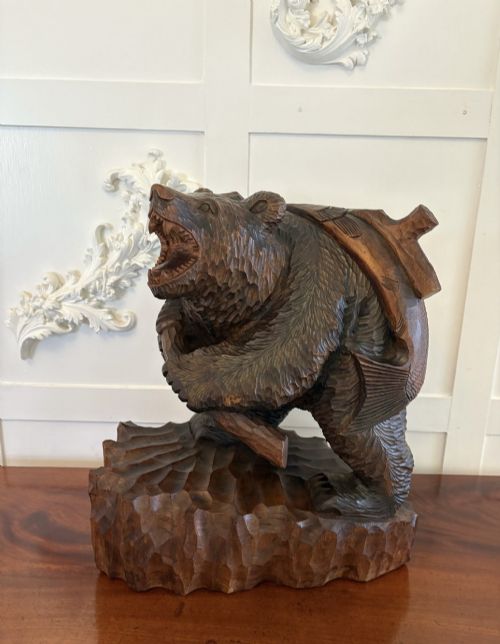
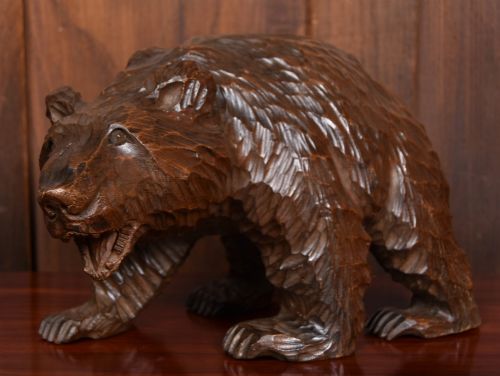
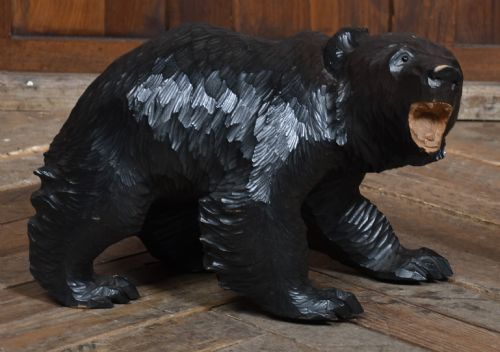
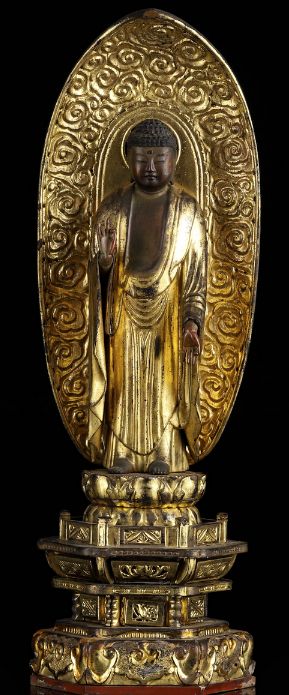
The most common subjects appearing here are carved bears known as kibori kuma, alongside deities, geisha figures, and animals such as tigers and eagles. These items originate from Japanese folk art traditions as well as more formal Meiji period workshops.
Many of these works combine carved wood with root wood bases, dark stain finishes, or occasional bronze elements. Collectors find both intimate pocket pieces and substantial room-scale statues in this group.
How they were made
Makers shaped these objects using dense hardwoods, fragrant boxwood, and pale linden wood, applying hand-carving techniques that left distinct chisel marks or smooth, polished surfaces. Specific pieces utilise the nata-tsukuri style, which employs hatchet-hewn facets to define the form.
Finishes include dark stain applications, natural wax coatings, and occasional gilt wood details on religious figures. Structural elements often integrate natural root wood bases beneath carved animal figures.
Several bears carry fish, proving that wood-carving animals with snacks is an international tradition spanning multiple centuries.
What varies in quality
The distinction between ordinary and superior pieces rests on the animation of the carving and the precision of the anatomical detail in animals and figures. Master carvers captured tension in a tiger's stance or expression in a deity's face with disciplined strokes that lesser workshops missed.
Proportion and the handling of the wood grain also separate standard items from exceptional ones. The finest sculptures demonstrate a complete harmony between the natural grain of the boxwood, linden wood, or hardwood and the final sculptural form.
Tomochika·Gyoko
The Japanese Wood Carving Statue Glossary
- Netsuke
- A small carved toggle fastened to the end of a cord connecting a small container to a kimono sash. These miniature sculptures often depict animals, deities, or folk figures in boxwood or hardwood.
- Okimono
- A small Japanese ornament designed for display on a tabletop or within a tokonoma alcove. They share subjects with netsuke but are generally larger and do not serve a fastening function.
- Kibori Kuma
- A carved wooden bear originating from the folk art traditions of Hokkaido. These figures frequently depict a bear holding a fish in its jaws.
- Nata-tsukuri
- A sculptural style employing hatchet or cleaver marks to shape the wood. This technique leaves deliberate, textured facets across the surface of the piece.
- Meiji Period
- The era of Japanese history lasting from 1868 to 1912. Objects from this period often reflect a high degree of naturalism alongside traditional themes.
Japanese Wood Carving Statue: Frequently Asked Questions
What is a kibori kuma?
A kibori kuma is a traditional Japanese wooden carved bear, frequently depicted carrying a salmon or fish.
These folk art pieces emerged strongly in Hokkaido and remain a distinct subcategory within Japanese wood carvings.
How do I distinguish Edo and Meiji pieces?
Edo period items often display a restraint and association with traditional religious or functional forms like netsuke.
Meiji period works tend toward greater naturalism and detailed realism driven by international exhibition markets.
Where were okimono displayed?
Okimono were placed on display surfaces such as low tables or within decorative alcoves inside traditional Japanese rooms.
Unlike netsuke, they existed purely to be viewed and appreciated as independent sculptures.
What woods were commonly used?
Carvers utilised dense boxwood for intricate miniature work, pale linden wood for folk figures, and various dark hardwoods.
Some pieces also incorporated root wood sections for naturalistic bases.