



Japanese Meiji Incense Burner
A japanese meiji incense burner brings together metalwork, ceramics, and intricate ornamentation from late nineteenth-century workshops.
Japanese Meiji Incense Burner
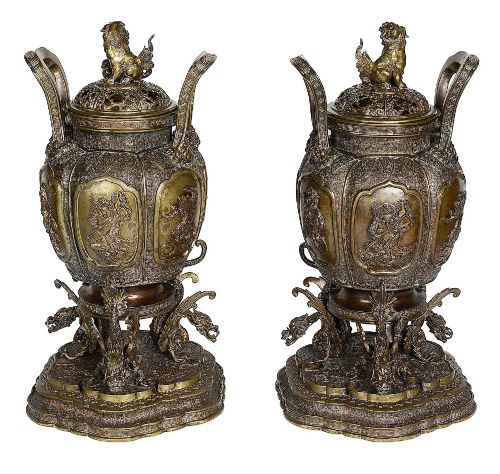
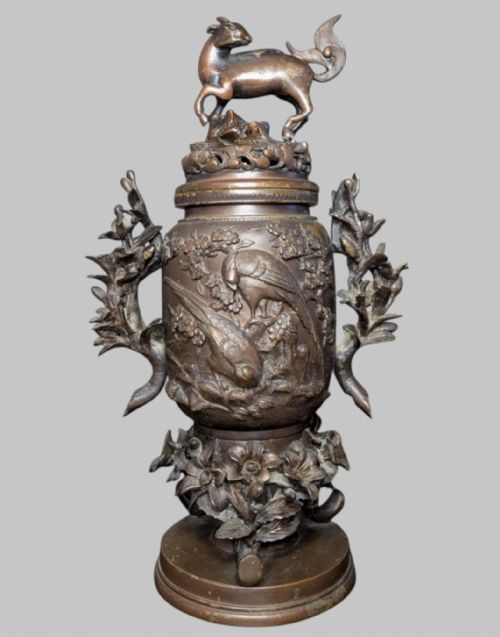
A japanese meiji incense burner stands as a sculptural vessel created during the Meiji period and associated eras. These pieces typically take the form of lidded koros, censer bowls, or figurative shapes such as hanging boats and treasure ships.
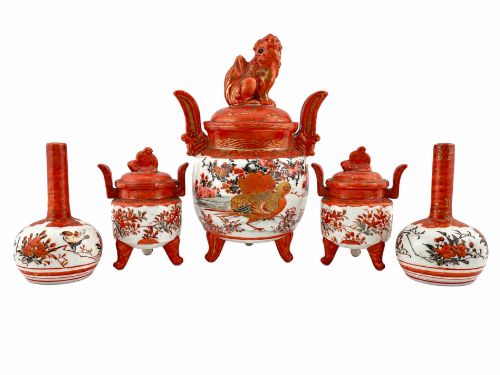
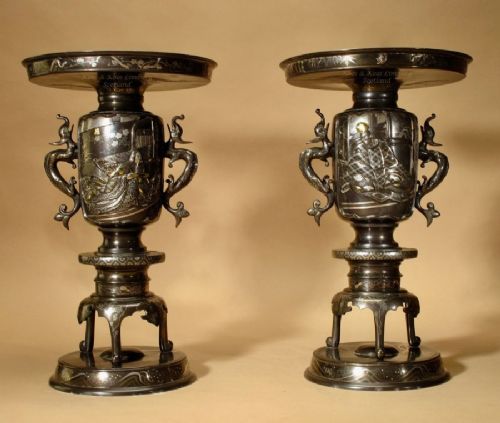
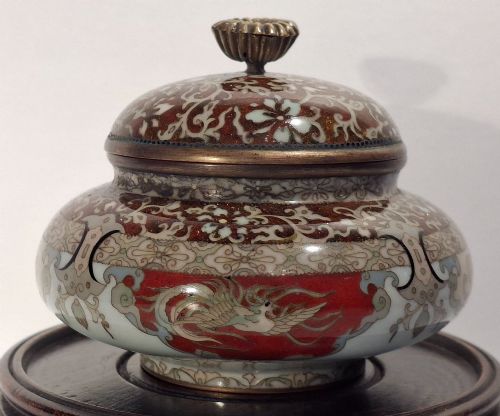
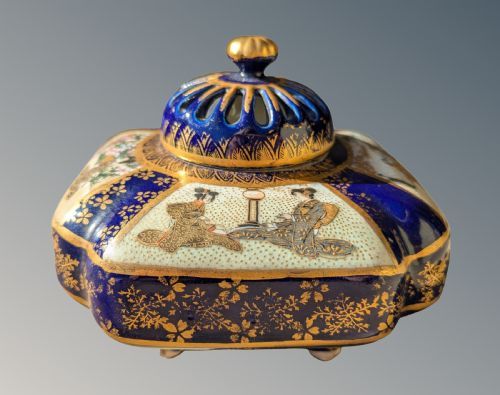
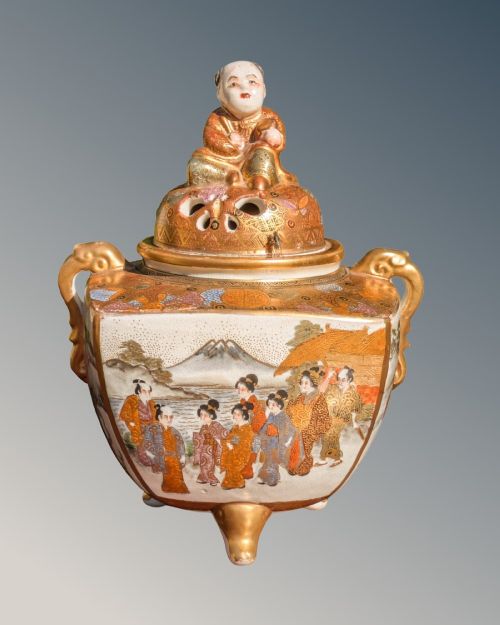
Buyers most frequently encounter bronze and Satsuma earthenware examples on this page, often supported on tripod feet or featuring sculpted animal finials. The selection also includes Kutani porcelain garnitures and cloisonne enamel vessels.
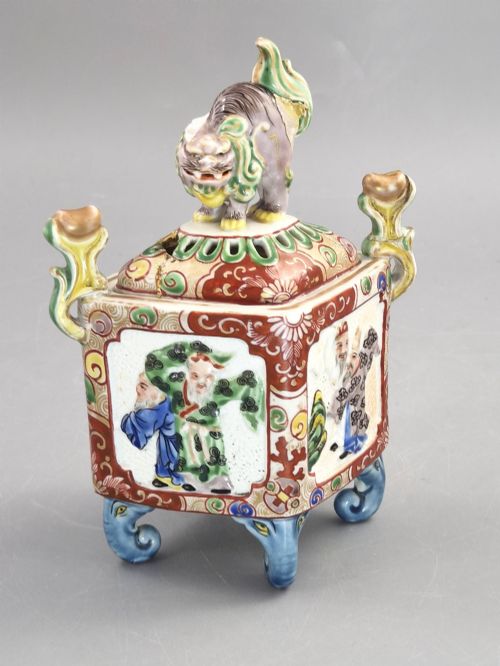
Originating from Japan, these works reflect the craftsmanship of late nineteenth-century makers working in bronze, copper, enamel, and porcelain. Their forms range from miniature vessels to large decorative pieces incorporating elephant head feet and dragon details.
What Varies in Quality
The refinement of sculptural details, such as the expression on a shi-shi lion finial or the crispness of a dragon relief, defines the upper tier of these vessels. Artisans who invest greater precision into modelling produce work with distinct presence.
The complexity of surface decoration distinguishes finer examples, whether through densely painted Satsuma enamelwork or intricate metal inlay. Stronger pieces display deliberate composition across every visible surface.
Japanese Meiji Incense Burner Retail Price Guide 2026
Typical asking prices for japanese meiji incense burner among the pieces listed under this phrase on Sellingantiques today, from the lower quarter to the upper quarter. They describe what is for sale here now, not the wider market.
Several incense burners take unusual aquatic forms, including hanging boats and treasure ships.
Tsukamoto Hikokichi·Kinkozan·Kizan·Kotobuki-do·Shizan
The Japanese Meiji Incense Burner Glossary
- Koro
- A traditional Japanese incense burner, usually fitted with a cover. These vessels appear in bronze, porcelain, and cloisonne enamel.
- Satsuma
- A type of Japanese earthenware featuring a crackle glaze decorated with enamel and gilt. Many pieces include figural scenes or floral motifs.
- Kutani
- A style of Japanese porcelain known for vibrant painted designs and rich colour palettes. Garnitures and incense burners frequently employ this ceramic tradition.
- Shi-shi
- A mythical guardian lion or dog often depicted on vessel lids and finials. These sculpted figures serve as handles for incense burner covers.
- Cloisonne
- A decorative metalwork technique using thin metal wires to form cells that hold coloured enamel. Artisans fire these vessels to create patterned surfaces.
Japanese Meiji Incense Burner: Frequently Asked Questions
What is a koro?
A koro is a traditional Japanese incense burner designed with a removable lid for burning aromatic materials. These vessels feature prominently among Japanese Meiji period metalwork and ceramics.
They appear in various forms, including tripod bowls, urns, and sculptural shapes like boats, often finished with detailed animal finials.
How do I identify Satsuma ware?
Satsuma ware is characterised by its distinctive cream-coloured earthenware body covered in a fine crackle glaze. Artisans decorate these surfaces with detailed enamel paintings and gilt highlights.
Many examples feature signature panels or crests, such as the Shimazu family crest, identifying their workshop origins.
What materials are used in these burners?
These incense burners utilise bronze, copper, porcelain, earthenware, and enamel. Metalwork examples frequently incorporate silver and gold inlay or gold leaf.
Ceramic versions rely on Satsuma earthenware, Kutani porcelain, or Hirado porcelain bodies decorated with glazes and enamels.
Where were these pieces made?
These works were produced in Japan during the Meiji period and surrounding eras, encompassing nineteenth-century production. Different regions developed distinct ceramic and metalwork traditions.
Kyoto workshops produced notable Satsuma wares, while Kutani centres specialised in painted porcelain garnitures and vessels.