


Japanese Ceramic Vase Cover
A Japanese ceramic vase cover brings intricate Meiji and Edo period artistry to a mantelpiece, offering traditional lidded porcelain and earthenware forms.

Japanese Ceramic Vase Cover
A japanese ceramic vase cover protects and completes lidded vessels such as ginger jars, baluster vases, and urns originating from Japan. These pieces span the nineteenth century and the Edwardian era, bringing decorative covered ceramic forms into Western interiors.
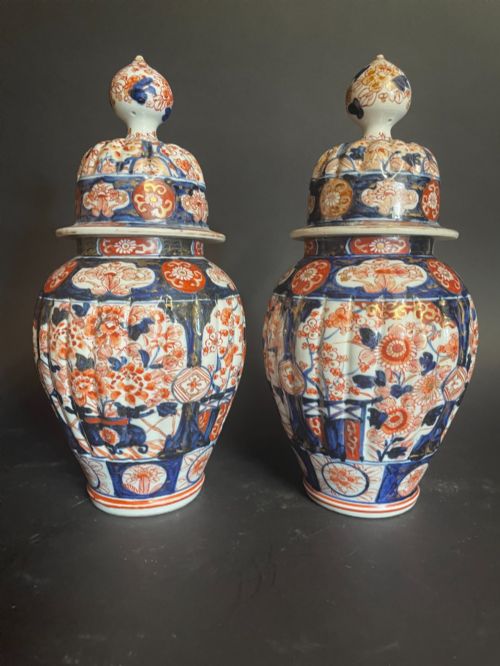
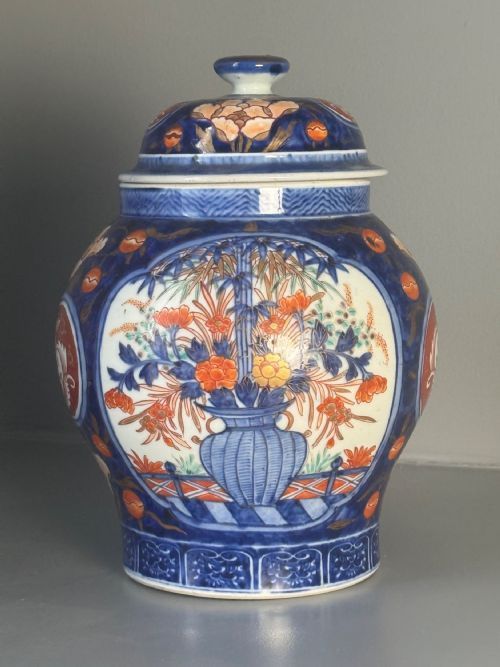
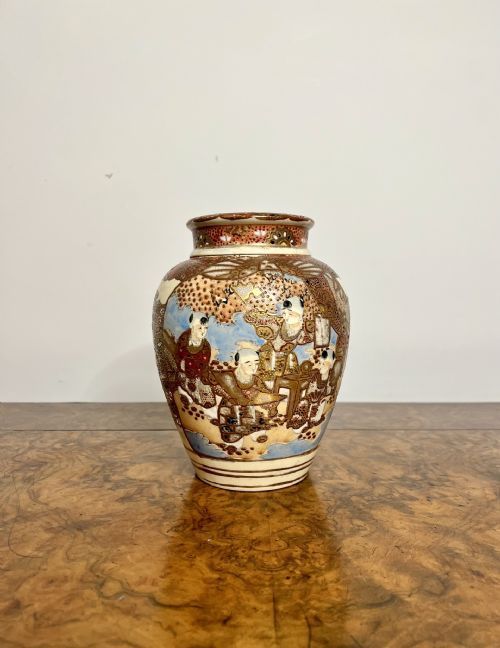
The selections on this page centre upon Imari, Satsuma, Arita, and Kutani wares produced across the Meiji and Edo periods. Buyers frequently encounter robust Imari palettes alongside finely painted Satsuma landscape jars.
Most items combine a vessel and matching lid, forming a unified silhouette designed for display. These objects reflect both traditional Japanese ceramic methods and the later European taste for Japonisme.
Assessing quality and craftsmanship
Quality rests upon the crispness of the hand-painted detail and the stability of the glaze. Superior examples display precise brushwork in the Imari palette or delicate rendering in Satsuma landscapes.
The integrity of the matching lid alongside the main vase body dictates the overall desirability of the piece. Artisanal precision in the porcelain body and the richness of the gilding separate standard production from exceptional works.
Listings feature porcelain and earthenware materials decorated with enamel, gold leaf, and ormolu across the nineteenth and early twentieth centuries.
Yamashu·Samson
The Japanese Ceramic Vase Cover Glossary
- Imari
- A style of Japanese porcelain featuring a distinct palette of underglaze blue, iron-red, and gold. This tradition originated in Arita and became immensely popular in European collections.
- Satsuma
- An earthenware ceramic style characterised by a finely cracked ivory glaze and elaborate polychrome enamel decoration. These pieces frequently depict intricate landscapes and figures.
- Arita
- The Japanese town and surrounding region renowned as the birthplace of Japanese porcelain production. Kilns here produced the robust blue and white and Imari wares seen in nineteenth-century collections.
- Kutani
- A style of Japanese pottery and porcelain known for bold colours and expressive pictorial designs. These works often utilise deep greens, yellows, and reds.
- Japonisme
- A nineteenth-century European artistic movement inspired by Japanese art and design. This influence appeared across Western decorative arts following the reopening of Japanese trade.
Japanese Ceramic Vase Cover: Frequently Asked Questions
How do I care for my vase and cover?
Dust ceramic surfaces gently with a soft, dry cloth to protect delicate enamel and gold leaf details.
Avoid displaying lidded vessels in direct sunlight or areas of high humidity to preserve the nineteenth-century glaze.
Were these pieces made for export?
Many nineteenth-century ceramic pieces were produced specifically for Western markets following the opening of Japanese trade routes.
European buyers favoured traditional Imari and Satsuma aesthetics, leading to robust export production during the Meiji period.
How can I distinguish Imari from Satsuma?
Imari pieces use porcelain bodies decorated primarily in cobalt blue, iron-red, and gold. They present a resonant, vitrified ceramic structure.
Satsuma pieces utilise earthenware bodies with a characteristic ivory crackle glaze beneath detailed enamel paintings.