

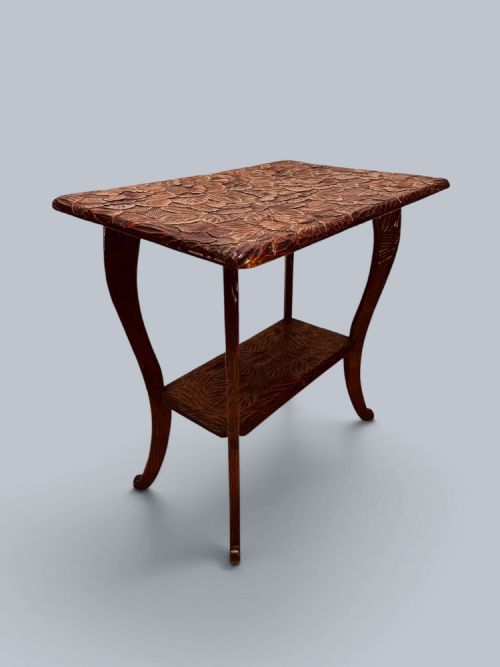
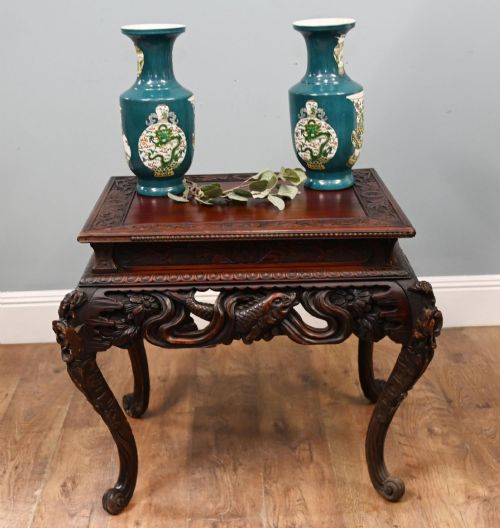


Japanese Carved Plant Table
A Japanese carved plant table brings tactile, intricate craft directly into a room, offering a sturdy yet decorative stage for foliage.
Japanese Carved Plant Table
A Japanese carved plant table is an occasional table or plant stand designed to elevate greenery and art objects within the home. When you search for a japanese carved plant table, you encounter forms that merge traditional Eastern motifs with Western Victorian and Edwardian domestic spaces.
The pieces appearing on this page span the late nineteenth century through to the early twentieth century, taking in the Victorian, Meiji, and Taisho periods. You find side tables, display tables, and drum type tables alongside conventional plant stands and pedestals.
Makers and retailers such as Liberty of London and Gabriel Viardot shaped this market, blending Anglo-Japanese and Aesthetic Movement ideals. These items reflect an era fascinated by Japonisme and Arts and Crafts principles, resulting in versatile occasional furniture.
Materials and construction methods
Hardwood forms the structural core of these pieces, frequently appearing as carved hardwood, ebonised wood, or dark stained wood alongside select examples in oak. Artisans applied deep hand carving to depict naturalistic flora and fauna, creating textured surfaces that catch the light.
Certain high status examples incorporate contrasting insets, pairing carved wood frames with marble top surfaces or inset cloisonné enamel panels. Gilt bronze accents occasionally appear to highlight structural details or edge mounts.
Japanese Carved Plant Table Retail Price Guide 2026
Typical asking prices for japanese carved plant table among the pieces listed under this phrase on Sellingantiques today, from the lower quarter to the upper quarter. They describe what is for sale here now, not the wider market.
Design styles represented here include the Aesthetic Movement, Japonisme, Arts and Crafts, and Anglo-Japanese.
Distinctions in quality and execution
Quality rests in the depth and sharpness of the hand carving, where superior examples exhibit crisp undercut details rather than shallow mechanical shaping. The integration of specialty materials like inset marble or cloisonne enamel panels signals a higher grade of manufacture.
Attribution also shifts perception, with documented pieces associated with Liberty of London or Gabriel Viardot demonstrating superior joinery and refined stylistic coherence compared to unmarked workshop productions.
Liberty of London·Gabriel Viardot
The Japanese Carved Plant Table Glossary
- Japonisme
- The influence of Japanese art and design on Western aesthetics, particularly prominent in the late nineteenth century. It inspired European makers to adopt asymmetrical compositions and natural motifs.
- Meiji Period
- The era of Japanese history lasting from 1868 to 1912, characterised by the opening of trade with the West. Furniture made during this time often catered specifically to European export tastes.
- Ebonised
- Wood treated with a chemical stain or finish to imitate true ebony. This dark, light absorbing surface was a favourite of Aesthetic Movement and Victorian designers.
- Cloisonne
- An ancient technique for decorating metalwork objects with coloured glass paste placed within compartments defined by wire. In these tables, cloisonne panels serve as smooth, colourful table tops.
- Aesthetic Movement
- A late nineteenth century art movement that promoted art for art's sake, valuing visual and tactile beauty above narrative or moral themes. It heavily influenced Anglo-Japanese furniture design.
Japanese Carved Plant Table: Frequently Asked Questions
What is a Japanese carved plant table?
A Japanese carved plant table is a decorative stand or small occasional table designed to hold plants, jardiniere bowls, or display items. These pieces typically feature intricate hand carved wooden details and reflect late nineteenth or early twentieth century craftsmanship.
They bridge Eastern decorative arts with Western interior design, serving as functional furniture that doubles as sculptural art within a room.
How were these tables used originally?
In Victorian and Edwardian homes, these tables served to showcase prized indoor plants, ceramic jardinieres, or decorative ornaments. Placing greenery on elevated stands allowed owners to display botanicals effectively in parlours and drawing rooms.
Beyond holding plants, smaller versions functioned as occasional side tables for holding books or tea items during social gatherings.
How do I care for a carved wooden table?
Preserve the carved hardwood surfaces by keeping the table away from direct heat sources and strong sunlight, which can dry out the wood. Dust the intricate carvings regularly with a soft brush to prevent dirt accumulation in the recesses.
Apply a microcrystalline wax sparingly when the wood appears dry, avoiding heavy liquid polishes that can build up within the detailed carving work.
How do I distinguish Meiji period pieces?
Meiji period items often display exceptionally deep, naturalistic hand carving depicting birds, flowers, and foliage. They reflect the high standards of Japanese craft exported to Europe during the late nineteenth century.
Comparing construction joints, wood types, and stylistic influences helps differentiate authentic Japanese export pieces from later European adaptations in the Anglo-Japanese style.