

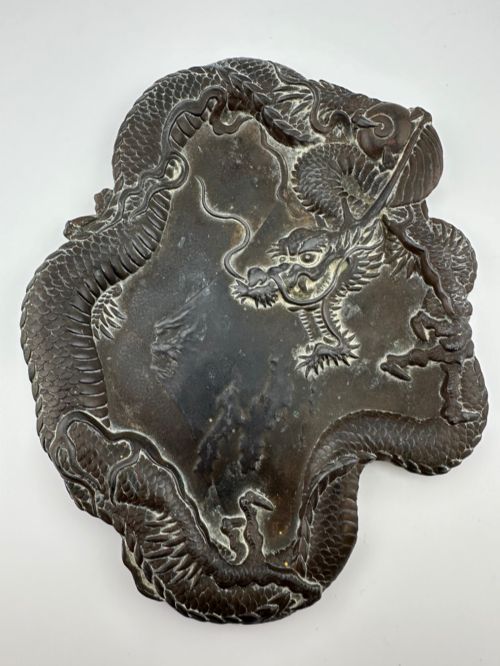
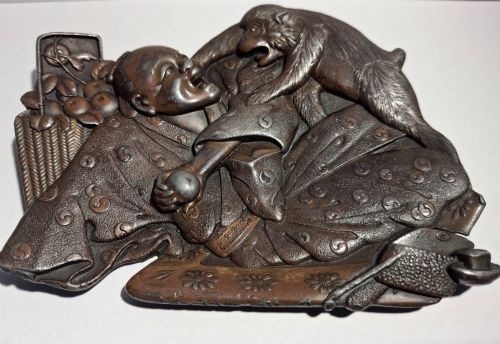
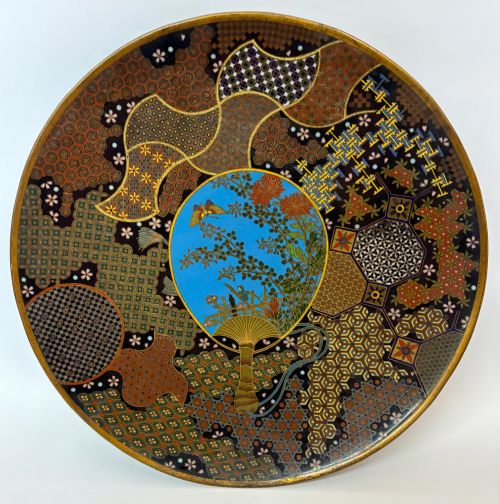


Japanese Bronze Plaque
A Japanese bronze plaque brings intricate Meiji craftsmanship and mixed-metal detailing into your home.
Japanese Bronze Plaque
When you search for a Japanese bronze plaque, you are looking at substantial metalwork shaped into decorative chargers, wall plates, and dishes. These objects date across the nineteenth century, spanning the Edo and Meiji periods.
You will most commonly encounter pieces formed of bronze, brass, and copper, often embellished with enamel, gold inlay, and intricate wirework. The forms range from small trinket dishes to massive chargers spanning forty centimetres.
The decorative subjects draw heavily from traditional motifs, depicting dragons, koi fish, birds, and chrysanthemums alongside auspicious symbols. Master craftsmen utilised techniques like Komai style inlay and cloisonne enamel to bring these subjects to life.
Materials and construction methods
The foundation of these works relies on cast or hammered metal bases, predominantly bronze and copper, sometimes paired with brass or wood. Artisans shaped these metals into substantial plates and chargers capable of holding complex surface treatments.
Surface ornamentation involved sophisticated mixed-metal techniques, including gold inlay and applied takazogan appliqués. Craftsmen also utilised cloisonne enamel and brass wire to create cellular designs filled with coloured pastes before firing.
Many items display specialised regional approaches, such as Komai style damascene work where fine threads of gold and silver are hammered into cross-hatched steel or bronze surfaces.
Japanese Bronze Plaque Retail Price Guide 2026
Typical asking prices for japanese bronze plaque among the pieces listed under this phrase on Sellingantiques today, from the lower quarter to the upper quarter. They describe what is for sale here now, not the wider market.
Listings feature items spanning the nineteenth century, with strong representation from the Meiji period and Victorian import era.
Distinguishing quality in nineteenth-century metalwork
Quality rests upon the precision of the metalwork and the complexity of the inlay. Pieces featuring multiple metallic alloys, deep relief appliqués, and finely hammered details demonstrate superior technical control.
The finesse of the enamel work dictates the standing of a charger or plaque. Uniform cells, clean wire borders, and smooth glazing separate standard production from masterwork examples.
Signatures inscribed by the maker provide a clear indication of provenance and elevated status within the period's output.
The Japanese Bronze Plaque Glossary
- Cloisonne
- An enamel technique where metal wire forms raised barriers on a metal surface to contain coloured pastes before firing. This method creates intricate patterned illustrations across chargers and plates.
- Meiji Period
- The era in Japanese history spanning from eighteen sixty-eight to nineteen twelve, marked by immense artistic output and the opening of trade with the West. Much of the surviving decorative metalwork originates from this time.
- Takazogan
- A high-relief metal inlay technique where decorative motifs stand proud of the background plate. This method adds significant depth and tactile quality to mixed-metal plaques.
- Totai Shippo
- A specific Japanese technique involving enamel applied over a porcelain body rather than traditional metal. It yields translucent decorative panels with distinctive textures.
- Komai Style
- A method of damascene inlay associated with Kyoto metalworkers, featuring intricate geometric and pictorial designs in gold and silver upon darkened metal. It defines many high-end Victorian-era imports.
Japanese Bronze Plaque: Frequently Asked Questions
How do I hang a heavy charger?
Large chargers require robust, adjustable brass plate hangers designed to distribute weight safely across the rim.
Ensure the wall fixing secures directly into a stud or uses heavy-duty wall anchors suitable for substantial metal objects.
Are these pieces signed?
Certain plaques and chargers bear artist signatures or workshop marks incised into the base or integrated within the design.
Signatures typically appear on high-status Meiji period metalwork and cloisonne enamel pieces.
What is mixed-metal work?
Mixed-metal work combines bronze, copper, brass, and precious metals like gold within a single decorative composition.
Artisans used this technique to create naturalistic colour variation across flora, fauna, and figural scenes.
How do I clean antique bronze?
Dust gently with a soft, dry brush to prevent accumulation in recessed enamel channels and wirework.
Avoid chemical polishes and water, as moisture damages vulnerable enamel surfaces and removes natural patination.