







Japanese Bronze Burner
A Japanese bronze burner brings centuries of metalworking skill into your room, offering sculptural form and traditional fragrance.
Japanese Bronze Burner
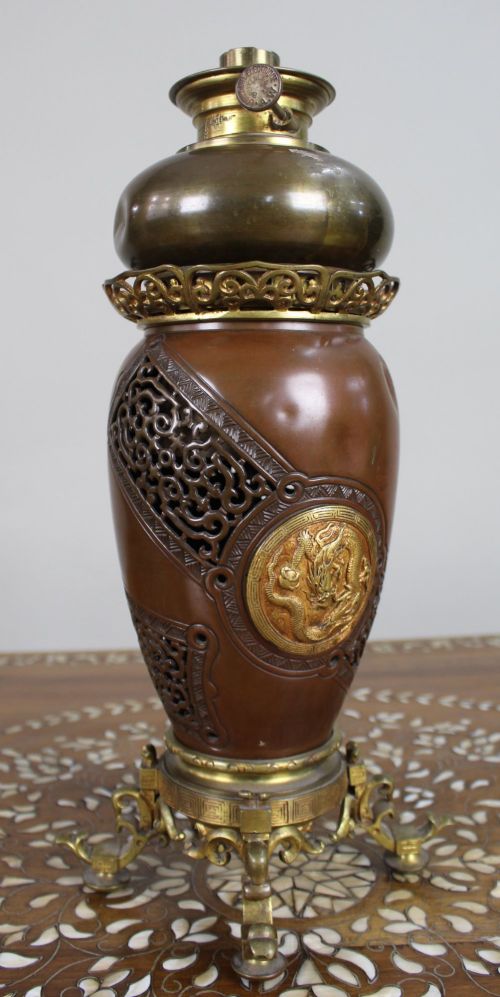
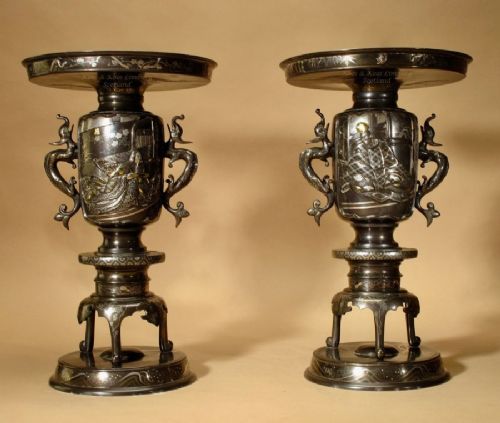
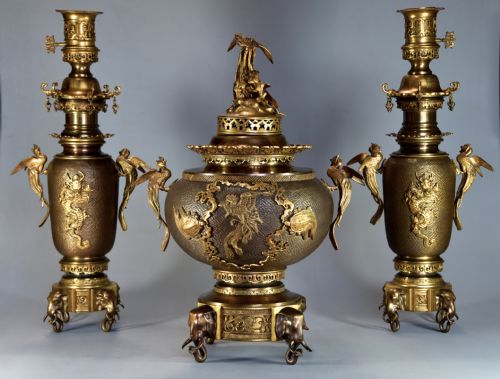
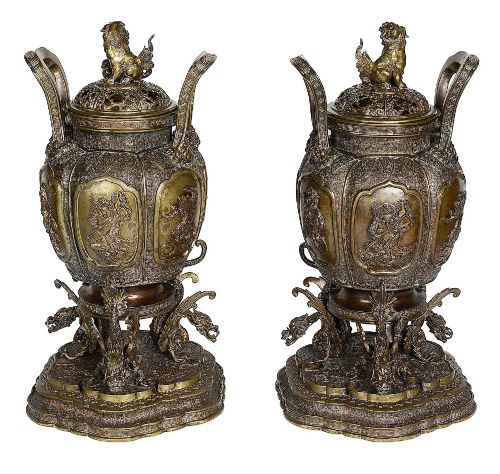
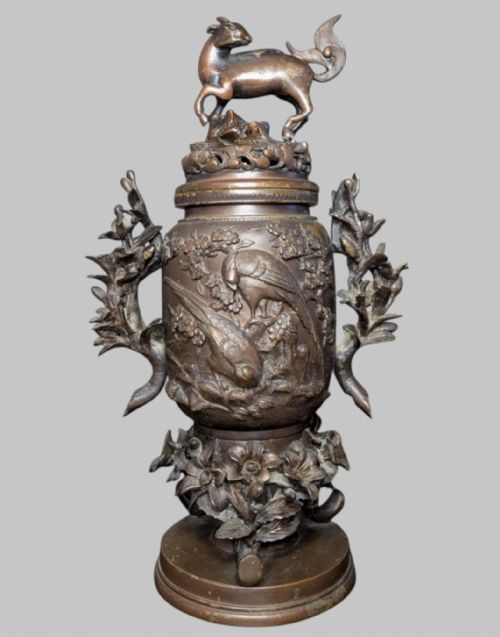
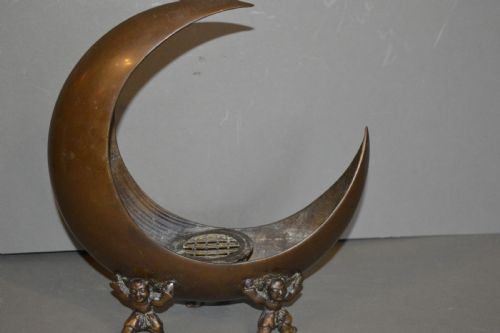
When you search for a Japanese bronze burner, you encounter vessels designed to hold incense or scent, spanning the Edo and Meiji periods alongside later 20th-century examples. These pieces take various forms, including lidded urns, hanging boats, and censer bowls featuring sculptural elements like goat finials or dragon motifs.
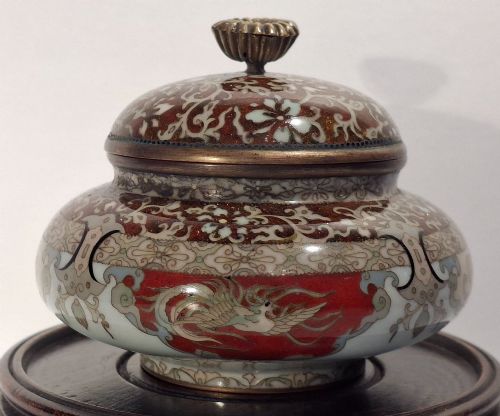
You are most likely to meet Meiji period examples on this page, often decorated with intricate detailing or combined with cloisonne enamel. Earlier Edo period pieces also appear, alongside French Japonisme interpretations influenced by eastern design.
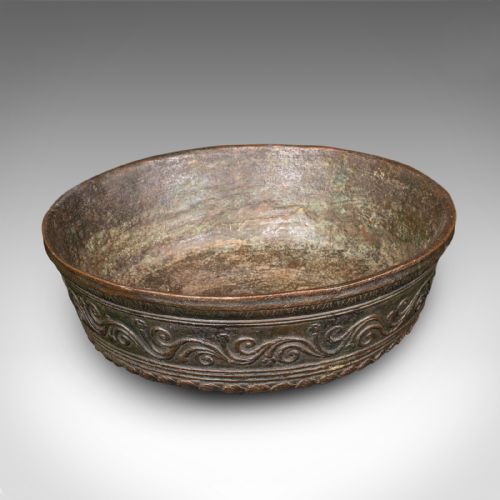
Beyond standard burners, related forms such as oil lamps, decorative bowls, vases, and jardinieres frequently share the material and stylistic language of these metalworking traditions.
Materials and construction methods
Metalworkers utilised bronze, brass, and copper to cast these vessels, frequently applying patination to achieve deep, rich surface tones. Gilt bronze and surface finishes enhance the tactile quality of the metal.
Surface enrichment often involves gold inlay and silver inlay, creating fine decorative patterns directly into the bronze ground. Cloisonne enamel panels are also incorporated into the bodies of specific censers and koro.
Finials and handles are cast separately and attached with precision, while lidded urns and hanging boat censers require careful balancing of components for domestic display.
Japanese Bronze Burner Retail Price Guide 2026
Typical asking prices for japanese bronze burner among the pieces listed under this phrase on Sellingantiques today, from the lower quarter to the upper quarter. They describe what is for sale here now, not the wider market.
Materials paired with bronze across the inventory include silver inlay, gold inlay, and vibrant cloisonne enamel.
Distinctions in craftsmanship
The sophistication of the casting work separates standard production from superior pieces, particularly in the sharpness of relief decoration and the balance of sculptural finials like goats or dragons. Finer examples display meticulous attention to detail in every cast element.
The integration of precious metal inlays dictates quality at the upper end, where gold and silver wire creates precise, secure patterns across the patinated bronze. Enamel work similarly varies, with exceptional cloisonne showing vibrant colour control and flawless cell work.
Overall structural integrity and the subtlety of the patination define the enduring appeal of each vessel, distinguishing thoughtful studio output from routine workshop items.
Tsukamoto Hikokichi·Kizan
The Japanese Bronze Burner Glossary
- Koro
- A traditional Japanese incense burner, frequently fitted with a pierced lid to allow scented smoke to escape. These vessels often stand on small feet and feature sculptural handles or finials.
- Meiji Period
- The era in Japanese history lasting from 1868 to 1912, characterised by opening trade with the West and exceptional technical mastery in metalwork. Pieces from this time often show ambitious decorative schemes.
- Edo Period
- The period spanning from 1603 to 1867, preceding the Meiji era and known for restrained, classical forms such as archaic bronze bowls. Items from this time display distinct traditional patination.
- Patinated Bronze
- Metal treated with chemicals or heat to produce a stable, decorative surface coloration ranging from deep brown to dark green. This finish protects the bronze while enhancing its visual depth.
- Cloisonne Enamel
- A technique where enamel pastes are applied within compartments formed by soldered metal wires on a bronze or copper base. Firing fuses the glass paste to the metal walls.
- Japonisme
- A 19th-century European artistic movement inspired by Japanese aesthetics, leading Western makers to produce objects imitating eastern forms and techniques. French iterations frequently combined gilt bronze with patinated surfaces.
Japanese Bronze Burner: Frequently Asked Questions
What is a Japanese bronze burner used for?
These vessels were primarily made to burn incense during traditional ceremonies or for perfuming domestic interiors. The pierced lids allowed fragrant smoke to disperse evenly through the room.
Over time, many of these pieces transitioned into purely decorative objects, valued for their sculptural presence and metalwork craftsmanship.
How do I distinguish Edo from Meiji period pieces?
Edo period vessels often feature simpler, more archaic forms with subdued patination and restrained decorative elements. They reflect older traditions of metal casting.
Meiji period pieces tend to display more elaborate surface ornamentation, including intricate gold and silver inlay, or combinations with cloisonne enamel, driven by international exhibition demands.
How should I clean a antique bronze burner?
You should only dust antique bronze gently with a dry, soft cloth to preserve the historic patina. Avoid using metal polishes, water, or chemical cleaners, which can strip the surface finish.
Allowing the natural ageing process to remain intact maintains both the appearance and the character of the metal.