




Japanese Bamboo Furniture
Japanese bamboo furniture brings the exotic geometry of the Aesthetic Movement and Victorian Chinoiserie directly into your home.
Japanese Bamboo Furniture
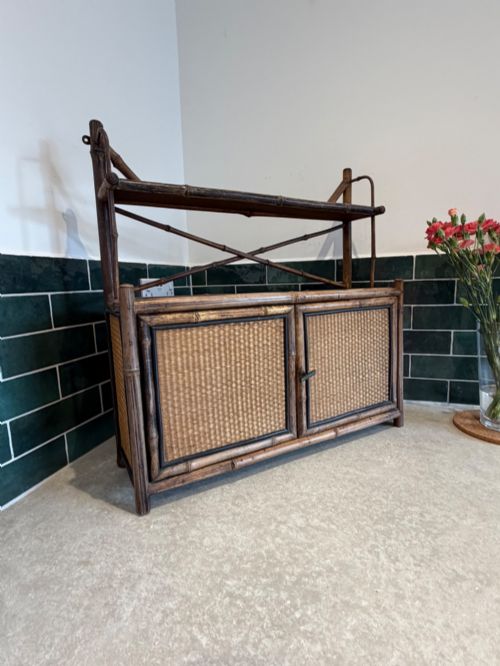
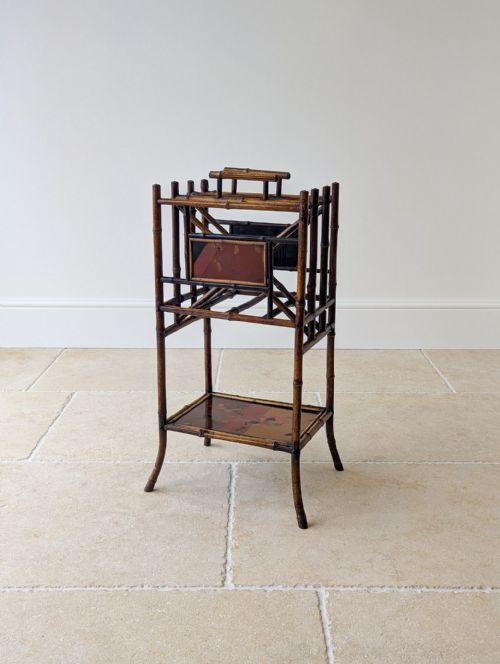
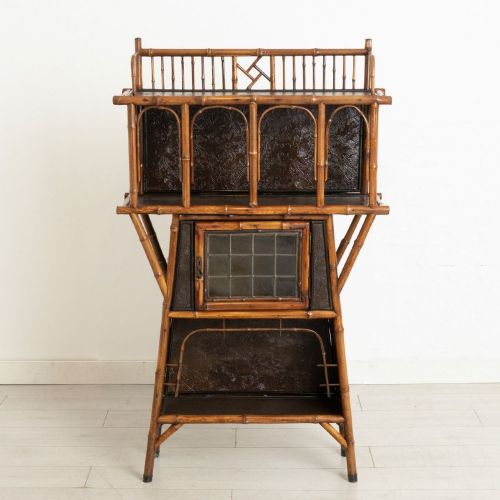
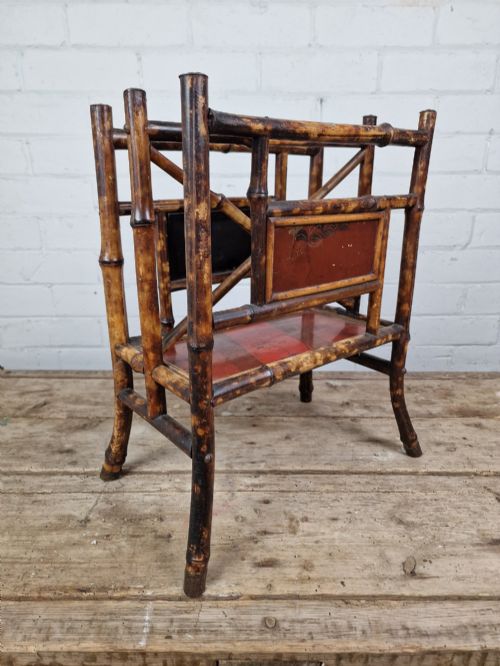
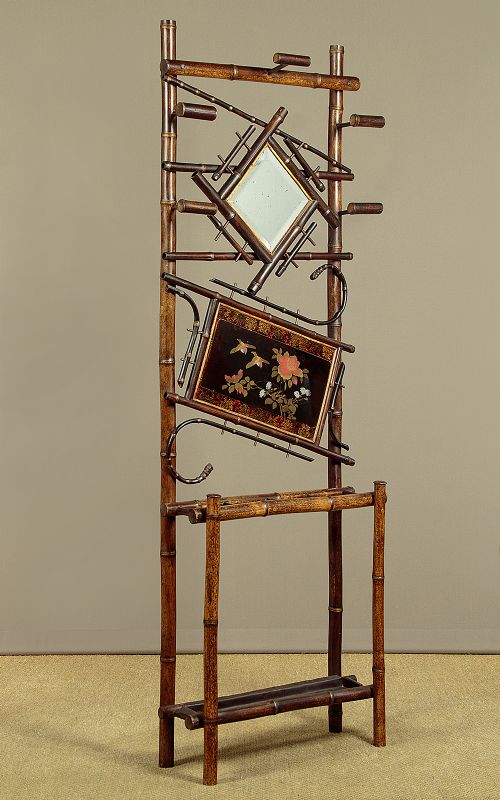
When you search for Japanese bamboo furniture, you encounter items designed during the nineteenth and early twentieth centuries under the influence of Eastern design. These pieces include display cabinets, etageres, hall stands, and magazine racks that capture the Victorian fascination with exotic interiors.
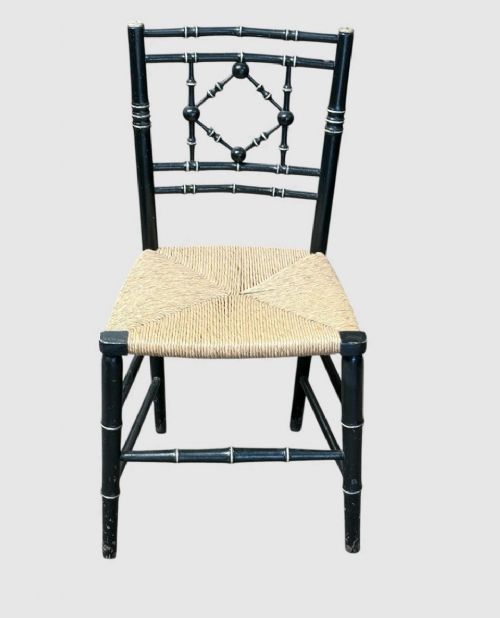
The objects on this page largely represent the Victorian Aesthetic Movement, utilising tiger bamboo and ebonised wood alongside lacquer panels and embossed paper. Forms range from half-moon console tables to corner shelves and side chairs.
Makers of the period adapted traditional bamboo into practical domestic items, sometimes incorporating cane seats or drop leaves. The resulting forms combine structural lightness with decorative panels that evoke Oriental aesthetics.
Materials and construction methods
The construction relies heavily on natural bamboo and tiger bamboo, selected for both flexibility and distinctive patterning. Workshops combined these canes with wood, metal fixings, and ebonised framing to create stable joints and decorative contrast.
Surfaces often feature lacquered panels or embossed paper inserts depicting Oriental motifs. These decorative elements were integrated into cabinets, etageres, and hall stands to enhance the visual depth of the bamboo framework.
Japanese Bamboo Furniture Retail Price Guide 2026
Typical asking prices for japanese bamboo furniture among the pieces listed under this phrase on Sellingantiques today, from the lower quarter to the upper quarter. They describe what is for sale here now, not the wider market.
Even a humble half-moon console table can transport a Victorian hallway straight to the far east.
Judging quality in bamboo pieces
Quality in these items rests on the integrity of the cane framework and the complexity of the internal joinery. Pieces that retain their original lacquer panels, glass inserts, or embossed paper show a higher degree of original craftsmanship.
The distinction between standard production and finer work often lies in the selection of tiger bamboo and the precision of the carved wooden components. Attribution to specific firms like Liberty and Co elevates the standing of an individual cabinet or etagere.
Leonard Wyburd for Liberty and Co
The Japanese Bamboo Furniture Glossary
- Aesthetic Movement
- A late nineteenth-century design style that emphasised visual beauty over narrative subject matter. It heavily influenced the adoption of Japanese motifs in British furniture.
- Tiger bamboo
- A distinctive variety of bamboo featuring natural mottled markings resembling tiger stripes. It was frequently chosen for decorative effect in Victorian furniture.
- Etagere
- A set of open shelves for displaying ornaments or small objects. These tiered stands were popular in the nineteenth century for showcasing collections.
- Canterbury
- A low stand fitted with partitions for holding sheet music, magazines, or newspapers. In bamboo examples, these racks often combine lightweight framing with compartmentalised storage.
- Chinoiserie
- European artistic style reflecting Chinese and broader East Asian artistic influences. It appears in nineteenth-century British pieces through decorative lacquer and scenic panels.
Japanese Bamboo Furniture: Frequently Asked Questions
What is Japanese bamboo furniture?
These pieces are nineteenth-century domestic furnishings created in Britain during the height of the Aesthetic Movement. They combine natural or tiger bamboo with imported decorative motifs to satisfy Victorian tastes for exotic interior design.
Items range from practical magazine racks and hall stands to elaborate display cabinets and etageres. Each piece reflects a blend of Eastern visual culture and European furniture-making techniques.
How were these pieces used?
Victorian households utilised these items for both storage and display in reception rooms, halls, and parlours. Cabinets and etageres held ornaments, while hall stands provided umbrella storage and hanging space for coats.
Smaller items like side tables, console tables, and canterburys served functional roles in daily domestic life. Their lightweight construction allowed owners to move them easily about the home.
How do I live with bamboo furniture?
Living with these items requires placing them away from direct heat sources and extreme humidity to protect the natural bamboo canes and lacquer panels. Regular dusting with a dry cloth helps maintain the finish of the wood and paper elements.
Because the construction is inherently lighter than solid oak or mahogany, owners should handle drop leaves and cabinet doors with care. They pair well with both period interiors and modern minimalist spaces.
How do I identify periods and styles?
Dating relies on stylistic markers such as the presence of Aesthetic Movement motifs, ebonised wood framing, and specific decorative techniques like lacquered panels. Pieces from the late nineteenth century frequently carry labels or attribution to firms operating in London.
Materials also offer clues, as tiger bamboo and embossed paper became particularly fashionable during the Victorian era. Structural forms like the half-moon console or tiered etagere point towards specific decades of production.