




Japanese Aesthetic Table
These japanese aesthetic table pieces bring late nineteenth century craftsmanship and Anglo-Japanese design together for any interior.
Japanese Aesthetic Table
A japanese aesthetic table encompasses side pieces, occasional surfaces, plant stands, and desks created during the nineteenth century and into the early twentieth century. These forms reflect the profound influence of Japanese art on British design during the Victorian era and the subsequent Arts and Crafts movement.
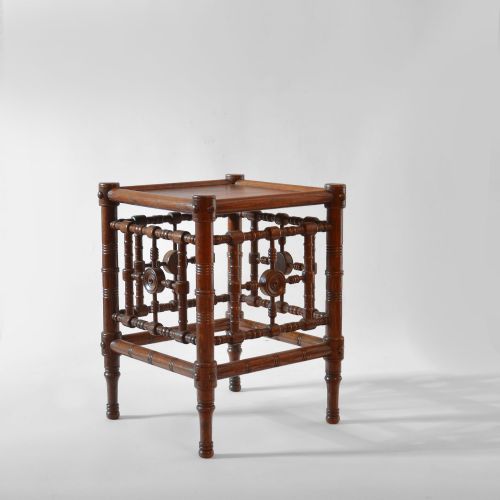
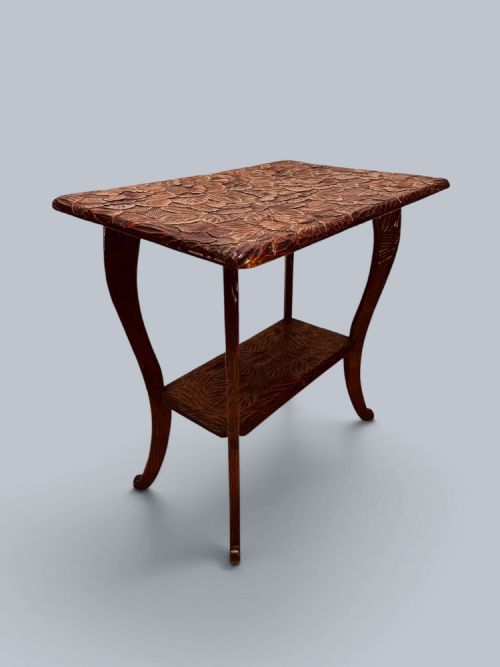
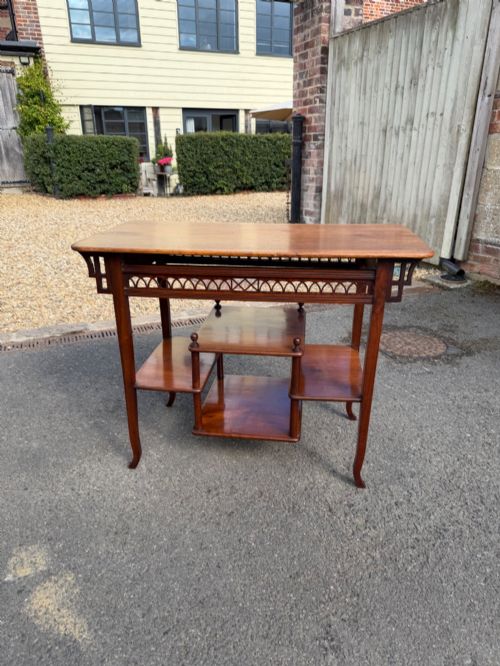
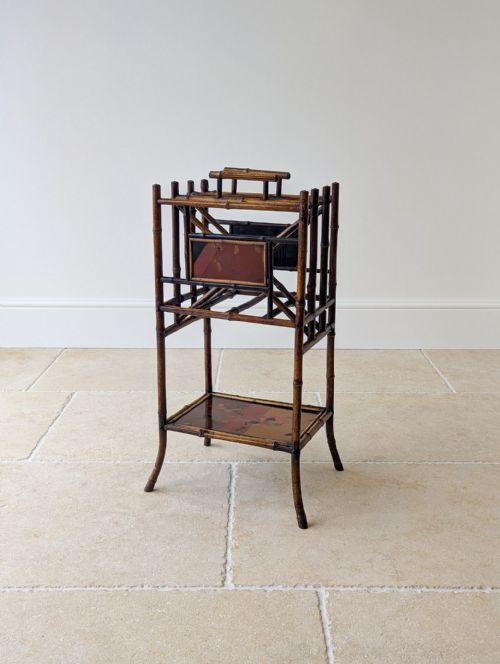
The pieces appearing on this page span diverse practical roles within the home, ranging from compact card tables to larger writing desks and two-tier display surfaces. Makers of the period drew upon Anglo-Japanese principles, Chinoiserie accents, and bamboo constructions to shape domestic furniture.
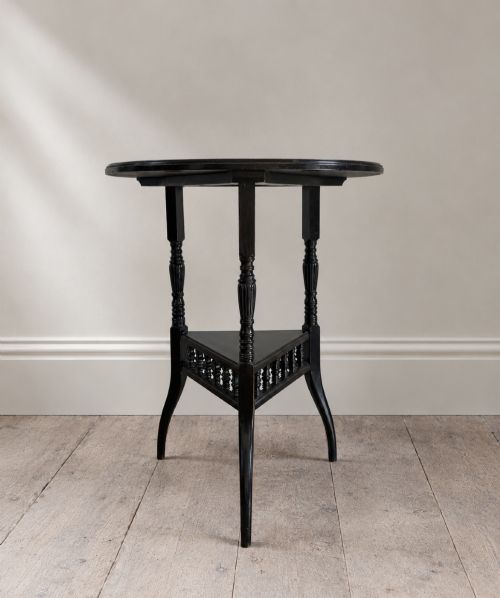
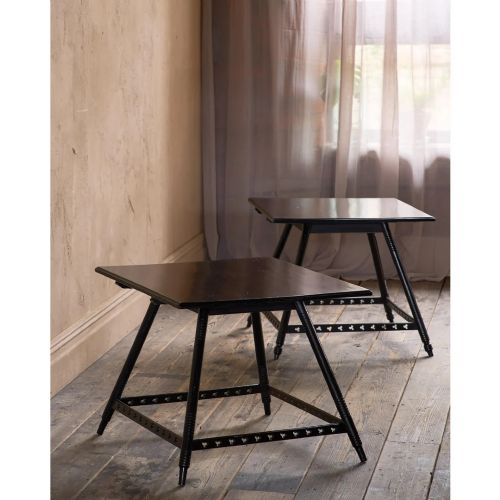
Buyers will most frequently encounter ebonised wood and bamboo frameworks across these listings, often echoing the distinctive structural lines associated with designers like E. W. Godwin. Such tables serve as functional display areas or writing spaces while retaining a pronounced stylistic identity.
Assessing quality in Anglo-Japanese furniture
The distinction between standard commercial output and exceptional cabinet-making lies in the precision of the joinery and the integrity of the materials. Superior pieces display meticulous attention to ebonised finishes, secure bamboo bindings, and balanced proportions across multi-tiered surfaces.
Provenance and association with known retailers or designers elevate the standing of a piece within this tradition. Workshop execution, such as the refined framing found in Godwin-inspired designs or Liberty productions, determines the overall refinement of the item.
Japanese Aesthetic Table Retail Price Guide 2026
Typical asking prices for japanese aesthetic table among the pieces listed under this phrase on Sellingantiques today, from the lower quarter to the upper quarter. They describe what is for sale here now, not the wider market.
Blyth & Son·Minton·Liberty & Co
The Japanese Aesthetic Table Glossary
- Ebonised wood
- Timber treated with a dark stain or finish to imitate ebony. This technique was widely employed in nineteenth-century furniture to create a stark, dark surface.
- Aesthetic Movement
- A late nineteenth-century British movement that prioritised aesthetic value over narrative or moral message in art and design. It drew heavily on Japanese motifs and craftsmanship.
- Anglo-Japanese style
- A design approach combining traditional British furniture forms with Japanese artistic influences, characterised by linear simplicity and asymmetric arrangements.
- Canterbury
- A low open-compartment stand originally designed for holding sheet music or books. In this context, versions are constructed from bamboo or ebonised wood.
- Bonheur du jour
- A small, light lady's writing desk featuring a raised cabinet or tier with drawers and pigeonholes above the main writing surface.
Japanese Aesthetic Table: Frequently Asked Questions
How do I style a japanese aesthetic table?
These tables pair well with minimalist interiors or rooms featuring collected antiques. Their slender silhouettes and dark finishes allow them to function as striking accent pieces.
Keep surface objects sparse to let the structural lines and material details remain visible. Placing a small ceramic or plant on the lower tier enhances the decorative balance.
Were these tables made in Japan?
The pieces listed here were manufactured in Britain during the Victorian and Edwardian eras. British designers and manufacturers drew inspiration from Japanese aesthetics rather than importing the furniture directly.
This fusion resulted in a distinct Anglo-Japanese style that adapted Eastern motifs to Victorian domestic requirements.
How do I identify an E. W. Godwin style table?
Godwin-inspired tables typically feature slender ebonised framing, square or rectangular proportions, and multiple tiers for display. The construction avoids heavy ornamentation in favour of clean, architectural lines.
Many examples reflect the designer's interest in Japanese printmaking and interior arrangements.
Can I use an antique writing table daily?
Most occasional tables and desks from this period are robust enough for gentle everyday use. Care should be taken with older surfaces to prevent moisture marks or deep scratches.
Using coasters and placing the table away from direct heat sources helps preserve the ebonised finish and polished wood.