



Japanese Aesthetic Cabinet
A japanese aesthetic cabinet brings the bold, imported lines of late nineteenth-century japonism straight into a room.
Japanese Aesthetic Cabinet
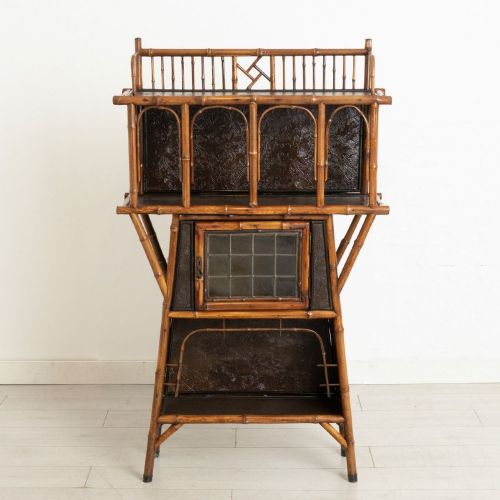
When you search for a japanese aesthetic cabinet, you find furniture born from Britain's intense fascination with Japanese design during the Victorian era. These pieces range from bamboo display units and walnut cupboards to wall-hung cabinets and ebonised sideboards.
You are most likely to meet ebonised wood and bamboo creations dating from eighteen eighty to eighteen ninety. These items often incorporate gilt highlights and porcelain elements to capture an exotic, asymmetrical look.
The forms vary from small hanging shelves to substantial display cabinets and bonheur du jour desks. Makers of the period adapted traditional British furniture types to showcase newly imported decorative motifs.
How they were made
Craftsmen built these cabinets using ebonised wood, mahogany, walnut, and bamboo. The framework frequently received dark or black finishes to mimic Japanese lacquerware and provide high contrast for gilt highlights.
Makers integrated varied materials like brass hardware, glass panels, and porcelain plaques into the wooden structures. These combinations required precise joinery to support delicate bamboo stalks alongside heavier timber frames.
Japanese Aesthetic Cabinet Retail Price Guide 2026
Typical asking prices for japanese aesthetic cabinet among the pieces listed under this phrase on Sellingantiques today, from the lower quarter to the upper quarter. They describe what is for sale here now, not the wider market.
Listings show bamboo, ebonised wood, mahogany, and walnut as the primary structural materials.
What varies in quality
The distinction between standard production and top-tier pieces rests on the ambition of the design and the precision of the cabinetwork. Pieces tied to known makers or specific architectural drawings display sharper carving and more confident handling of exotic materials.
Surface finish and material selection dictate the overall presence of the piece. Smoother ebonising, intact gilt highlights, and well-chosen bamboo or hardwood sections separate ordinary cupboards from exceptional examples of the movement.
Leonard Wyburd·Garnett and Sons·E W Godwin·Gabriel Viardot
The Japanese Aesthetic Cabinet Glossary
- Aesthetic Movement
- A late nineteenth-century design current prioritising visual beauty over narrative or moral function. It drew heavily on Japanese art and craftsmanship.
- Ebonised wood
- Timber treated with chemical stains or dark paint to imitate costly ebony. This finish was a staple of Anglo-Japanese furniture.
- Japonism
- The influence of Japanese art on Western culture during the Victorian era. It shaped the decoration of ceramics, textiles, and cabinets alike.
- Bonheur du jour
- A light lady's writing desk featuring a small cabinet or set of shelves on top. These desks often adopted the asymmetrical lines of the Aesthetic period.
Japanese Aesthetic Cabinet: Frequently Asked Questions
What is a japanese aesthetic cabinet?
A japanese aesthetic cabinet is a Victorian storage or display piece influenced by Japanese design principles. These items feature dark ebonised finishes, bamboo structures, or asymmetrical arrangements.
Craftsmen built them during the late nineteenth century to satisfy British demand for exotic, decorative furnishings. They serve as both functional storage and striking focal points in a room.
How do I style a japanese aesthetic cabinet?
These cabinets work well against plain or softly coloured walls that allow the dark wood or bamboo frames to stand out. Use the display shelves for small ceramics or glassware to mirror their original Victorian contexts.
Keep surrounding furniture relatively simple so the intricate lines and gilt details remain the visual centrepiece. They fit comfortably into both traditional period rooms and cleaner, modern interiors.
How can I tell the period?
You can date these cabinets by examining the materials, construction methods, and hardware typical of the late nineteenth century. Ebonised finishes, bamboo framing, and specific Aesthetic Movement motifs point directly to the Victorian era.
Makers often utilised walnut and mahogany alongside applied brass details characteristic of eighteen eighty to eighteen ninety production. Structural joints and drawer construction methods further confirm this nineteenth-century window.
Were these cabinets made in Britain?
Many of these pieces were manufactured in Britain by firms and designers interpreting imported Japanese motifs. British workshops produced ebonised sideboards, bamboo display cases, and hanging wall cabinets locally.
At the same time, French makers like Gabriel Viardot also created influential japonism furniture that crossed the channel. This created a diverse Anglo-French market for Asian-inspired European design.