



Japanese Aesthetic Bamboo
These Japanese aesthetic bamboo pieces bring nineteenth-century British design into your home with organic plant forms and distinctive dark finishes.
Japanese Aesthetic Bamboo
When you search for Japanese aesthetic bamboo, you are looking at nineteenth-century furniture and decorative items that cross British Aesthetic movement tastes with Eastern motifs. These pieces combine lightweight natural supports with dark lacquered panels, glazed ceramics, and embossed paper inserts.
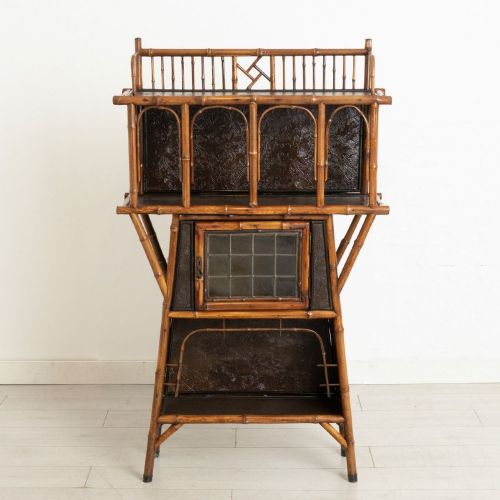
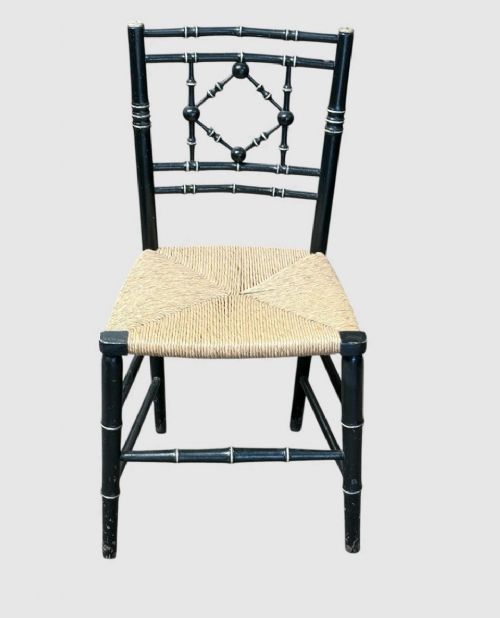
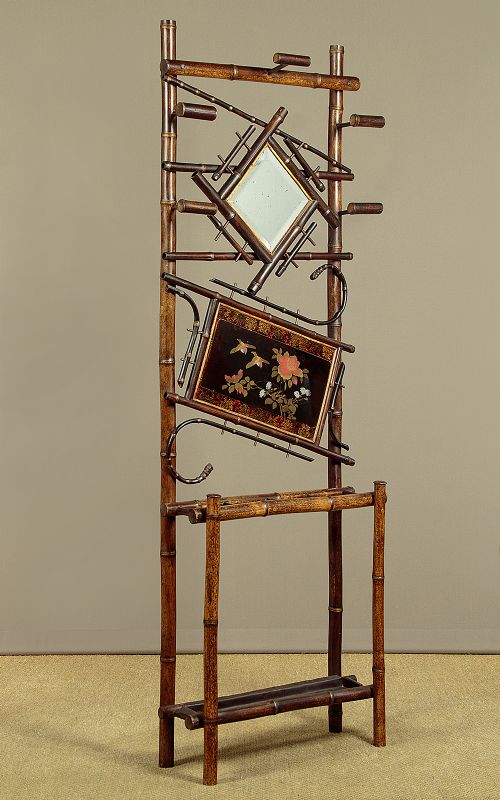
You are most likely to meet practical household furniture on this page, including magazine racks, hall stands, and display cabinets. These items range from compact occasional tables to substantial hall benches with cane seats.
The objects span several decades from the mid-nineteenth century into the early twentieth century, carrying the stylistic hallmarks of the Victorian era. Makers adapted natural plant stems to create rigid frames for domestic storage and display.
How they were made
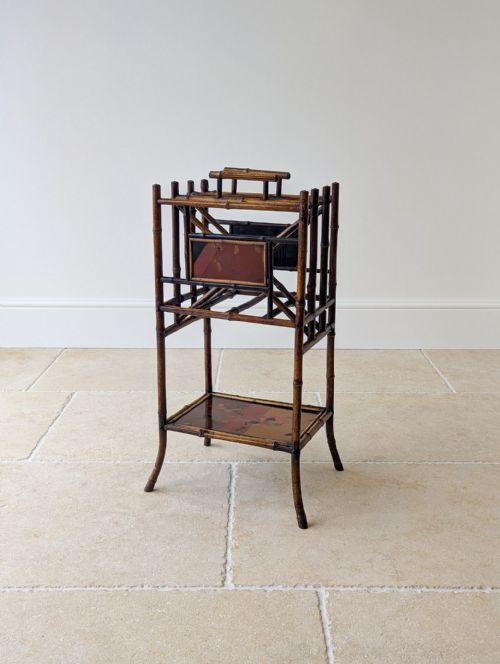
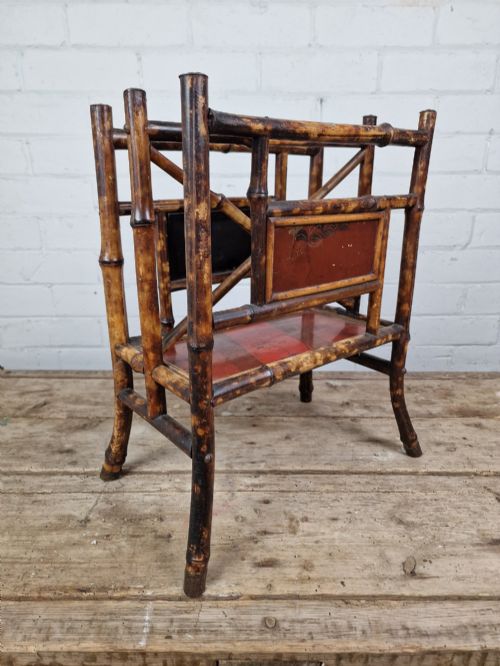
Craftsmen utilised natural bamboo and tiger bamboo to construct lightweight structural frameworks for tables, stands, and cabinets. These stems were bent, joined, and lacquered to provide both rigidity and decorative contrast.
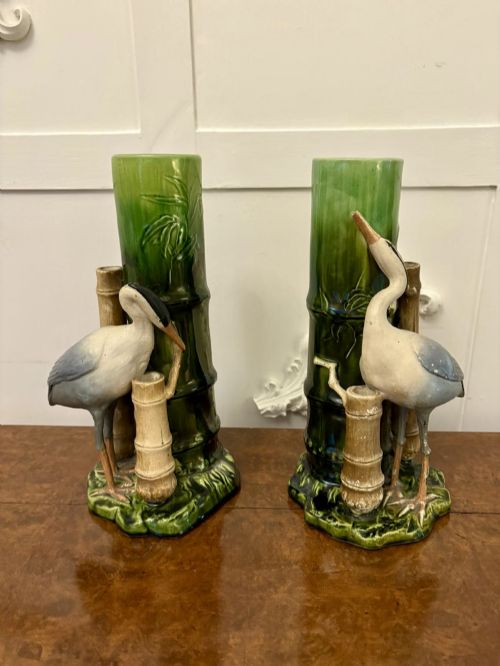
Makers integrated varied materials into the wooden frames, including earthenware and glazed ceramic panels from potteries like Bretby, alongside embossed paper and glass. Metal stud work and applied lacquer panels further decorated the surfaces of hall stands and cuffs.
Japanese Aesthetic Bamboo Retail Price Guide 2026
Typical asking prices for japanese aesthetic bamboo among the pieces listed under this phrase on Sellingantiques today, from the lower quarter to the upper quarter. They describe what is for sale here now, not the wider market.
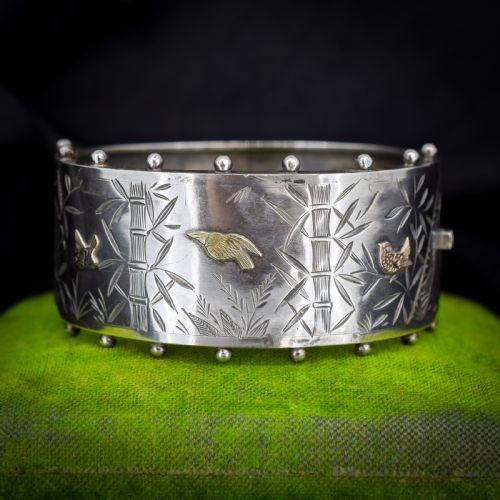
Victorian makers even turned tough bamboo into personal adornment, creating studded metal-trimmed cuff bracelets to wear on your wrist.
What varies in quality
Quality rests on the complexity of the construction and the integration of secondary decorative elements. Simpler items rely on basic bamboo frames, whereas superior examples incorporate fitted glazed ceramics, lacquered panels, and detailed carving.
The inclusion of specific designer attributions, such as work linked to Leonard Wyburd for Liberty and Co, elevates certain cabinets and stands above standard commercial output. The condition of delicate cane seats, embossed paper, and applied lacquer also dictates the standing of individual pieces.
Leonard Wyburd·Liberty and Co·Bretby
The Japanese Aesthetic Bamboo Glossary
- Aesthetic Movement
- A nineteenth-century design current that prioritised visual beauty over narrative or moral function. It drew heavily on Japanese art and natural forms.
- Tiger Bamboo
- A specialised variety of bamboo featuring dark mottled patterns across the stem. It was frequently selected for its striking visual texture in furniture.
- Canterbury
- A low multi-section stand originally designed for holding sheet music or books. Nineteenth-century makers adapted this form into magazine racks.
- Hall Stand
- A tall piece of furniture placed near an entrance for hanging coats and storing umbrellas. These often incorporated mirrors, hooks, and umbrella wells.
Japanese Aesthetic Bamboo: Frequently Asked Questions
What is Japanese aesthetic bamboo?
These items are nineteenth-century furnishings that combine British Aesthetic movement design with Eastern decorative motifs. They utilise natural plant stems alongside lacquered panels and ceramic inserts.
Most surviving examples date from the Victorian period through the early twentieth century. They include functional household objects such as magazine racks, hall stands, and display cabinets.
How do I clean bamboo furniture?
Dust these items gently with a dry cloth to protect the natural fibres and applied finishes. Avoid soaking the bamboo or using harsh modern cleaning chemicals.
Keep the pieces away from direct sunlight and damp environments to preserve the lacquer, glass, and ceramic elements. Natural materials respond well to stable indoor temperatures.
Are these items purely decorative?
Many pieces were designed for active domestic use as storage furniture, seating, and display units. Items like hall benches, side tables, and canterburys served practical daily functions in Victorian hallways and parlours.
Smaller objects, such as ceramic vases and cuffs, were intended for personal adornment or ornamental display. They bring period character into modern rooms while retaining their original utility.
How can I tell the period?
Dating relies on construction methods, materials, and stylistic markers associated with the nineteenth century. Pieces linked to the Aesthetic movement often feature specific Japanese-inspired decorative details.
Attributions to firms like Liberty and Co or potteries such as Bretby help establish a precise timeframe. The presence of tiger bamboo and specific lacquer techniques also points toward late Victorian production.