

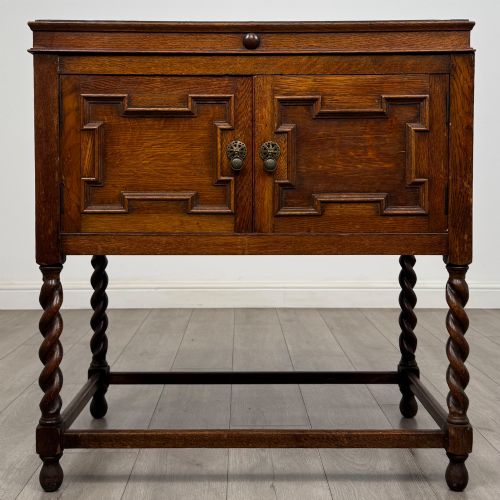


Jacobean Style Credenza
A Jacobean style credenza brings solid oak presence and robust historical character to a room, offering both generous storage and rich carved detail.
Jacobean Style Credenza
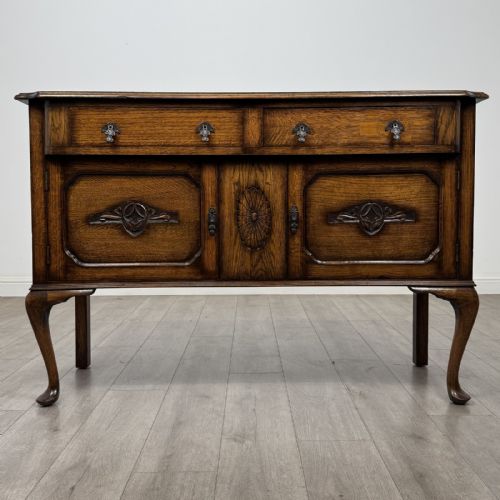
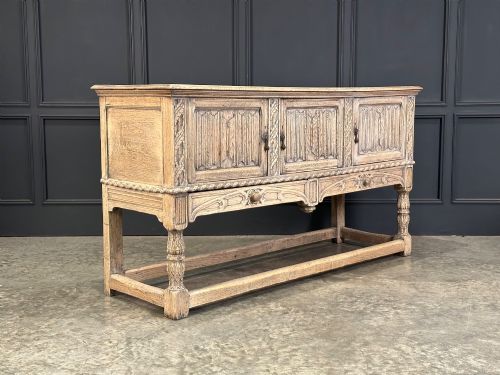
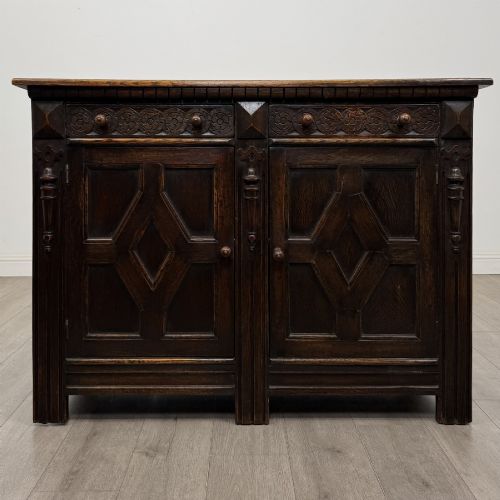
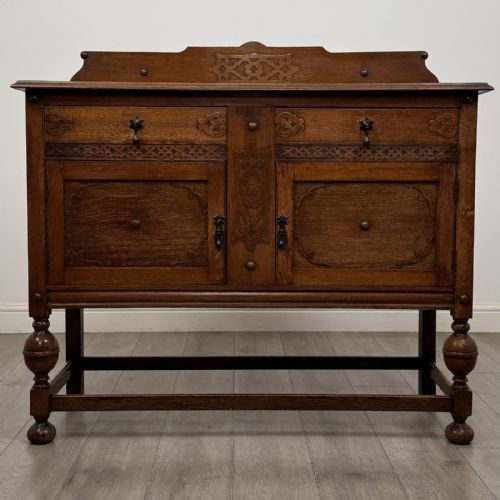
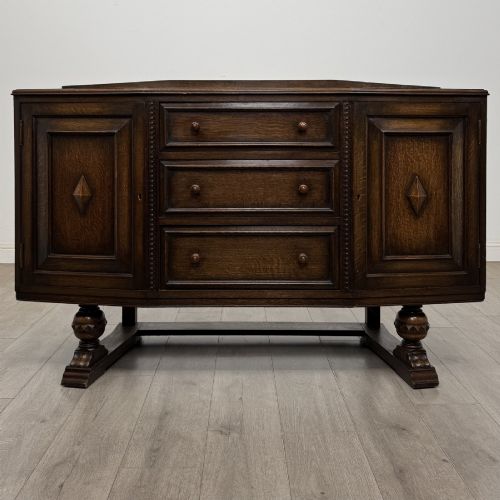
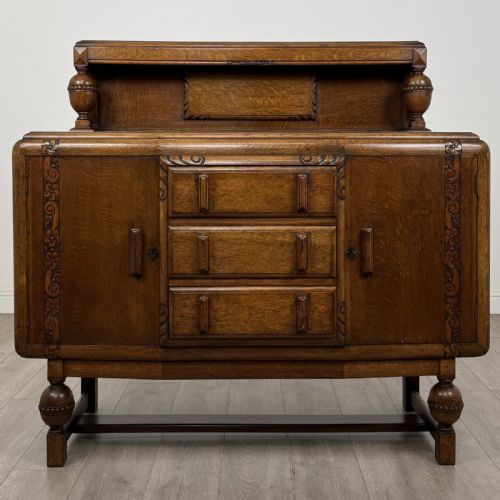
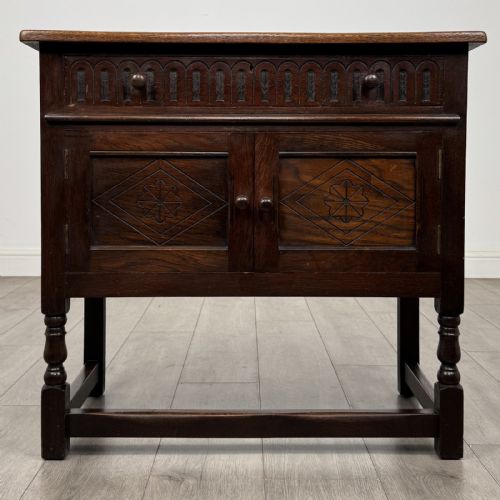
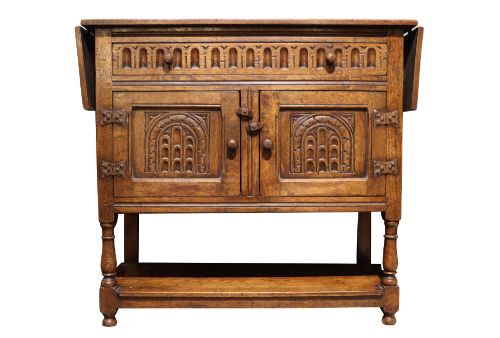
When buyers search for a jacobean style credenza, they encounter substantial oak storage pieces spanning several distinct periods and revivals. The listings show forms such as sideboards, side cabinets, court cupboards, and dresser bases rather than standard modern credenzas. These items draw heavily on seventeenth-century proportions and joinery methods.
The pieces on this page are predominantly twentieth-century revivals from the Edwardian era and the nineteen-twenties, alongside genuine seventeenth-century examples and Victorian interpretations. Common variants include golden oak side cabinets and heavily carved court cupboards with panelled doors. Buyers frequently choose these forms to anchor a dining room or hallway with period gravity.
Styles crossover between Jacobean Revival, Tudor Revival, Gothic Revival, and Flemish Baroque, reflecting how nineteenth and twentieth-century makers reinterpreted older motifs. A buyer might select a compact side cabinet of small proportions or a large livery cabinet depending on spatial requirements. Every piece relies on heavy timber construction to create an authoritative architectural statement.
What distinguishes finer pieces
Quality in these timber cabinets rests upon the crispness of the hand-carving and the density of the oak selected by the maker. Superior examples display deeply chiselled foliage, symmetrical panels, and tightly fitted joints without recourse to modern fasteners. The depth of the natural patina on the golden oak further separates distinguished items from simpler production pieces.
Proportion and scale dictate the visual success of the piece, with better balanced sideboards offering harmonious drawer arrangements and well-scaled cornices. The integration of period-appropriate brass or iron mounts enhances the overall authenticity and tactile appeal. Poorer examples often feature flat, mechanical milling instead of animated, three-dimensional carving.
Jacobean Style Credenza Retail Price Guide 2026
Typical asking prices for jacobean style credenza among the pieces listed under this phrase on Sellingantiques today, from the lower quarter to the upper quarter. They describe what is for sale here now, not the wider market.
Some oak court cupboards conceal secret compartments behind their carved foliage where generations of owners hid spare keys and small silver spoons.
The Jacobean Style Credenza Glossary
- Court cupboard
- A heavy enclosed piece of furniture featuring upper and lower tiers used historically for displaying plate and storing provisions. These sturdy wooden cupboards often feature elaborate carved supports and panelled doors.
- Dresser base
- A long low wooden cabinet containing multiple drawers above cupboards, originally used in kitchens for food preparation and serving. They form a staple category within early oak furniture.
- Linenfold
- A style of relief carving applied to wooden panels that imitates folded linen cloth. This technique gained popularity in late medieval and Tudor joinery.
- Flemish Baroque
- An ornate European design style characterised by exuberant scrolling foliage, rich carvings, and dramatic volumetric forms. It heavily influenced later revival side cabinets.
- Golden oak
- A bright, warm timber tone typical of Edwardian and early twentieth-century furniture production. It highlights the natural medullary rays within quartersawn oak boards.
Jacobean Style Credenza: Frequently Asked Questions
How do I date an oak sideboard?
Dating requires examining the construction methods, tool marks, timber selection, and hardware style. Edwardian and nineteen-twenties revivals often feature lighter golden oak and machine assistance alongside hand-carving.
Seventeenth-century originals show entirely hand-wrought joinery, peg construction, and deep natural oxidation acquired over centuries of use and exposure.
Where should I place a heavy oak cabinet?
These substantial oak pieces suit dining rooms as sideboards for serving and storage, or spacious hallways and living areas where their architectural presence anchors the room. Ensure the floor can support the significant weight of solid timber.
Keep them away from direct heat sources and strong sunlight to protect the finish and prevent the oak from drying out or splitting.
What is the difference between a court cupboard and a sideboard?
A court cupboard is a formal enclosed cabinet with distinct upper and lower storage sections, frequently decorated with prominent carved columns or brackets. Sideboards generally feature a lower profile with a flat top surface designed for serving food.
Both utilise heavy oak construction and share similar revival stylistic details, but court cupboards offer a more imposing vertical presence.