






Jacobean Style Buffet
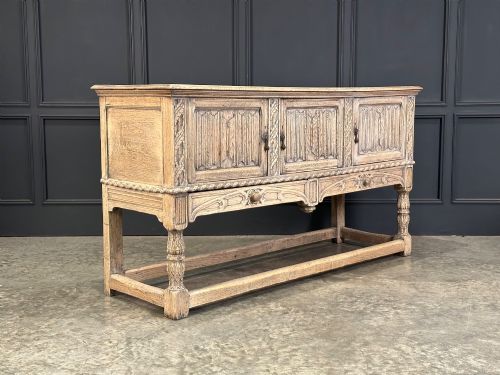
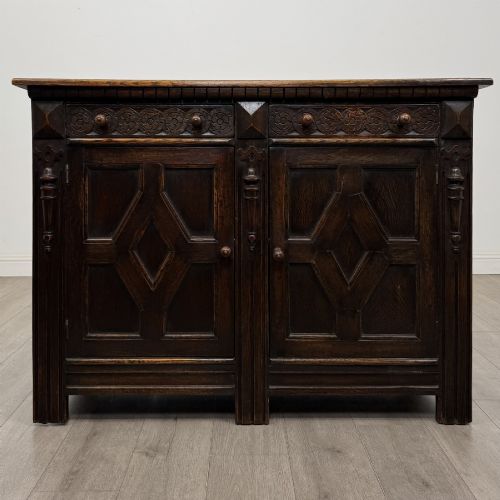
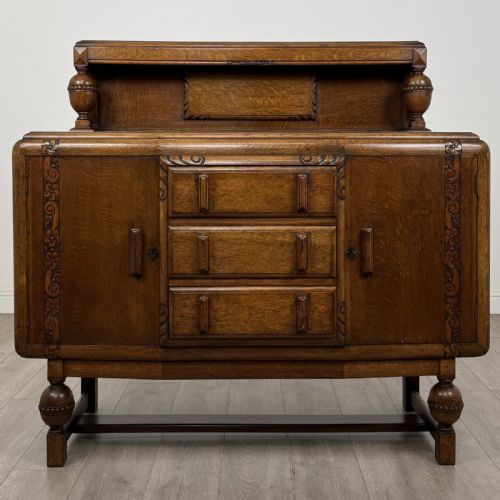
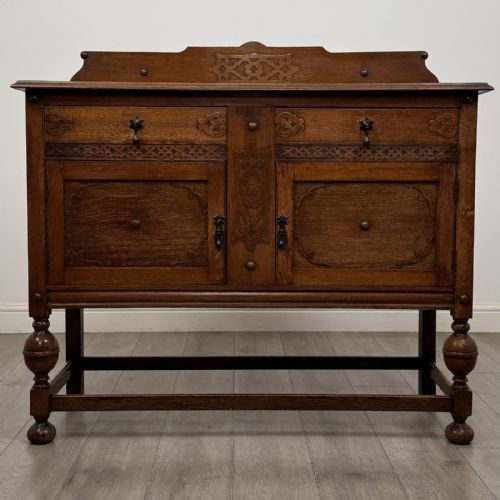
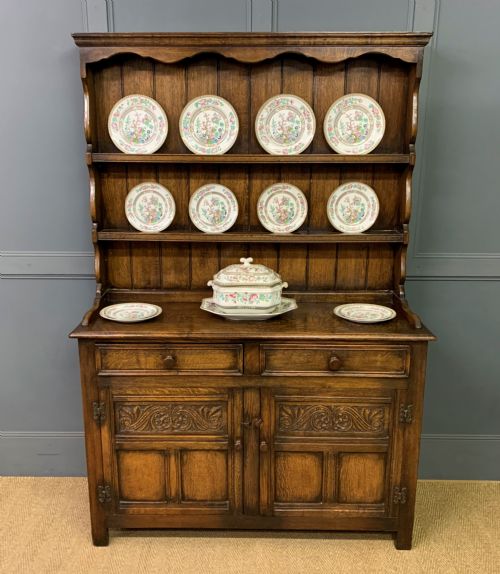
These heavy, timber-framed pieces of furniture built to display plate and store provisions define the jacobean style buffet.
Jacobean Style Buffet
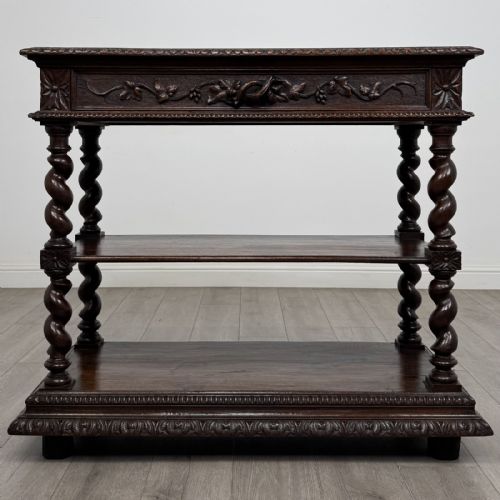
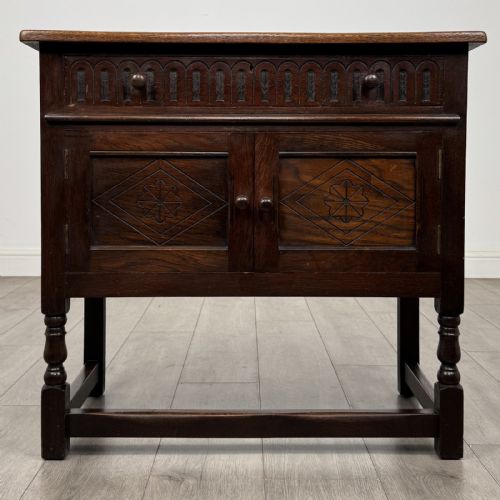
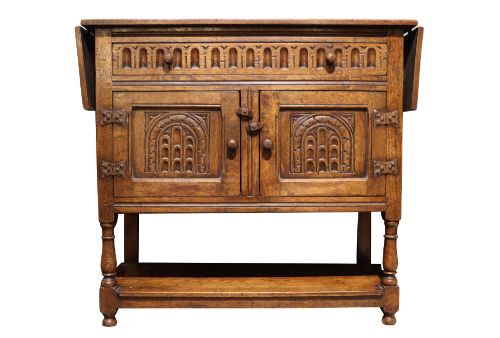
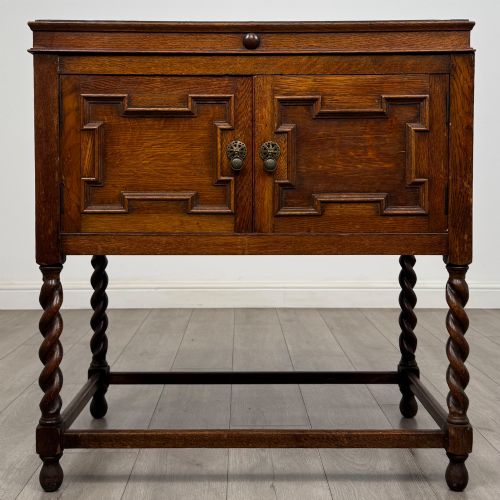
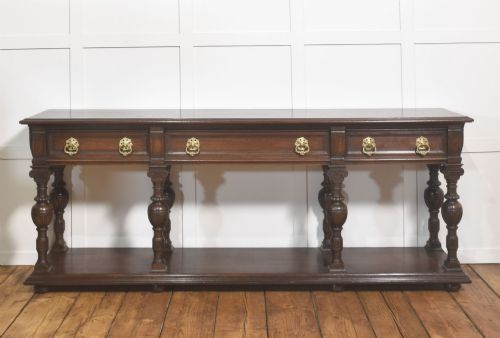
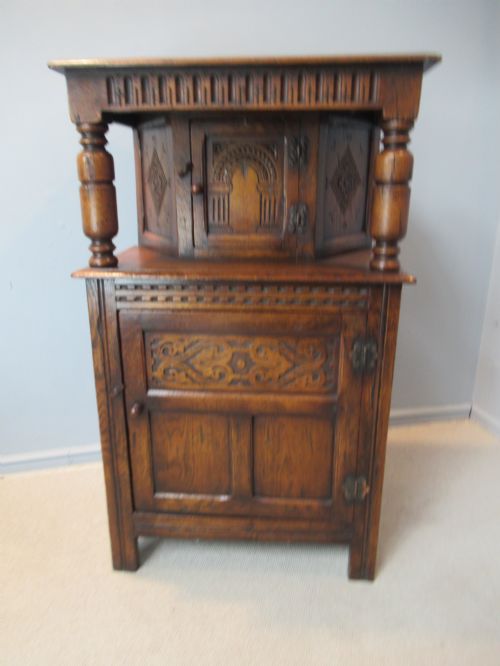
A jacobean style buffet appears in forms such as sideboards, dresser bases, side cabinets, and court cupboards. These pieces bridge centuries of revival, stretching from the seventeenth century and its immediate style descendants through Victorian, Edwardian, and twentieth-century interpretations.
The most common form on this page is the carved oak sideboard or dresser base dated to the early twentieth century or the 1920s. Alongside these, buyers encounter court cupboards and smaller side cabinets showing revivalist design influences.
Materials and construction
Solid oak serves as the primary material, shaped into heavy panels, stretchers, and frames. Craftsmen utilise iron and brass for hinges, handles, and escutcheons, while occasional pieces incorporate mirror glass and mother-of-pearl.
Joinery relies on traditional frame-and-panel construction to accommodate the natural movement of timber. Carvers apply geometric motifs, strapwork, and figural details directly into the dense oak surfaces.
Jacobean Style Buffet Retail Price Guide 2026
Typical asking prices for jacobean style buffet among the pieces listed under this phrase on Sellingantiques today, from the lower quarter to the upper quarter. They describe what is for sale here now, not the wider market.
Listings span periods from the 17th century through the Victorian and Edwardian eras into the 1930s, constructed primarily in solid oak.
Craftsmanship and proportion
Depth and crispness of the timber carving separate standard revival pieces from finer examples. Sharp, well-defined geometric panels and deeply undercut foliage indicate skilled handwork rather than mechanical routing.
Proportion and timber selection dictate the standing of a piece. Better examples utilise straight-grained golden oak with balanced proportions, maintaining structural integrity across heavy stretchers and turned supports without clumsy timber patches.
The Jacobean Style Buffet Glossary
- Court cupboard
- A formal seventeenth-century storage piece featuring a recessed upper section supported by pillars above a lower cabinet. These items were designed for displaying plate and storing household linens.
- Barley-twist
- A rounded column turned in a helical spiral resembling a twist of barley. This decorative leg or support appears frequently on revival sideboards and tables.
- Dresser base
- A low wooden sideboard fitted with drawers and sometimes a lower potboard shelf beneath. They originate from utilitarian kitchen furniture but evolved into formal dining room storage.
- Geometric panels
- Raised mouldings arranged in repeating rectangles, octagons, or intersecting lines across cabinet doors. These patterns provide surface relief without figural carving.
Jacobean Style Buffet: Frequently Asked Questions
What is a court cupboard?
A court cupboard is an enclosed storage piece featuring a recessed upper stage supported by turned columns over a lower cabinet base. They originated as status symbols for displaying household wealth and plate.
Over subsequent revival periods, cabinetmakers reproduced these forms to satisfy demand for historicist dining room furniture. They function today as principal storage sideboards.
How do I date a revival piece?
Dating relies on examining secondary woods, fastener types, and tool marks hidden on interior surfaces. Machine-sawn timbers and modern screws point to nineteenth or twentieth-century revival manufacture.
Style labels like Jacobean Revival or specific date markers in the inventory distinguish older reproductions from genuine seventeenth-century originals. Grain oxidation and peg construction offer further clues.
Where should I place a sideboard?
These robust cabinets require substantial wall space and clearance for opening doors and drawers. Dining rooms and large hallways suit their scale best.
Ensure placement avoids direct heat sources that cause solid oak to dry and split. The sturdy top surface serves well for serving food or displaying ceramics.
How do I care for oak furniture?
Maintain finished oak surfaces by dusting regularly with a dry cloth and applying natural beeswax sparingly. Avoid silicone sprays that build up and attract dirt.
Keep room humidity stable to prevent timber joints from shrinking or expanding excessively. Good care preserves the rich patina developed over decades of use.