


Jacobean Revival Storage Cupboard
These jacobean revival storage cupboard pieces offer sturdy timber construction and historic carving, bringing robust utility and period character to modern rooms.
Jacobean Revival Storage Cupboard
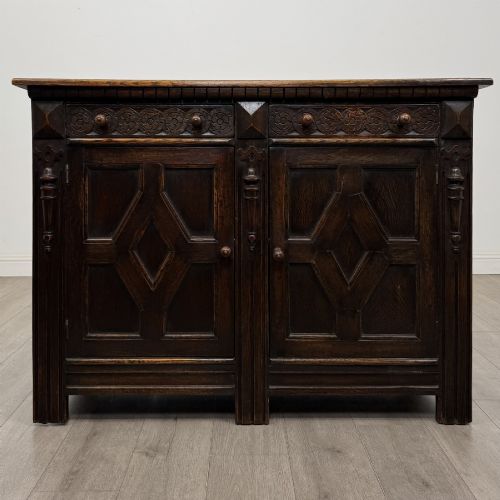
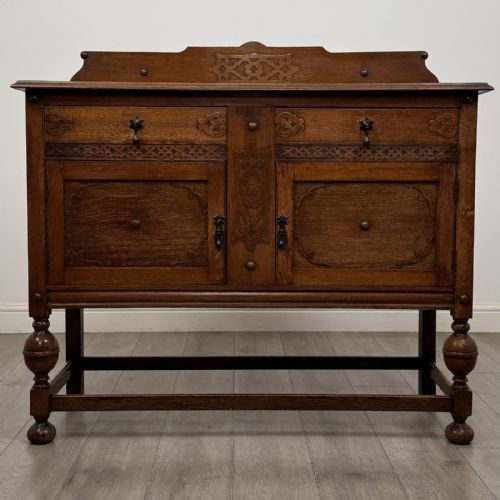
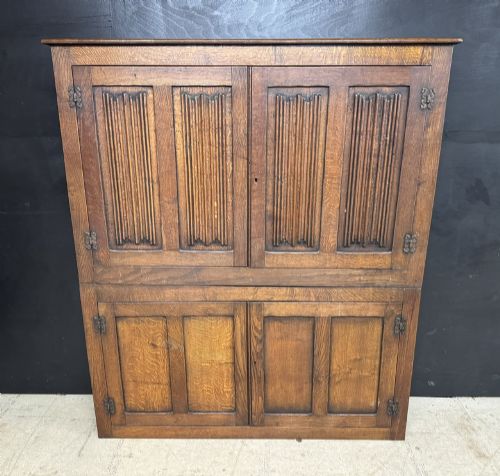
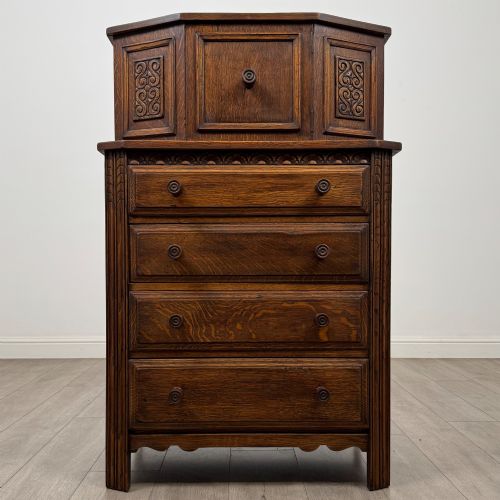
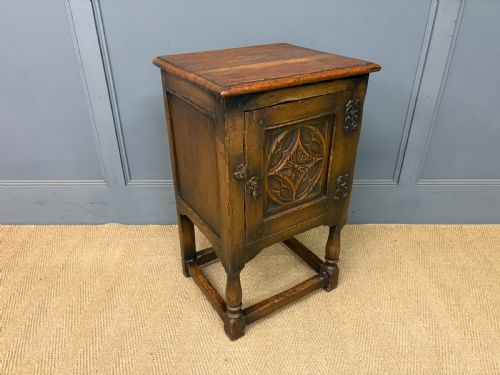
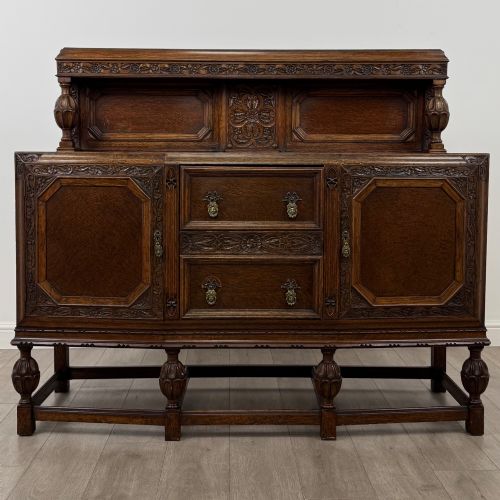
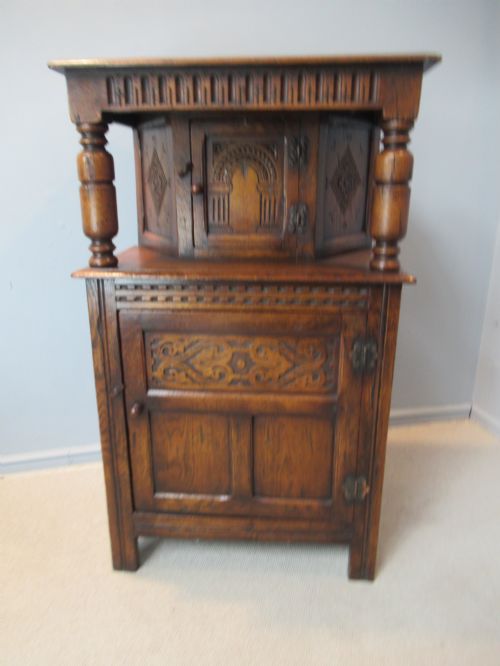
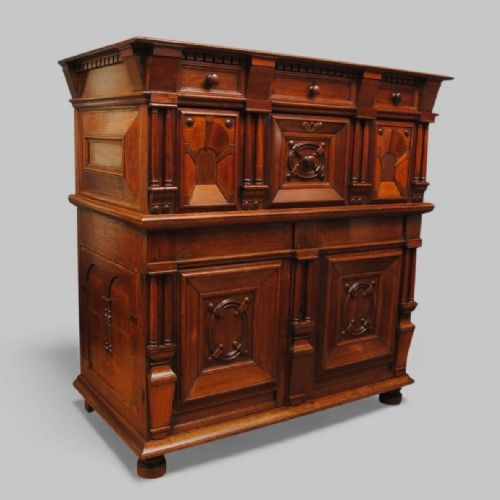
When you search for a jacobean revival storage cupboard, you encounter substantial timber furniture built to hold household goods while displaying traditional carved motifs. The pieces gathered here span side cabinets, court cupboards, sideboards, and wardrobes originating across the nineteenth and early twentieth centuries.
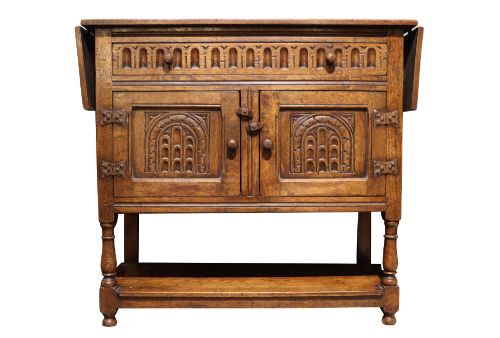
You are most likely to meet solid oak examples bearing carved panels, drop-leaf surfaces, or turned supports dating from the Edwardian era and the 1920s. These items emulate seventeenth-century craftsmanship, adapting historical storage forms for domestic use in later homes.
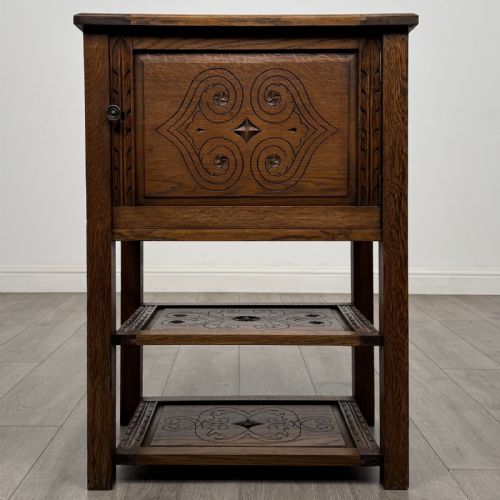
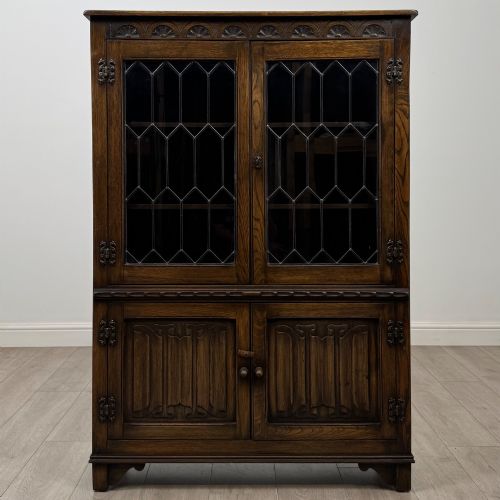
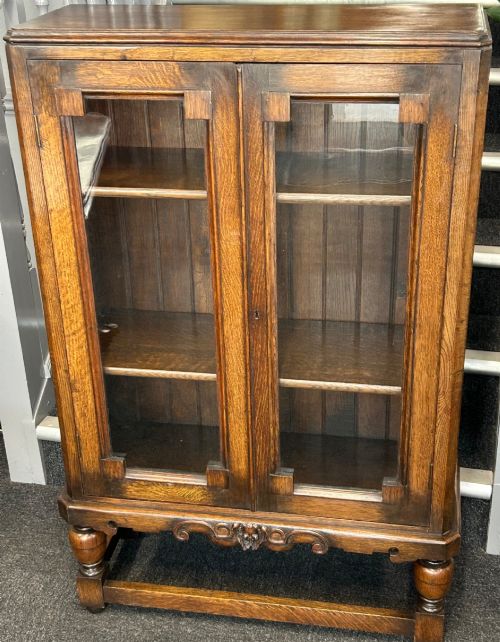
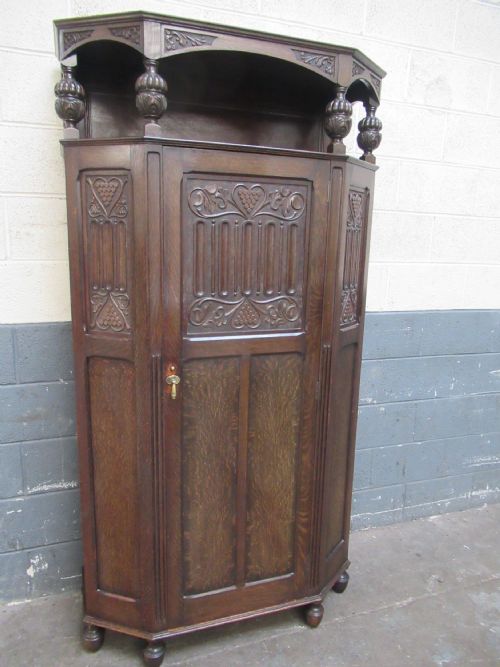
The selection includes specialised variations such as display cabinets with leaded glass doors, corner cupboards, and cocktail cabinets. Each form retains the heavy timber presence and dark finishes typical of the revival aesthetic.
Materials and Construction Techniques
Carpenters built these storage pieces primarily from solid oak, sometimes augmented with walnut, fruitwood, or bleached oak surfaces. Panels and frames utilised traditional joinery methods to accommodate the weight of dense timber.
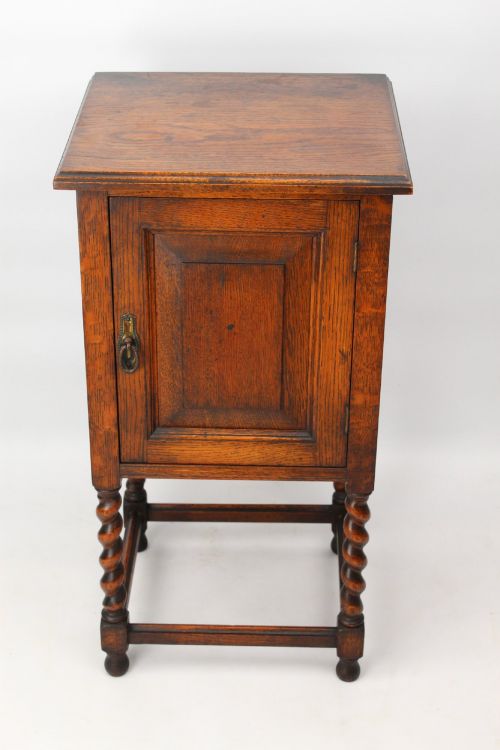
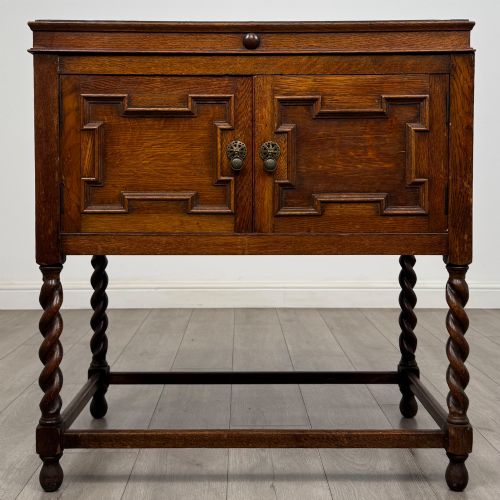
Surface decoration relied heavily on hand and machine carving, producing linenfold patterns, geometric panels, and relief motifs. Turnery formed structural elements such as barley twist legs, while brass, iron, and wrought iron provided functional hardware like original handles and hinges.
Glazed sections incorporated lead and glass to create display doors on cabinets and dressers, balancing solid timber enclosures with transparent compartments.
Jacobean Revival Storage Cupboard Retail Price Guide 2026
Typical asking prices for jacobean revival storage cupboard among the pieces listed under this phrase on Sellingantiques today, from the lower quarter to the upper quarter. They describe what is for sale here now, not the wider market.
Several cupboards hide drop-leaf surfaces, ready to turn a quiet hallway cabinet into an impromptu cocktail bar.
Distinguishing Quality in Revival Cabinetry
Quality rests upon the depth and crispness of the timber carving, distinguishing masterwork relief panels from routine stamped or shallow decoration. The choice of timber grain and the uniformity of the dark oak finish also signal higher standards of production.
Structural integrity depends on the weight of the solid oak used and the precision of the joints in heavy items like court cupboards and wardrobes. Original hardware, such as brass or wrought iron handles and leaded glass panes, preserves the authentic character of the piece.
The sophistication of the design dictates overall standing, with notable cabinetmakers contributing marked pieces that elevate the historical fidelity of the furniture.
Maple and Co·Waring and Gillows
The Jacobean Revival Storage Cupboard Glossary
- Court cupboard
- A traditional enclosed storage piece featuring an upper recessed section supported by pillars, often heavily carved with geometric or floral motifs.
- Linenfold
- A carved panel decoration resembling folded fabric, frequently seen on the doors of oak cupboards and cabinets.
- Barley twist
- A turned wooden furniture leg or support shaped into a helical spiral, characteristic of seventeenth-century and revival furniture.
- Leaded glass
- Small panes of glass held together by strips of lead within a window or cabinet door, common in Edwardian display units.
- Drop-leaf
- A hinged table flap attached to a side cabinet that can be raised to extend the surface area.
Jacobean Revival Storage Cupboard: Frequently Asked Questions
Where should I place a heavy oak cupboard?
These substantial pieces require a wall capable of supporting heavy timber furniture, ideally away from direct heat sources that might dry out the oak.
Position them in dining rooms, hallways, or living spaces where their storage capacity and carved presence anchor the room.
How do I care for antique oak furniture?
Maintain the finish by applying natural beeswax occasionally and buffing with a soft cloth to preserve the timber's sheen.
Avoid chemical polishes and keep the wood away from extreme temperature fluctuations to prevent splitting.
Are these cupboards suitable for modern storage?
The deep shelves and enclosed compartments offer practical space for dinnerware, linens, or modern media equipment.
Wardrobes and sideboards provide deep hanging or shelved storage while concealing contemporary items behind historic doors.
How do I distinguish revival pieces from seventeenth-century originals?
Revival pieces generally date from the Victorian, Edwardian, or interwar periods, utilising machine-assisted joinery alongside hand carving.
Examine the interior construction, backboards, and fastener types, which typically reveal nineteenth or twentieth-century manufacturing methods.