

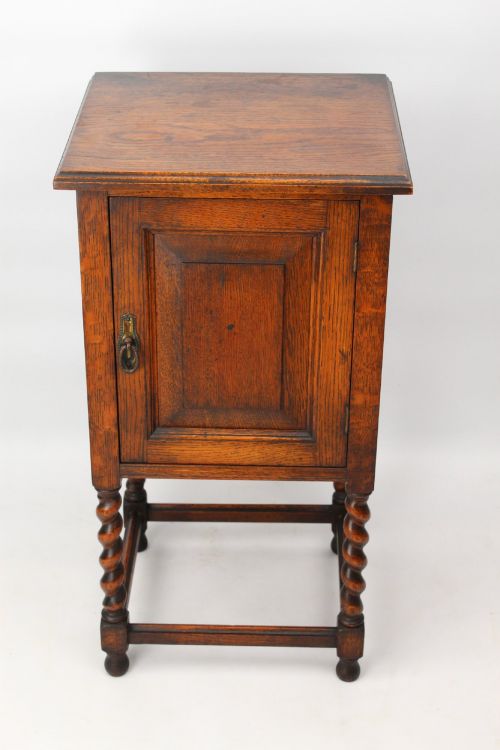
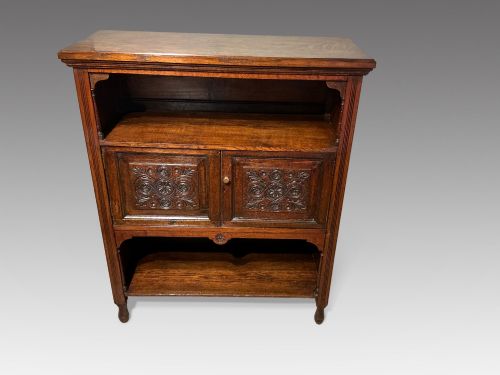
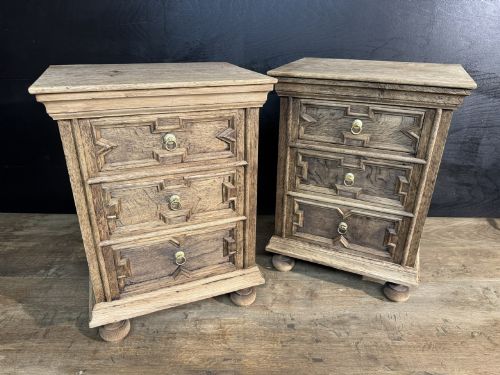
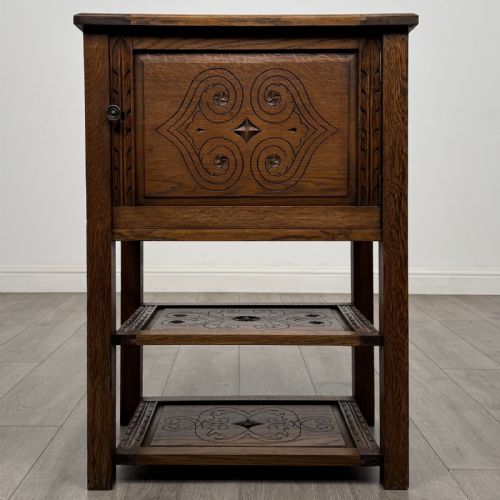
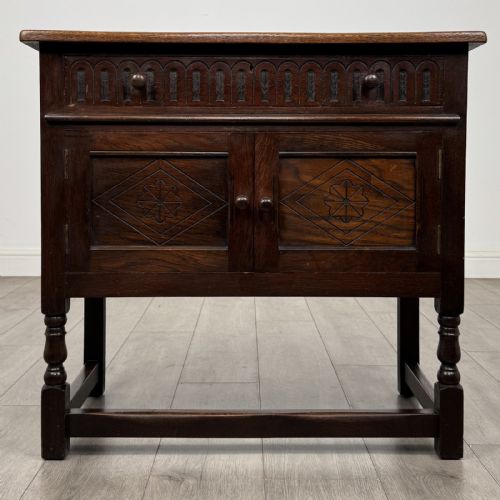
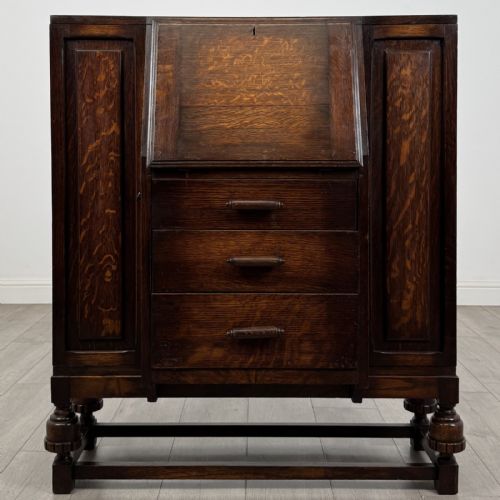
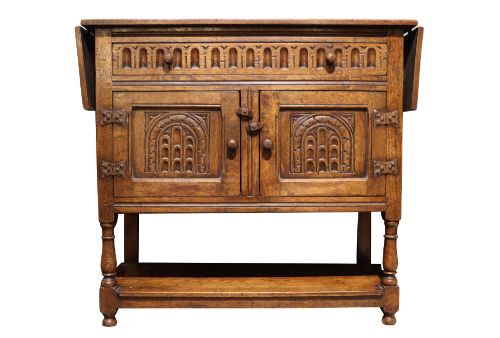
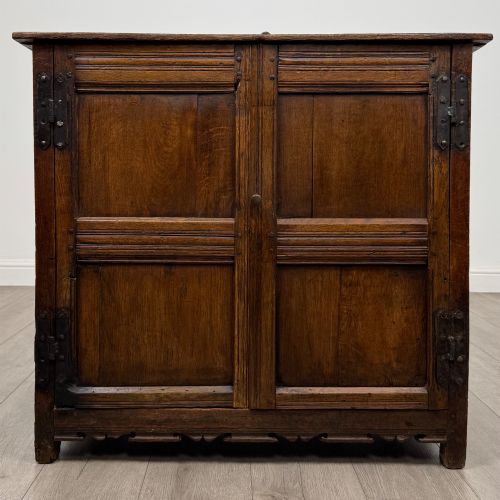
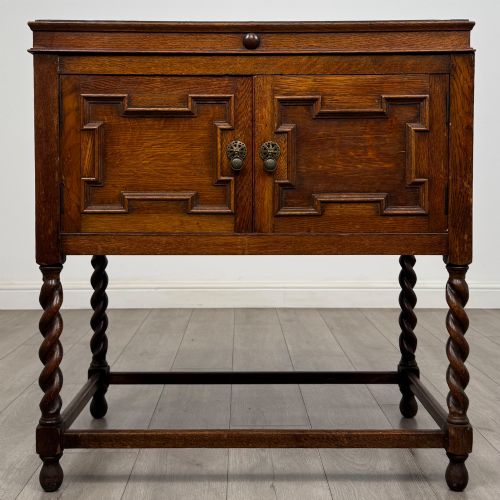
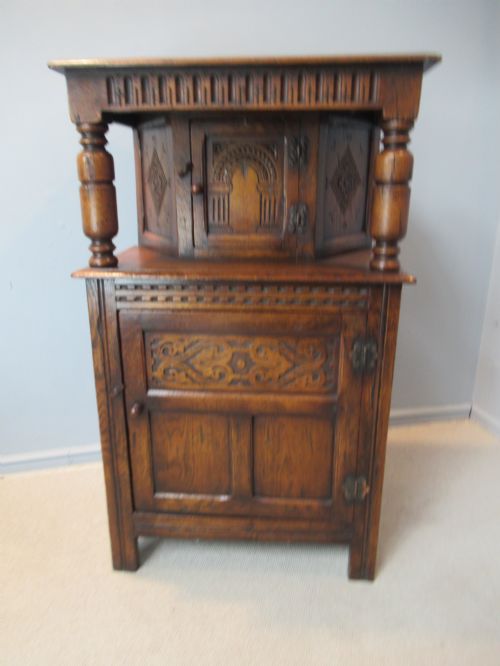


Jacobean Oak Side Cabinet
These jacobean oak side cabinet pieces deliver heavy architectural timber and timeless craft, offering substantial storage anchored in centuries of English tradition.
Jacobean Oak Side Cabinet
A jacobean oak side cabinet brings together sturdy storage forms like cupboards, court cupboards, and cabinets on stands that serve both functional and decorative purposes in a room. Buyers looking at this selection encounter pieces ranging from authentic seventeenth-century survivors to later revival interpretations produced during the Victorian era and the early twentieth century.
The most common iterations on this page adopt the Jacobean Revival or Jacobean style, often featuring dark finishes, panelled doors, and compact dimensions suited to modern domestic spaces. Alongside these, traditional court cupboards and sideboards appear, carrying centuries of woodworking heritage into contemporary interiors.
Origins span distinct historical moments, with pieces dating variously from the seventeenth century, the nineteenth century, and the nineteen-twenties. Each era contributes its own interpretation of timber construction, balancing heavy proportions with functional internal shelving or fitted compartments.
Materials and construction methods
Solid oak forms the structural backbone of every piece in this category, providing the heavy weight and durability characteristic of the period and its revivals. Craftsmen utilise traditional joinery techniques to frame panels and support heavy doors without relying on modern adhesives.
Metal hardware plays a functional role in the construction, incorporating brass and iron for hinges, handles, and locks. Wrought iron elements appear on select doors and mounts, adding utilitarian strength and contrast against the dark timber grain.
Surface decoration relies heavily on carving and turning techniques rather than applied veneers. Artisans chisel floral or geometric motifs directly into the solid wood and turn structural supports like barley twist legs on a lathe.
Jacobean Oak Side Cabinet Retail Price Guide 2026
Typical asking prices for jacobean oak side cabinet among the pieces listed under this phrase on Sellingantiques today, from the lower quarter to the upper quarter. They describe what is for sale here now, not the wider market.
Listings feature solid oak combined with brass and iron hardware across periods spanning the seventeenth century to the nineteen-thirties.
Markers of quality and execution
The standard of carving defines the distinction between standard production and superior craftsmanship. Crisp, deep relief work executed directly into the solid timber indicates a higher level of skill than shallow or mechanical surface scoring.
Construction integrity and timber selection separate finer examples from basic utilitarian furniture. Uniformity in the grain, tight joinery at the corners, and heavy, well-fitted panel doors demonstrate superior workshop standards regardless of the production century.
The Jacobean Oak Side Cabinet Glossary
- Court Cupboard
- A traditional form of storage furniture featuring an upper recessed section supported by pillars above a lower cupboard base. These pieces often display elaborate carved detailing.
- Jacobean Revival
- A nineteenth and early twentieth-century design movement that emulates the heavy, ornate furniture styles of the early seventeenth century. It utilises dark oak and deep panel carving.
- Barley Twist
- A decorative turning technique resembling a spiralling rope, frequently utilised on the vertical legs and structural supports of cabinets and stands. This feature adds vertical rhythm to heavy furniture forms.
- Press Cupboard
- An enclosed wooden storage piece designed for linen or garments, typically featuring upper and lower compartments divided by panelled doors. These examples often date from the seventeenth century.
- Flemish Baroque
- A continental European style characterised by dramatic proportions, rich surface carving, and heavy architectural details. Pieces in this tradition show influences from seventeenth-century Flanders.
Jacobean Oak Side Cabinet: Frequently Asked Questions
How do I spot a seventeenth-century piece?
Authentic seventeenth-century examples display hand-cut joinery, pegged tenons, and timber surfaces showing natural oxidation and wear built up over centuries.
Closer inspection often reveals subtle irregularities in the panels and hand-hammered iron or brass hardware that distinguish early workshop production from later revivals.
Where should I place a side cabinet?
These robust cabinets suit dining rooms, hallways, or living spaces where their substantial timber presence and storage capacity can be fully utilised.
Positioning them away from direct heat sources and strong sunlight protects the solid oak and maintains the stability of the traditional joinery.
What is a cabinet on stand?
A cabinet on stand consists of an enclosed upper storage section raised on a separate structural base supported by legs. This configuration lightened the visual weight of heavy furniture.
Twentieth-century revival versions adopted this historic format to provide compact storage while maintaining period aesthetic proportions.
How do I care for antique oak?
Maintaining solid oak furniture involves applying a traditional beeswax polish occasionally to nourish the timber and preserve the natural lustre of the finish.
Avoiding excessive moisture and rapid temperature changes prevents the wood from warping and protects the structural integrity of the panels.