





Jacobean Revival Refectory Table
A jacobean revival refectory table brings solid oak presence and seventeenth-century style into a modern dining room.
Jacobean Revival Refectory Table
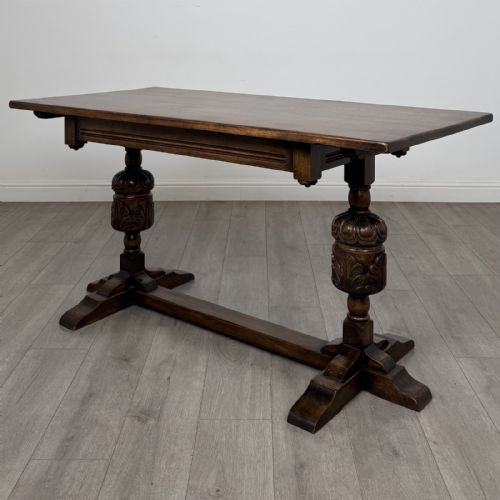
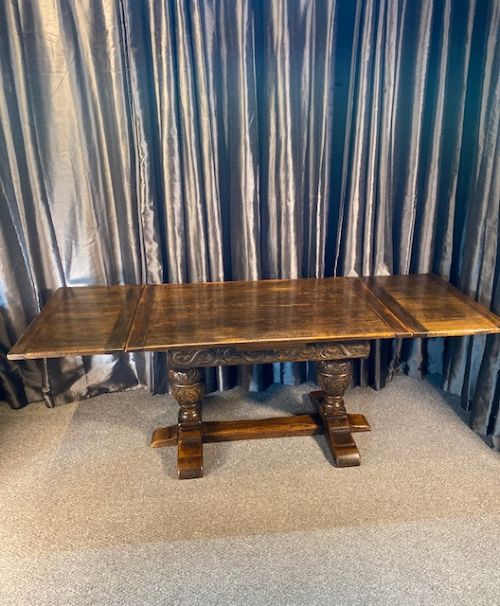
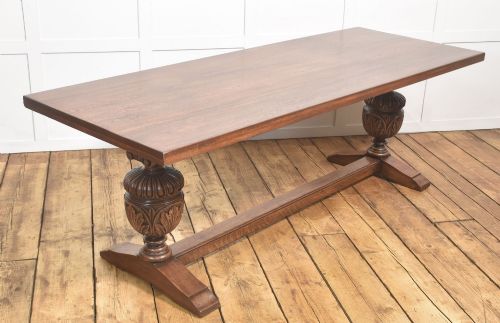
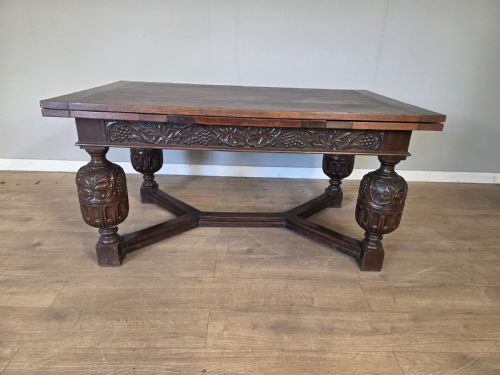
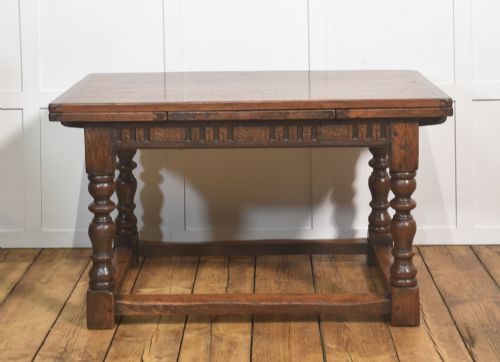
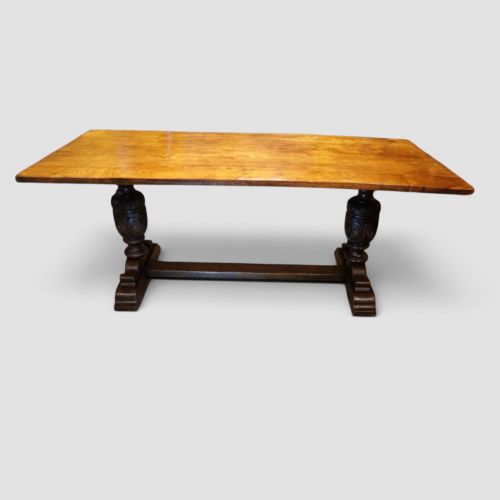
A jacobean revival refectory table is a heavy dining surface built to echo older forms, appearing frequently in oak across the nineteenth and twentieth centuries. These pieces draw on Elizabethan, Tudor, and Jacobean styles, often utilising extending leaves or draw-leaf mechanisms for practical daily use.
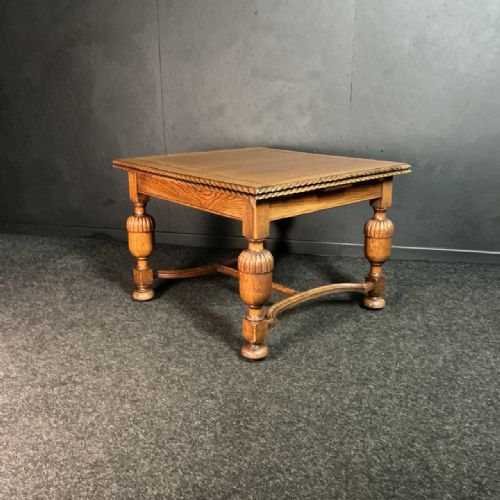
The selection ranges from large dining suites and dresser bases down to compact coffee tables and small extending models. Dating spans the nineteenth century through to the Edwardian era and the 1930s, keeping sturdy traditional proportions while serving contemporary domestic needs.
What varies in quality
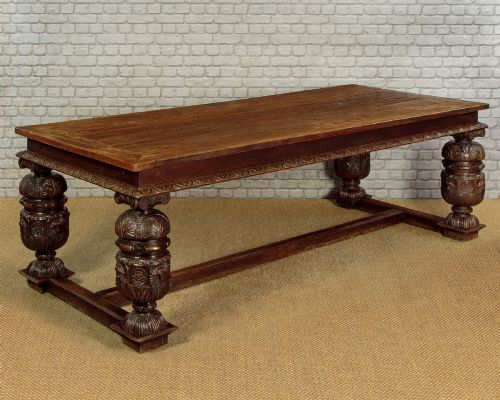
Quality rests in the depth and crispness of the carved ornamentation on the timber, separating plain examples from those with detailed stylistic flourishes. The choice of solid oak versus secondary woods also dictates the visual weight and longevity of the piece.
Mechanism engineering defines the better extending tables, ensuring draw leaves move smoothly without sagging. Heavier, sturdier framing provides a firmer foundation than lighter iterations.
Jacobean Revival Refectory Table Retail Price Guide 2026
Typical asking prices for jacobean revival refectory table among the pieces listed under this phrase on Sellingantiques today, from the lower quarter to the upper quarter. They describe what is for sale here now, not the wider market.
The inventory includes companion pieces such as dresser bases, sideboards, and complete dining suites alongside standalone refectory and coffee tables.
Maple and Co
The Jacobean Revival Refectory Table Glossary
- Refectory table
- A long dining table historically used in monasteries for communal meals. Modern revivals adapt this long, narrow format for domestic dining.
- Draw-leaf
- An extending table design featuring two leaves stored beneath the main top that pull out to lengthen the surface. This allows the table to expand easily for guests.
- Jacobean Revival
- A nineteenth and twentieth-century design movement mimicking the heavy, rectilinear furniture style of the early seventeenth century. It makes frequent use of dark oak and geometric carving.
- Dresser base
- A low sideboard or cabinet with drawers, often built in matching oak alongside dining tables of the period. These items form part of larger dining suites.
Jacobean Revival Refectory Table: Frequently Asked Questions
How do I care for an oak refectory table?
Clean the solid oak surface with a slightly damp cloth and dry it immediately to protect the finish. Avoid placing the table near direct heat sources to prevent the timber from splitting.
Use coasters and placemats to guard against moisture rings and heat marks from everyday dining. Regular waxing maintains the lustre of the wood over time.
Are these tables suitable for everyday dining?
These pieces are built from sturdy solid oak designed specifically to withstand daily use. Many examples feature draw-leaf mechanisms that make them practical for both family meals and larger gatherings.
Measuring your dining space carefully ensures the substantial proportions and heavy framing fit comfortably in the room. Pairing the table with appropriate chairs creates a functional and cohesive dining area.
How can I tell the period of my table?
Examine the construction methods, drawer joints, and hardware for clues to the manufacturing era. Nineteenth and early twentieth-century revival pieces often blend seventeenth-century motifs with later joining techniques.
Stylistic details like Elizabethan or Jacobean carving indicate the design influence rather than the literal decade of construction. Comparing the timber patination and wear patterns also helps determine the age of the piece.
What is the difference between refectory and draw-leaf tables?
A refectory table has a fixed, non-extending top supported by long stretchers and heavy legs. It maintains a constant length suited to the room.
A draw-leaf table incorporates hidden panels beneath the main surface that slide outward to increase the overall length. Both styles utilise solid oak and revival ornamentation.