

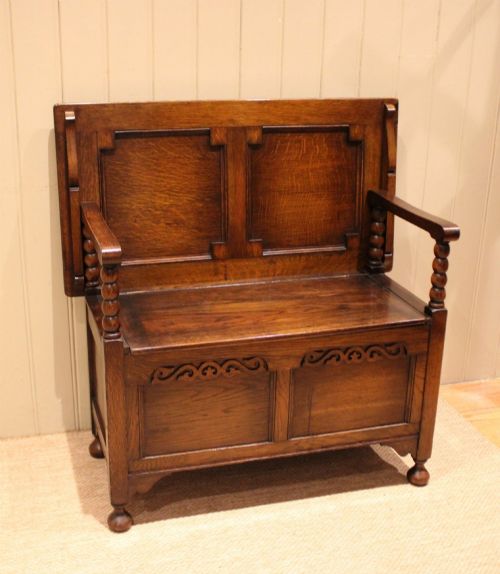

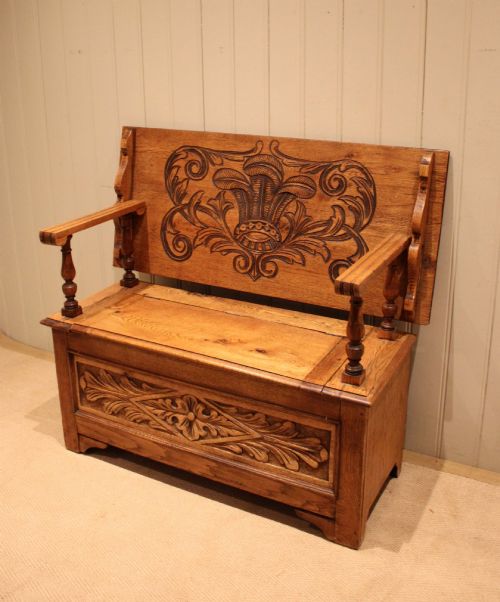



Jacobean Oak Table Bench
These jacobean oak table bench pieces combine traditional seating with convertible surfaces, offering solid timber construction and historic style for modern interiors.
Jacobean Oak Table Bench
A jacobean oak table bench serves dual purposes as both a seat and a table, drawing on designs found in seventeenth-century domestic interiors. These items appear across various forms, including monks benches, hall seats, settles, and chair-tables.
Most examples encountered on this page date from later revival periods such as the Edwardian era and the twentieth century, alongside authentic seventeenth-century pieces. Buyers often find variants featuring lift-up lids, fold-over tops, and integrated storage compartments.
Distinctions in quality
The degree of hand-carving and the crispness of moulded detail distinguish finer examples from simpler vernacular pieces. Early period items show distinct tool marks and patination acquired through centuries of use.
Proportion and structural integrity also separate standard revival items from superior masterworks, particularly where folding mechanisms and heavy table tops are concerned.
Jacobean Oak Table Bench Retail Price Guide 2026
Typical asking prices for jacobean oak table bench among the pieces listed under this phrase on Sellingantiques today, from the lower quarter to the upper quarter. They describe what is for sale here now, not the wider market.
The Jacobean Oak Table Bench Glossary
- Monks Bench
- A convertible piece of furniture featuring a backrest that tilts forward to form a table top above a box seat. This form provides dual functionality for smaller domestic spaces.
- Joint Stool
- A sturdy wooden stool constructed with mortise and tenon joints, commonly standing on four turned legs connected by stretchers. These items date from the seventeenth century and function as movable seating.
- Settle
- A wooden bench featuring high backs and solid arms designed to shield occupants from draughts. They often incorporate enclosed storage compartments beneath the seat.
- Jacobean Revival
- A nineteenth and twentieth-century design movement that emulates the heavy proportions, dark timber, and carved ornamentation of the early seventeenth century. Revival pieces adapt historical aesthetics for later domestic requirements.
Jacobean Oak Table Bench: Frequently Asked Questions
How does a monks bench convert into a table?
The upper backrest pivots on wooden pegs or iron pivots, swinging over the arms to rest horizontally and form a flat surface.
This transformation turns the seating unit into a practical table while retaining access to the storage box beneath the seat.
Are these pieces from the seventeenth century?
The selection includes genuine seventeenth-century examples alongside significant numbers of later revival pieces made during the Edwardian period and the twentieth century.
Construction details, timber patination, and hardware styles help determine whether an item belongs to the original period or a later revival.
Where were these benches placed in a home?
Historically, these items stood in hallways, reception rooms, and parlours where space efficiency mattered.
The dual function of seating and table surface made them useful in communal living areas.
What is the difference between a hall seat and a settle?
A hall seat generally offers a more compact footprint with straightforward lift-up storage beneath the bench.
Settles usually feature taller panelled backs designed to block cold air in large rooms.