



Jacobean Oak Low Dresser
A jacobean oak low dresser is a heavy timber serving piece that brings the grounded utility of seventeenth century interiors straight into a modern room.
Jacobean Oak Low Dresser
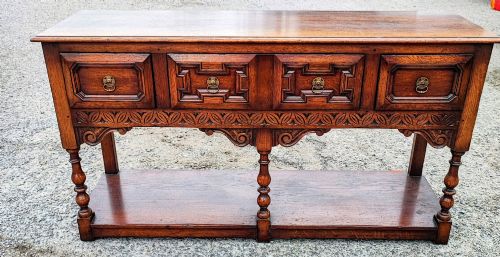
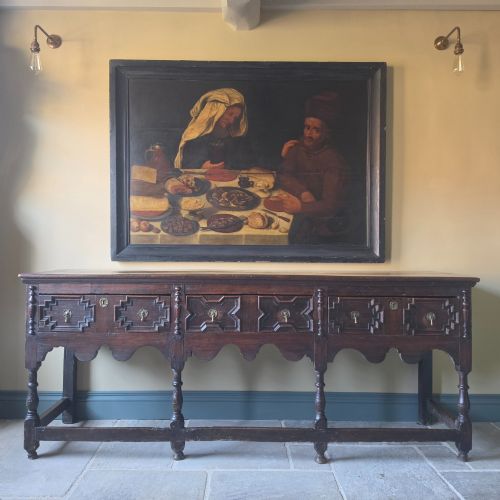
A jacobean oak low dresser functions primarily as a low sideboard or serving table, providing substantial surface space above storage drawers. Buyers seeking a jacobean oak low dresser encounter forms that date from the seventeenth century through to nineteenth century revivals.
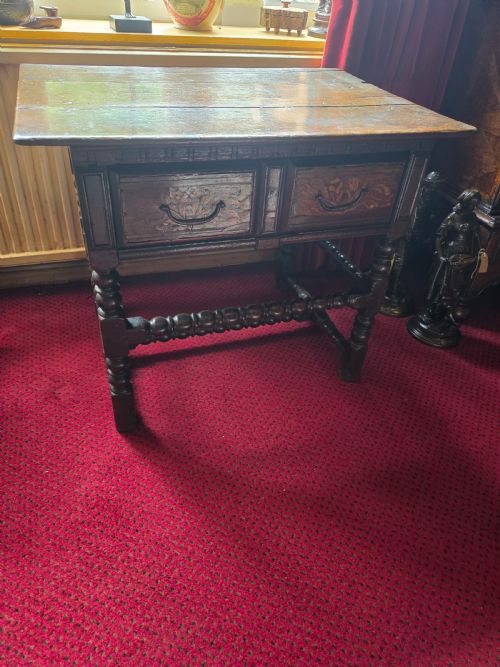
The pieces appearing on this page span formats such as dresser bases, sideboards, and side tables constructed from solid timber. Seventeenth century originals sit alongside later interpretations built in the seventeenth century style and the jacobean revival movement.
Most examples present a low profile designed for domestic service, often featuring multiple drawers arranged across the front elevation. English country workshops produced many of these sturdy units to withstand daily household use over generations.
Construction and materials
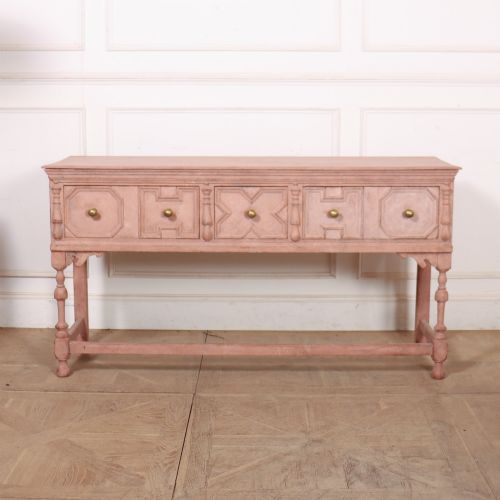
Oak forms the primary structural material for every piece, chosen for its density and durability. Wood inlay and painted finishes appear on select variants to add surface pattern and visual contrast.
Joinery methods rely on traditional framing techniques to stabilize the heavy timber panels. Metal components such as brass and iron provide structural reinforcement and functional hardware on drawers and doors.
Jacobean Oak Low Dresser Retail Price Guide 2026
Typical asking prices for jacobean oak low dresser among the pieces listed under this phrase on Sellingantiques today, from the lower quarter to the upper quarter. They describe what is for sale here now, not the wider market.
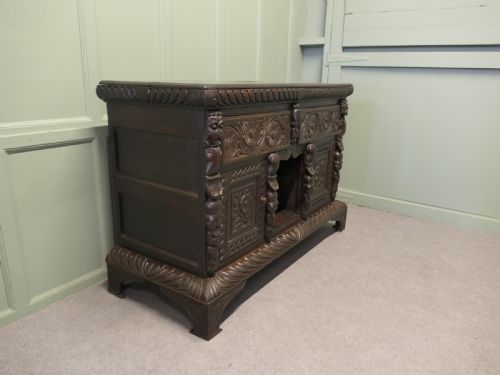
A nineteenth century maker decided a quiet oak sideboard needed a roaring green man peering out from the timber.
Assessing quality and character
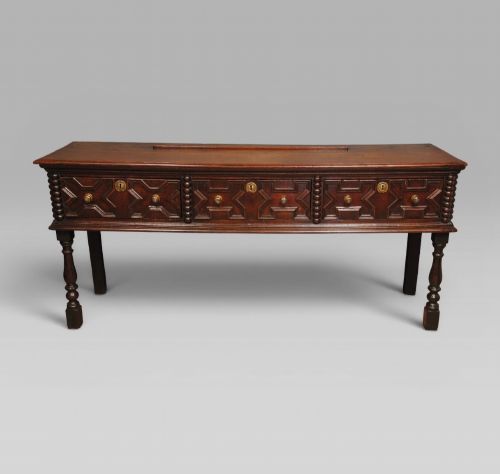
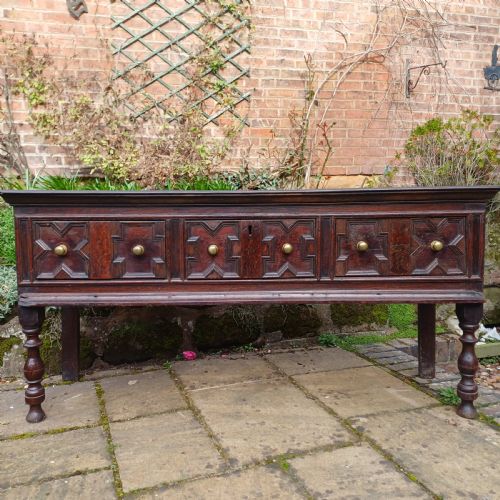
Quality rests in the crispness of timber mouldings, such as geometrically moulded drawer fronts, and the integrity of the original oak boards. Surfaces that retain deep patination demonstrate age and careful use.
Proportion and the handling of decorative details like carved green man motifs or inlaid sections separate standard utilitarian builds from finer cabinet work. The harmony between the primary oak structure and secondary metal elements dictates the overall presence of the piece.
The Jacobean Oak Low Dresser Glossary
- Dresser base
- The lower section of a traditional dining room storage unit built without the upper plate rack. This form provides a broad top surface and accessible lower drawers.
- Geometrically moulded drawer fronts
- Raised wooden mouldings applied to drawer faces in angular or geometric patterns. This decorative technique creates strong shadow lines across the front elevation.
- Jacobean style
- Design characteristics associated with the reign of James I and seventeenth century English craftsmanship. It emphasises solid proportions, rectilinear forms, and panelled construction.
- Green man
- A sculptural architectural motif representing a face carved from or entwined with leaves and foliage. This detail appears on select nineteenth century revival pieces.
- Wood inlay
- The technique of embedding contrasting pieces of timber into the primary surface to create decorative patterns. It enhances the visual depth of the oak boards.
Jacobean Oak Low Dresser: Frequently Asked Questions
What is a jacobean oak low dresser used for?
These pieces serve as practical low sideboards or serving tables in dining rooms, living areas, and hallways. Their broad tops provide display space while the deep drawers accommodate household storage.
Historically designed for food preparation and service, they now function well as media consoles or general storage cabinets in domestic interiors.
How do I tell a seventeenth century piece from a revival?
Seventeenth century originals exhibit timber shrinkage, hand-cut joinery marks, and natural wear patterns accumulated over centuries of use. The patination on early oak develops a deep, unforced lustre.
Revival pieces from later periods often display more uniform machine sawing and cleaner internal construction methods despite utilising reclaimed oak.
Where were these dressers made?
English country workshops and regional cabinet makers produced the majority of these timber storage units. Local joiners utilised native oak harvested from British woodlands.
Production methods varied from rural vernacular workshops to more specialised urban cabinet practices across England.
How should I care for antique oak furniture?
Maintain stable humidity levels in the room to prevent the solid oak panels from splitting or warping over time. Avoid placing the low dresser near direct heat sources or strong sunlight.
Apply traditional wax polish sparingly to nourish the timber grain and preserve the surface patination without building up heavy residues.