

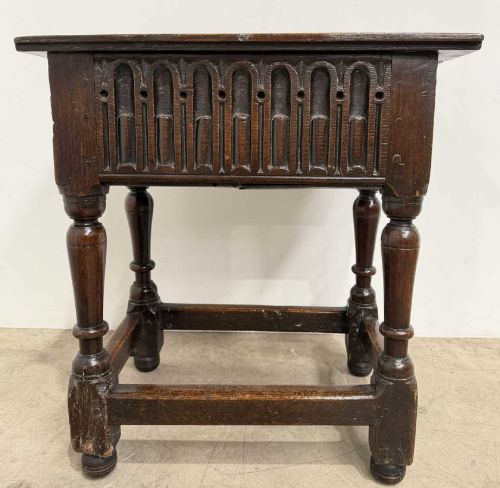
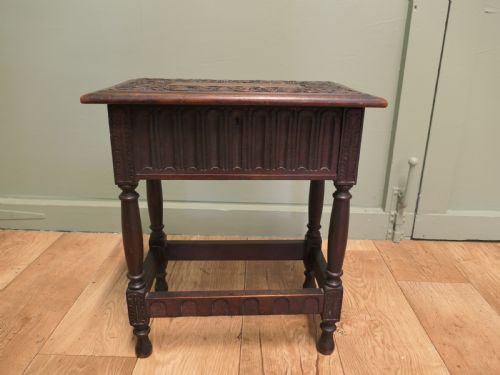
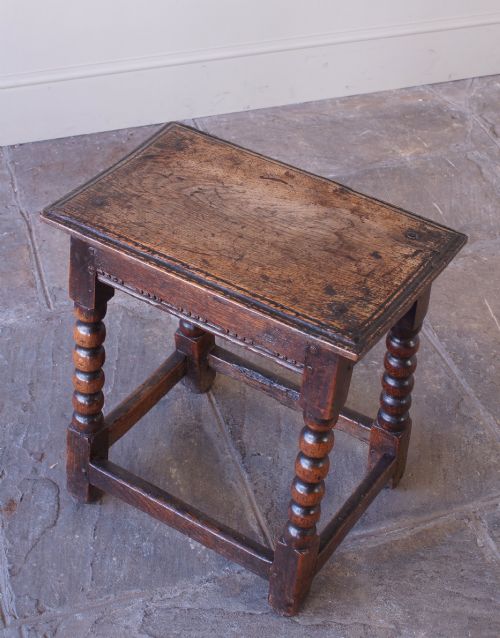
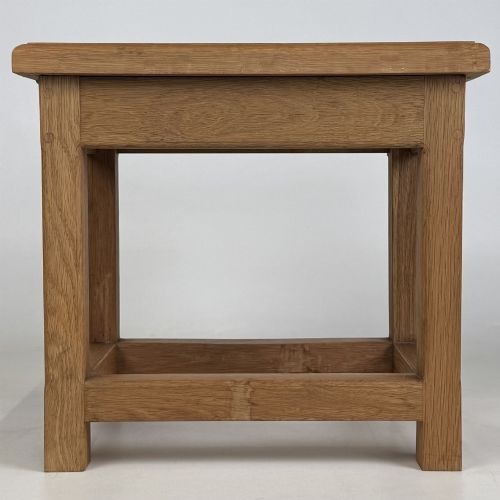
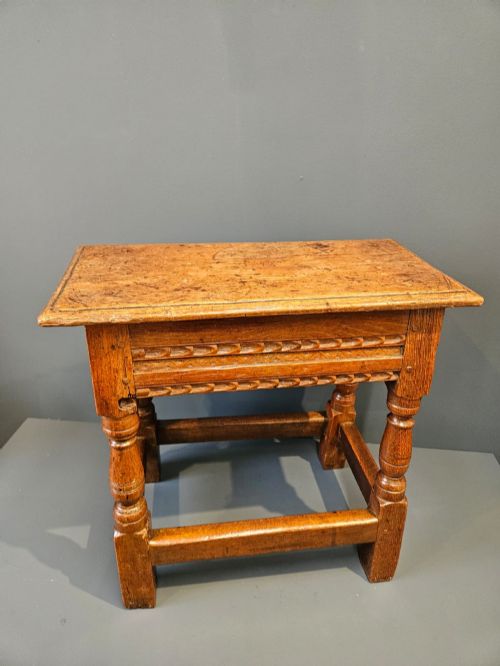


Jacobean Oak Joint Table
A jacobean oak joint table brings sturdy timber and honest seventeenth century construction straight into a modern room.
Jacobean Oak Joint Table
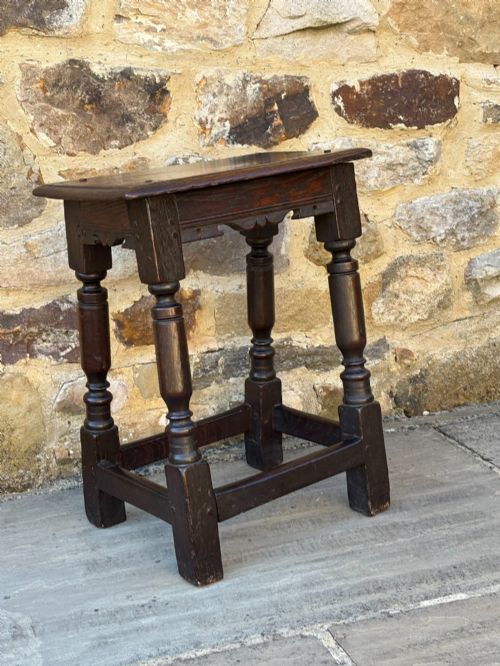
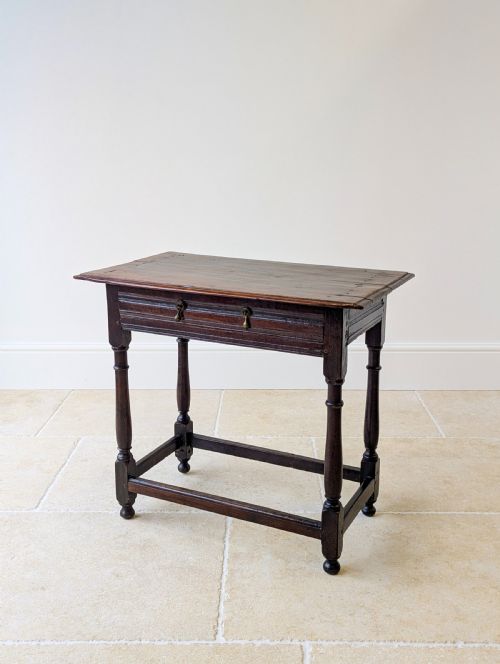
The jacobean oak joint table category encompasses heavy timber furnishings built with mortise and tenon joints, designed for domestic utility in the seventeenth century and later revived. Buyers searching this phrase frequently encounter side tables, occasional tables, and low tables alongside related joint stools from both the seventeenth century and later revival periods.
Surviving examples range from authentic seventeenth century pieces featuring turned legs and pegged stretchers to later nineteenth and twentieth century revival interpretations. These tables and stools display the enduring appeal of English country oak, often accented with elm or yew wood in secondary elements.
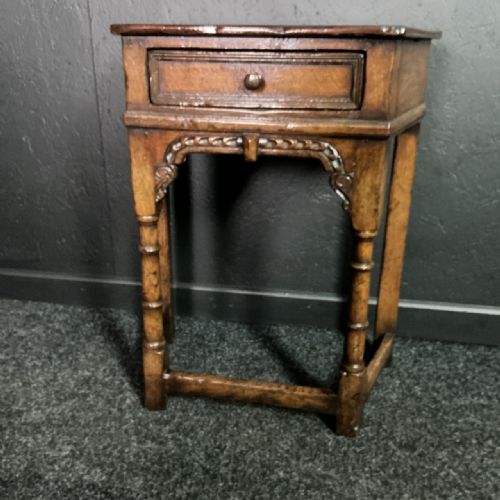
While true period tables from the 1600s command attention for their age and tool marks, revival pieces from the Edwardian era and the 1920s provide similar domestic character. The selection spans straightforward utilitarian forms and carved variants with drawer compartments or low stretchers.
What varies in quality
Quality rests upon the proportion of original timber remaining in the frame and the integrity of the pegged joints. Pieces that retain their original tops and uncompromised stretchers stand apart from examples rebuilt with modern timber or replaced components.
The crispness of hand-carved details and the richness of the natural grain determine the visual appeal of each table. Finer examples display harmonious proportions and a patinated surface acquired through centuries of use, whereas lesser items suffer from unsympathetic restoration or heavy stripping.
Jacobean Oak Joint Table Retail Price Guide 2026
Typical asking prices for jacobean oak joint table among the pieces listed under this phrase on Sellingantiques today, from the lower quarter to the upper quarter. They describe what is for sale here now, not the wider market.
Listings span periods from the 17th century through Georgian and Edwardian eras up to 1920, predominantly featuring solid oak alongside elm and yew.
The Jacobean Oak Joint Table Glossary
- Joint stool
- A sturdy wooden stool constructed with pegged mortise and tenon joinery rather than traditional turned spindles.
- Gateleg table
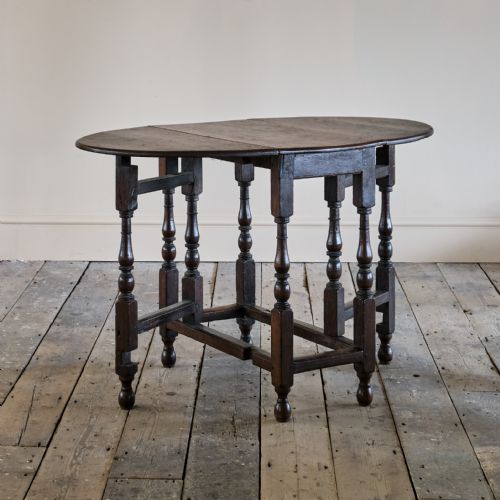
- A table featuring drop leaves supported by hinged legs that swing outward like a gate.
- Lowboy
- A small seventeenth or eighteenth century table equipped with one or more drawers and relatively short legs.
- Mortise and tenon
- A joint wherein a protruding tenon fits snugly into a corresponding hole or mortise, secured with a wooden peg.
- Patina
- The deep surface sheen and colour developed by aged wood through decades of handling, polishing, and exposure.
Jacobean Oak Joint Table: Frequently Asked Questions
How do I spot a real seventeenth century table?
Authentic seventeenth century tables display hand-cut peg holes, irregular tool marks, and dry, dense oak timber with deep patination. Secondary timbers and construction methods should align with period workshop practices.
Revival pieces from the nineteenth and twentieth centuries often feature more uniform machine sawing and cleaner, tighter joints without the authentic wear patterns of early use.
Can I use a joint table every day?
These solid oak tables were originally built for heavy daily labour and domestic service, making them exceptionally durable for modern use. Their sturdy frames handle normal placement of lamps, books, and cups without difficulty.
Protect the historic wood surface from excessive moisture and direct heat sources to preserve the finish and prevent timber splitting.
What is the difference between a side table and a joint table?
A side table serves as a general surface designed to stand against a wall, whilst a joint table specifically utilises rigid frame construction joined by pegged stretchers. Many early forms overlap, as jointed construction techniques were standard for both low tables and seating.
Examine the underframe for the characteristic low stretchers that brace jointed legs near the floor.
Why do some tables have drawers?
Drawers were incorporated into seventeenth century side tables and lowboys to store small household documents, textiles, or eating utensils. These compartments utilise side runners and occasional brass or iron pulls.
Inspect the drawer linings to ensure the internal timber matches the age and wear of the primary carcass.