





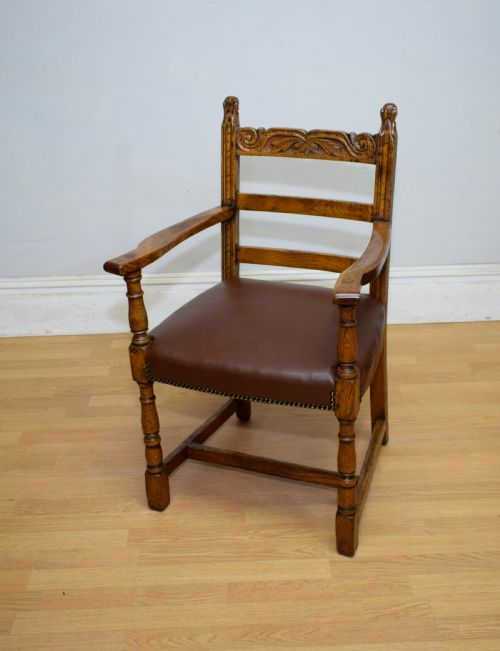
Jacobean Elbow Chair
These jacobean elbow chair pieces offer solid timber construction and period presence, bringing traditional seating character to an interior.
Jacobean Elbow Chair
A jacobean elbow chair brings substantial timber frames and open arms into a room, taking forms such as carver armchairs, desk chairs, and fireside seats. These pieces range from authentic seventeenth-century examples down to nineteenth-century revivals and early twentieth-century interpretations.
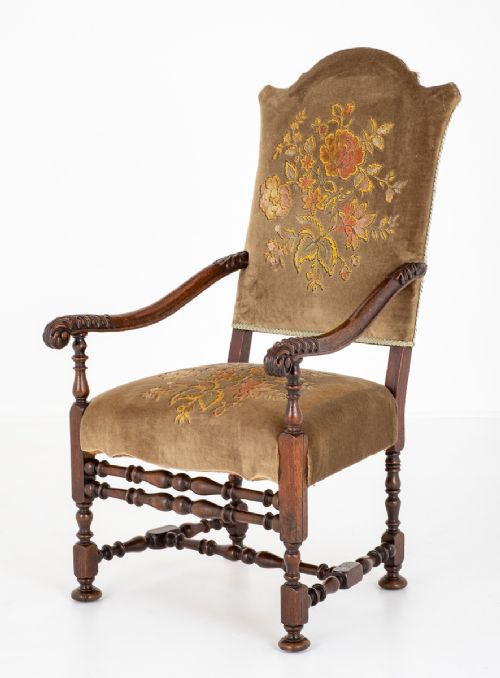
Most items you encounter on this page date from the nineteenth century or the early decades of the twentieth century, built in revival styles that mimic earlier craftsmanship. You will also find authentic seventeenth-century framework alongside pieces finished with upholstered pads, tapestry fabric, or leather.
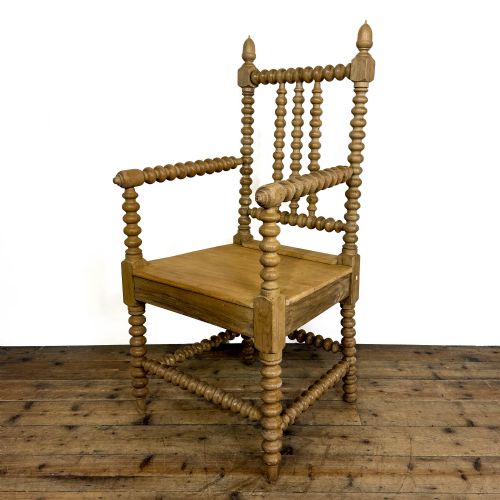
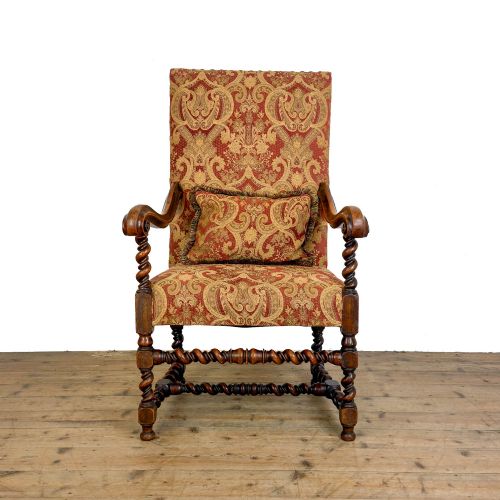
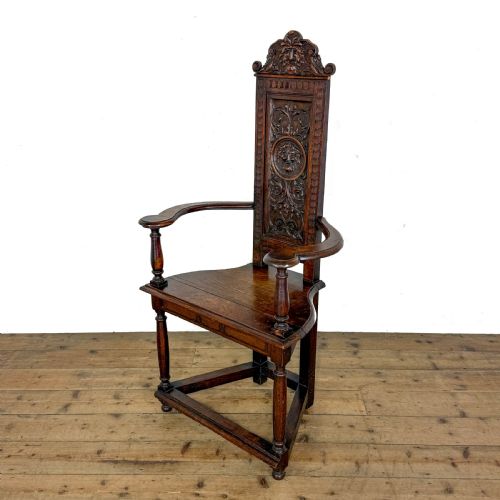
The regional origins and workshop styles vary from Welsh country oak builds to substantial carved walnut library armchairs. Buyers find specific variations including bobbin-turned supports, barley twist members, and carved back panels.
Materials and construction methods
Makers built these frames predominantly using oak and walnut, often combining solid timber boards with turned structural components. Regional examples occasionally incorporate secondary timbers like yew-wood for specific panels.
Carving and turning form the primary decorative techniques across the frames, utilising bobbin shapes, barley twists, and deeply carved back panels. Upholstery materials such as leather, velvet, tapestry fabric, and modern upholstery cloth are applied over the seats and backrests.
Jacobean Elbow Chair Retail Price Guide 2026
Typical asking prices for jacobean elbow chair among the pieces listed under this phrase on Sellingantiques today, from the lower quarter to the upper quarter. They describe what is for sale here now, not the wider market.
One chair even sneaks in a contrasting yew-wood panel to keep folks guessing down in Wales.
Assessing quality and craftsmanship
Quality shows in the depth and crispness of the timber carving, where hand-carved panels demonstrate superior definition compared to later or simpler machine production. The selection of dense oak or figured walnut determines the structural integrity and visual weight of the frame.
The integrity of the structural joints and the retention of original turning details separate standard production from superior examples. Secondary woods, such as a yew-wood panel set within an oak frame, indicate thoughtful regional material selection.
The Jacobean Elbow Chair Glossary
- Carver armchair
- A sturdy wooden armchair, traditionally featuring open arms, designed to sit at the head of a table or serve as a principal seating piece.
- Barley twist
- A type of turning shaped to resemble a spiral rope or twisted column, frequently found on the legs and stretchers of revival seating.
- Bobbin armchair
- A chair featuring turned woodwork composed of joined spherical or cylindrical shapes resembling bobbins used in textile work.
- Carolean revival
- A nineteenth-century style reviving the ornate decorative motifs and high-backed forms of the reign of Charles the Second.
- Tapestry fabric
- A heavy woven textile featuring pictorial or geometric designs, often utilised for the seat pads and back panels of period armchairs.
Jacobean Elbow Chair: Frequently Asked Questions
What is a jacobean elbow chair?
A jacobean elbow chair is a wooden armchair featuring open arms, sturdy upright posts, and decorative elements inspired by seventeenth-century design.
These seats include authentic period pieces as well as later revival interpretations made in oak and walnut.
How were these chairs used historically?
These armchairs served as principal seats in halls, libraries, and around dining tables, denoting status and providing comfortable fireside seating.
Padded upholstery and tapestry additions offered extra comfort during long periods of sitting.
How do I care for wooden frames?
Maintain the timber by keeping the chair away from direct heat sources and sudden temperature fluctuations that can dry out the wood.
Apply suitable beeswax periodically to nourish the surface finish without building up heavy residues.
Can I use these at a desk?
Several examples function effectively as desk chairs due to their supportive arm height and sturdy wooden frames.
Ensure the seat height and arm clearance match your desk dimensions before regular daily use.
How do I distinguish revival periods?
Nineteenth-century revival pieces often exhibit heavier machine-tooling, softer patination, and standardised upholstery methods compared to seventeenth-century originals.
Examine the construction joints, tool marks, and timber shrinkage to help determine the age of the frame.