
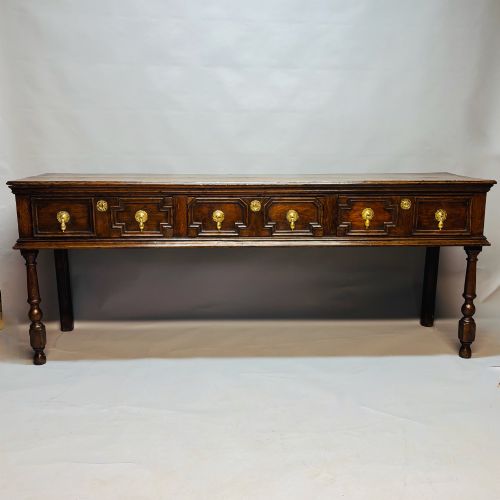
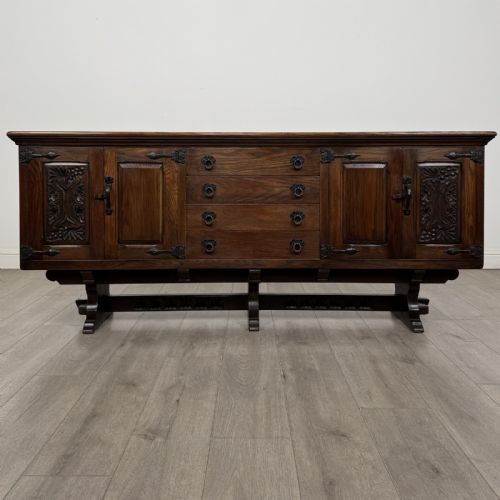
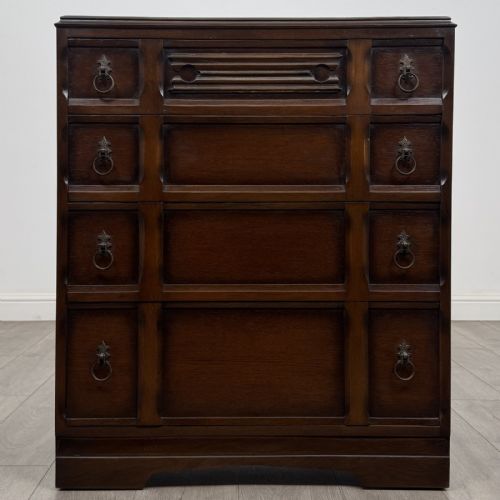
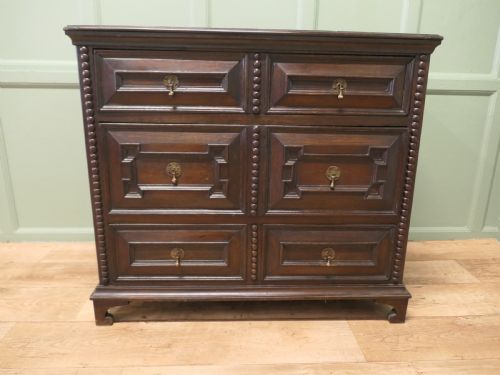
Jacobean Dresser
A jacobean dresser brings robust seventeenth-century character and dark timber warmth into a modern dining room.
Jacobean Dresser
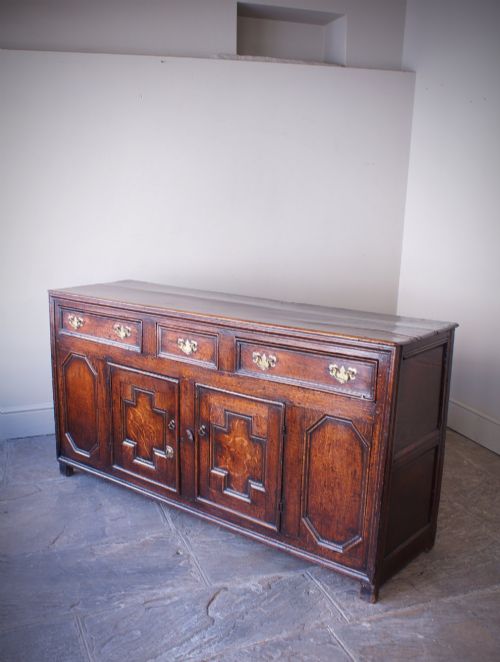
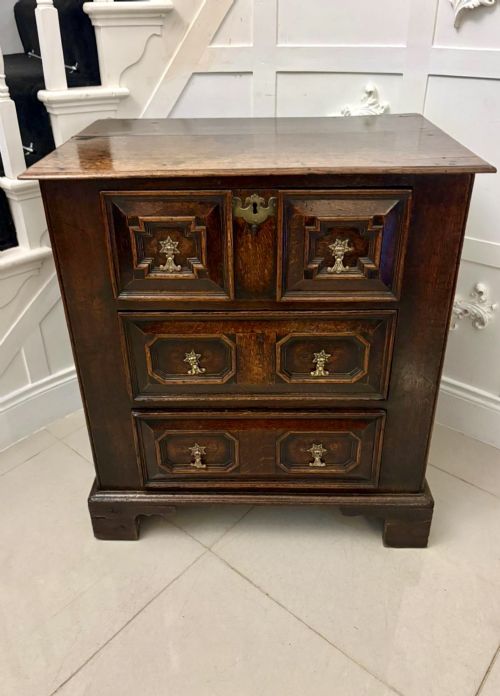
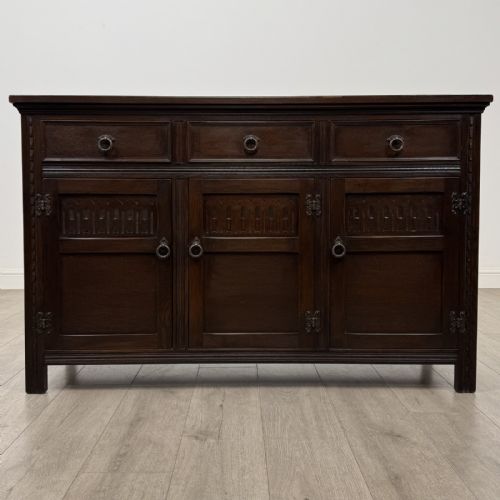
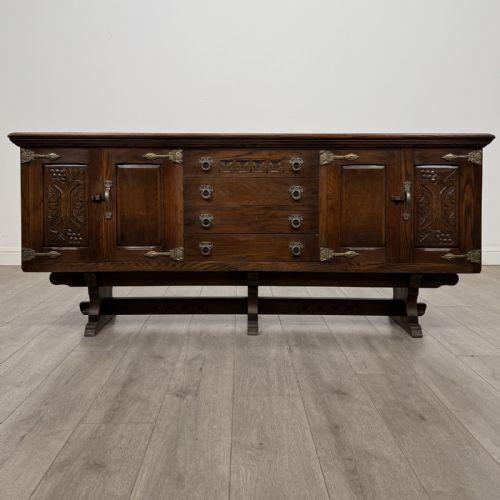
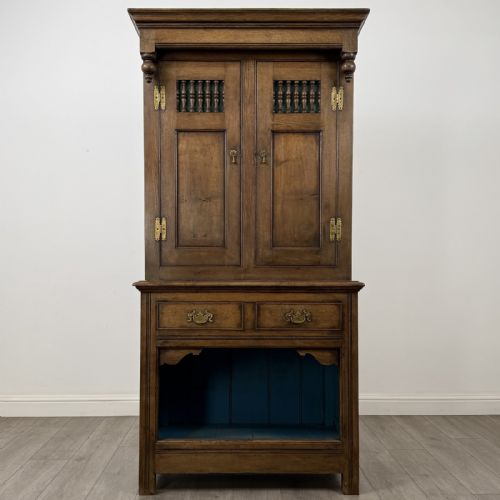
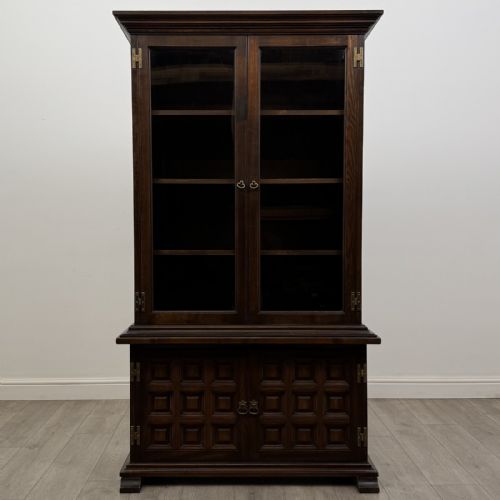
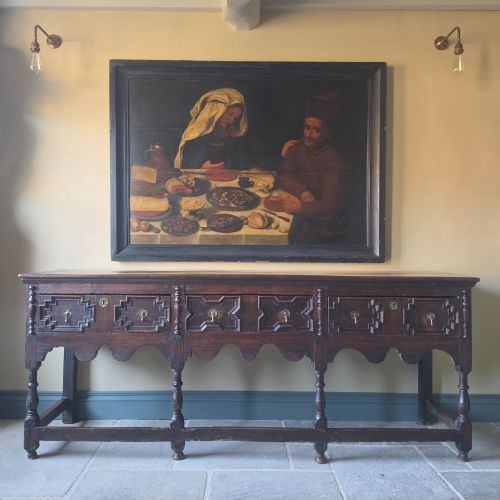
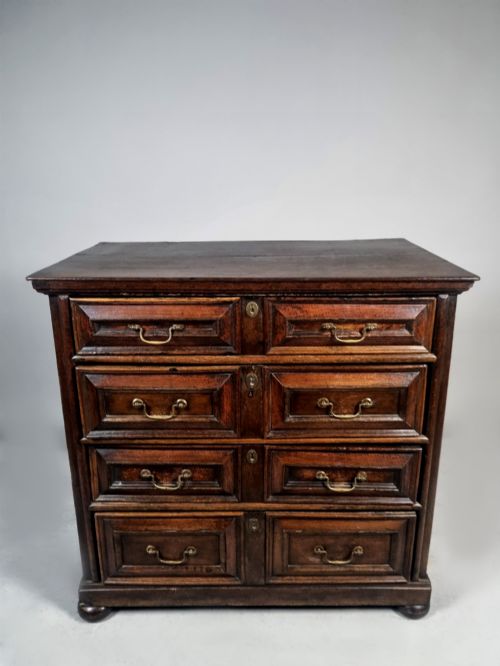
A jacobean dresser search encounters solid timber furniture built primarily in oak, spanning genuine seventeenth-century origins alongside later revival pieces. These forms incorporate dresser bases, sideboards, and chests of drawers that emphasise utility and heavy proportions.
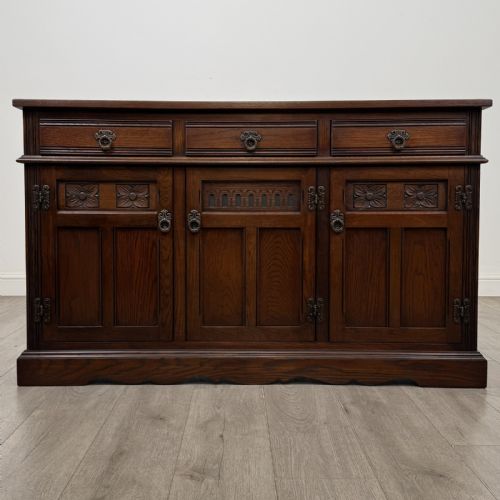
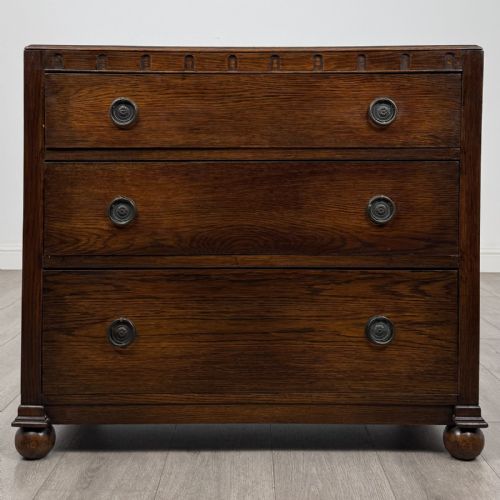
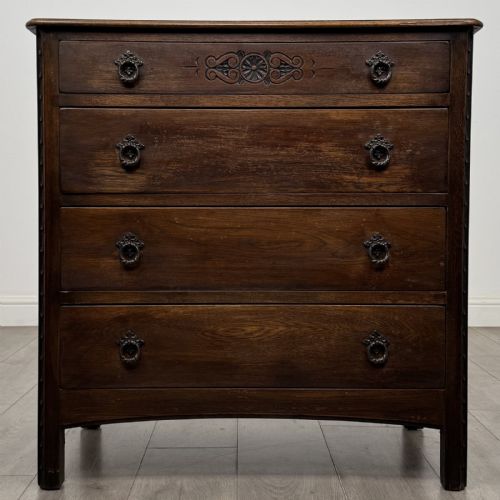
Most examples met on this page date from later revival periods such as the nineteen-twenties or Edwardian era, reproducing early styles with carved panels and stretcher bases. Authentic seventeenth-century pieces appear alongside these later interpretations, sharing similar geometric mouldings and dark finishes.
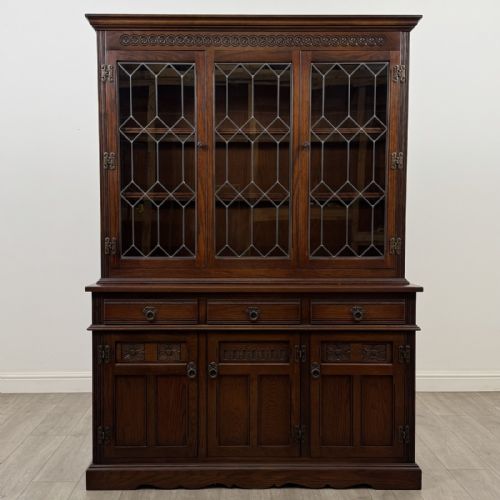
Forms vary from low dresser bases with drawers to larger sideboards and display cabinets fitted with leaded glass doors. Buyers select these pieces for their practical storage and strong architectural presence.
Materials and Construction
Construction relies heavily on solid oak, selected for durability and finished with dark wax or polish. Metal elements like brass handles, iron fixtures, and lead detailing appear alongside painted surfaces on specific nineteenth-century examples.
Listings feature oak furniture spanning the seventeenth century, Georgian period, Victorian era, and nineteen-twenties revivals.
Distinguishing Quality
Quality rests upon the depth of the timber grain, the crispness of the hand-carved geometric panels, and the integrity of the original joints. Period authenticity and the retention of original brass handles or bun feet elevate the standing of a piece.
Later revival items range from simple mass-produced Edwardian furniture to meticulous reproductions that mirror seventeenth-century proportions. The weight of the solid wood and the precision of the stretcher base separate finer examples from simpler utilitarian cupboards.
The Jacobean Dresser Glossary
- Stretcher base
- A framework of horizontal wooden bars connecting the lower legs of a table or dresser base for added stability.
- Geometric panels
- Raised or sunken mouldings arranged in symmetrical shapes on drawer fronts and cabinet doors, typical of seventeenth-century joinery.
- Raised gallery
- A low wooden upstand attached to the top rear edge of a chest of drawers or sideboard to prevent items from sliding off.
- Bun feet
- Rounded, slightly flattened wooden feet shaped like buns that elevate cabinets and chests off the floor.
Jacobean Dresser: Frequently Asked Questions
How do I date a dresser?
Dating relies on examining the timber grain, the style of the hardware like brass handles, and the construction methods used in the drawers.
Seventeenth-century pieces display distinct hand tool marks and period mouldings, whereas revival pieces from the Edwardian era or nineteen-twenties often utilise machine-cut elements.
Where should I place it?
These robust sideboards and dresser bases suit dining rooms, hallways, or living spaces needing substantial surface area and storage.
Their dark oak tones and carved panel doors anchor a room visually, pairing well with both traditional and contemporary interiors.
Are revival pieces well made?
Revival furniture from the early twentieth century often utilises solid oak and traditional joinery methods similar to earlier eras.
Many Edwardian and nineteen-twenties pieces offer sturdy construction and careful carving that emulate seventeenth-century aesthetics effectively.