


Jacobean Console Table
Jacobean console table pieces bring sturdy timber and historic carved detail into modern hallways, offering practical surface space rooted in centuries of design.
Jacobean Console Table
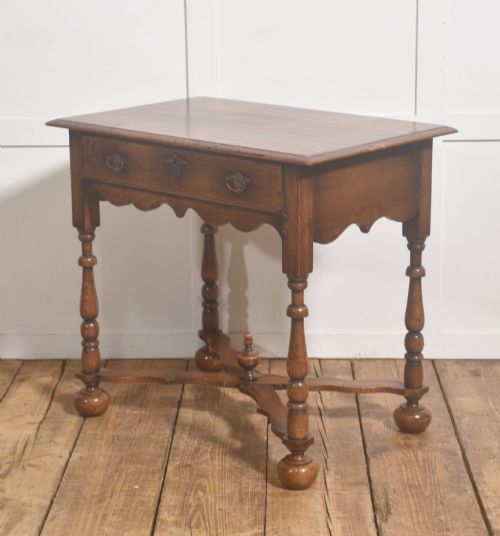
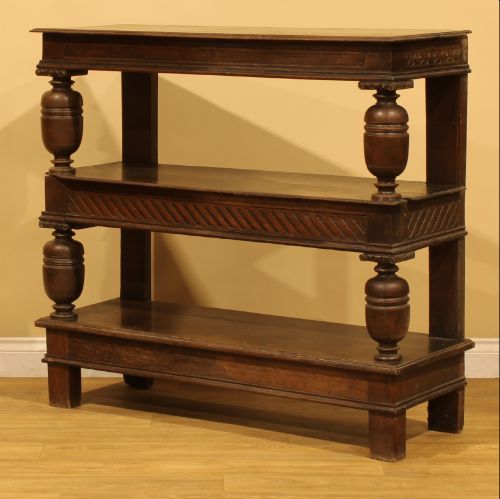
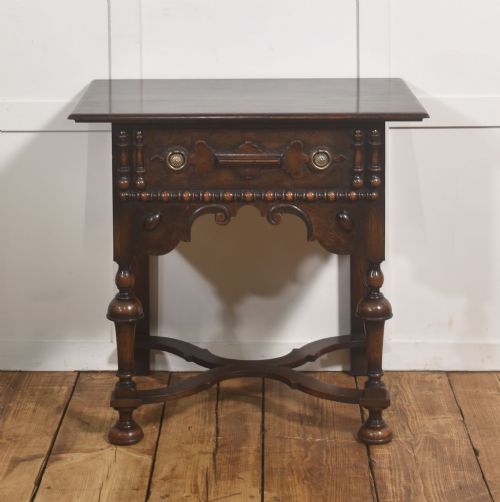
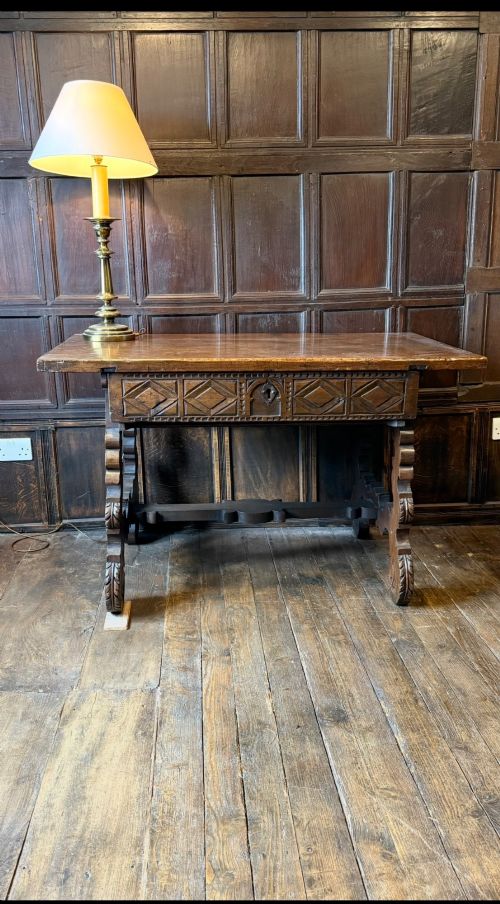
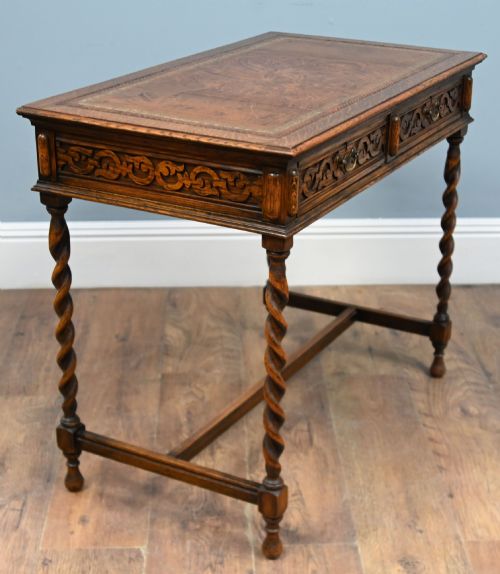
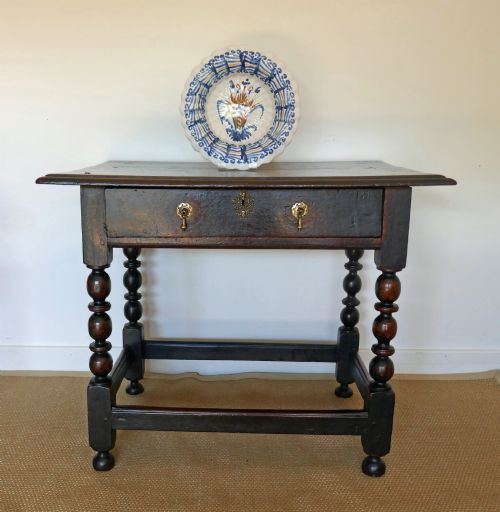
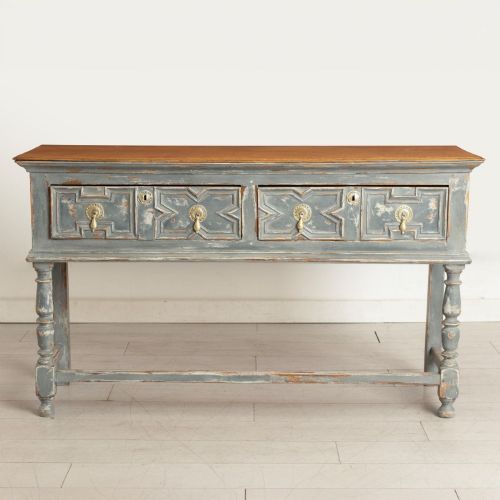
A jacobean console table encompasses heavy timber side tables, low dresser bases, and serving tables originating from the seventeenth century alongside revival interpretations made during the Victorian, Edwardian, and nineteen-twenties periods. Buyers searching this phrase encounter substantial forms built from oak and walnut, often featuring practical drawers or lower potboards designed for storage in halls and living spaces.
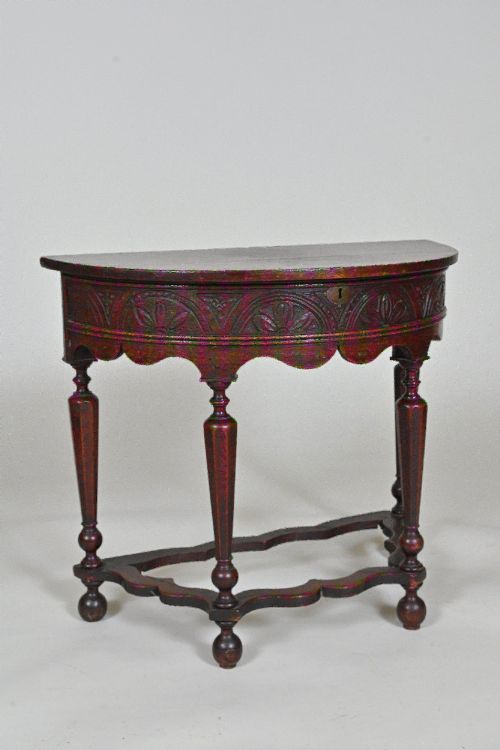
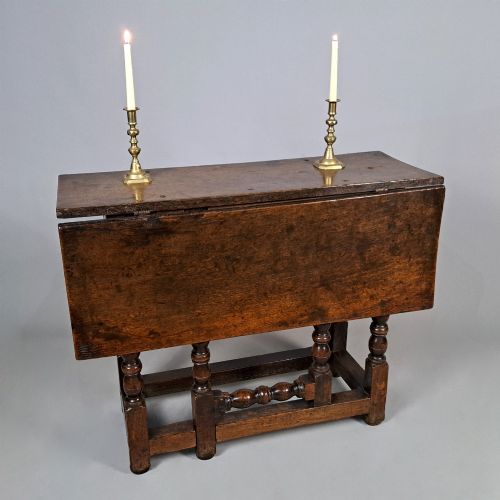
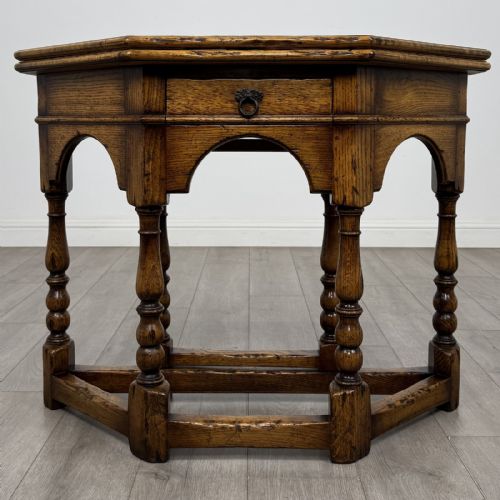
The material palette relies heavily on solid oak, supplemented by walnut, brass, and painted finishes that reflect both seventeenth-century origins and later revival movements. These tables manifest in various formats, including narrow hallway furniture, fold-over tea tables, and carved desks suited to contemporary domestic interiors.
How they were made
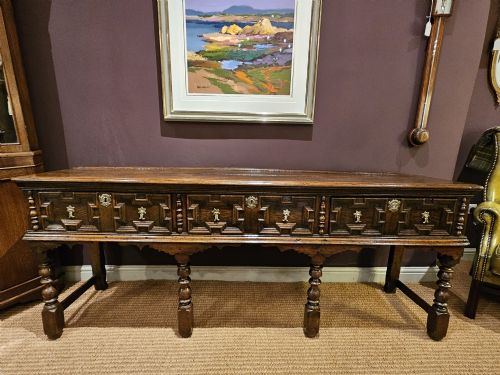
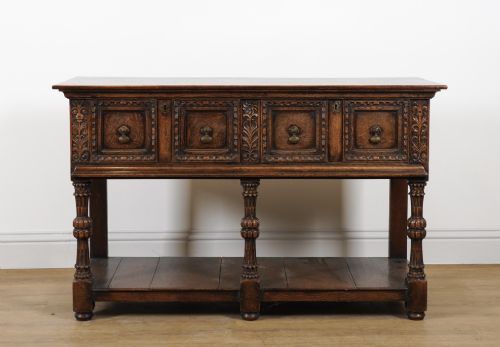
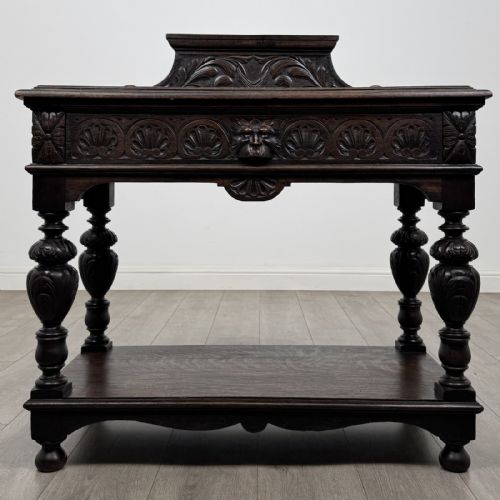
Construction relies on solid oak and walnut timbers, shaped using traditional joinery techniques such as mortise and tenon frames alongside geometric mouldings applied to drawer fronts. Artisans utilised hand-carving methods to produce intricate details like Green Man masks, foliate patterns, and applied split spindles.
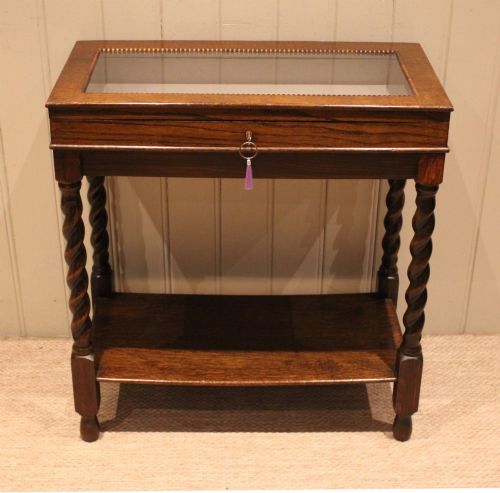
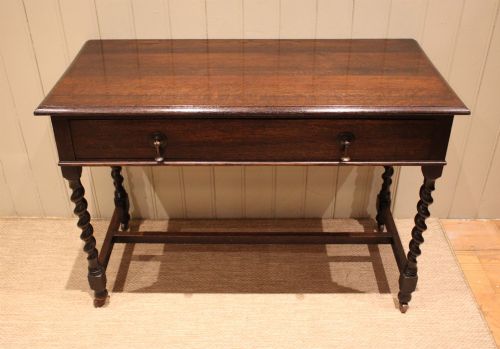
Turning techniques created the characteristic structural supports seen in these pieces, ranging from bobbin turning and early twists to later barley twist legs. Metal elements appear primarily as brass drop handles and drawer pulls complementing the dark timber surfaces.
Jacobean Console Table Retail Price Guide 2026
Typical asking prices for jacobean console table among the pieces listed under this phrase on Sellingantiques today, from the lower quarter to the upper quarter. They describe what is for sale here now, not the wider market.
Keep an eye out for hidden Green Man masks peering from the carved woodwork, watching over your hallway keys.
What varies in quality
Quality depends on the integrity of the timber and the depth of the carving, distinguishing seventeenth-century originals and high-grade revivals from mass-produced later copies. Crispness in hand-carved details and originality of brass hardware and drawer linings elevate a piece significantly.
Structural proportion and timber figuring dictate visual appeal, with dense grain patterns and well-balanced dimensions marking superior examples across all production periods.
The Jacobean Console Table Glossary
- Potboard
- An open lower shelf fitted to a dresser base or console table, historically used for displaying pewter or storing kitchen pottery.
- Barley Twist
- A cylindrical furniture leg or column carved in a spiral rotation resembling a twisted rope or strand of barley.
- Credence Table
- A folding-top table originating in the medieval and seventeenth periods, featuring a hinged leaf supported by a swinging leg.
- Geometrical Moulding
- Raised rectangular or panelled wooden mouldings applied to drawer fronts and doors, popular during the seventeenth century.
Jacobean Console Table: Frequently Asked Questions
Where should I place a jacobean console table?
These tables fit well in hallways, entrance passages, and living rooms where surface space is needed for lamps or decorative items. Their narrow proportions allow them to sit flush against walls without obstructing pathways.
Because many examples include drawers or lower potboards, they provide functional storage for everyday items while maintaining a strong historic aesthetic.
How do I distinguish a seventeenth century table from a revival piece?
Seventeenth-century originals display hand-cut joinery marks, genuine timber oxidation, and wear patterns consistent with centuries of use. Revival pieces made during the Victorian era or the nineteen-twenties often feature machine-sawn elements and uniform timber coloration.
Examining the underside and drawer linings reveals construction methods that help clarify whether a piece dates to the original period or a later revival.
What maintenance do these oak tables require?
Solid oak furniture benefits from occasional application of quality beeswax to nourish the wood and maintain a soft lustre. Avoid placing timber tables in direct sunlight or near heat sources to prevent the wood from drying out.
Regular dusting with a soft, dry cloth keeps the carved details clear of debris without damaging the historic finish.
Did these tables always have drawers?
Many surviving examples incorporate one or two drawers beneath the main surface, though simpler serving tables and credences were also common. Drawer configurations depended on the specific function, whether for serving dining items or storing household papers.
Revival makers frequently copied these functional layouts, producing both single-drawer and multi-drawer variants to suit domestic needs.