
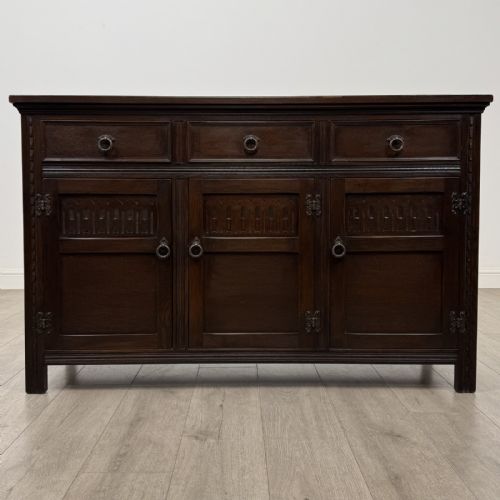
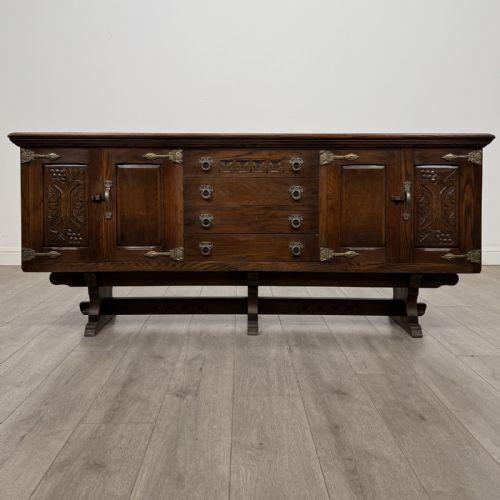
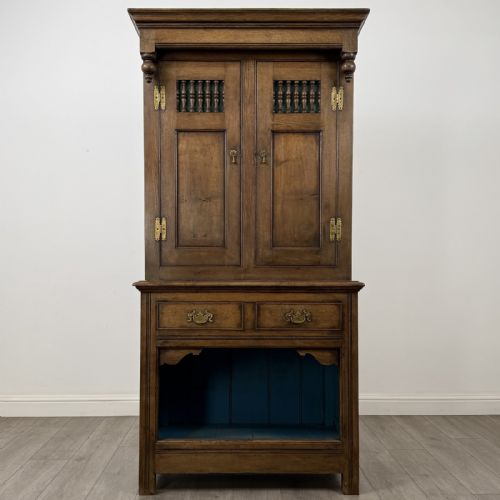
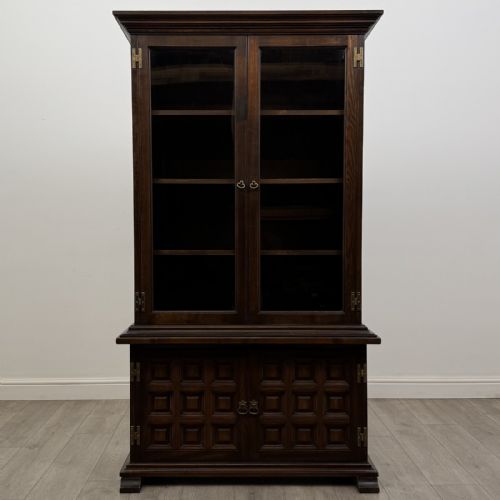
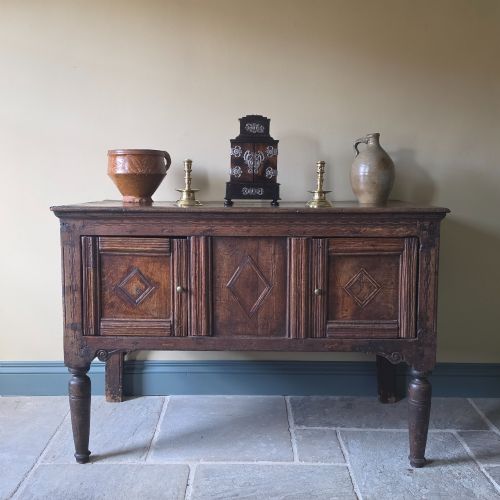
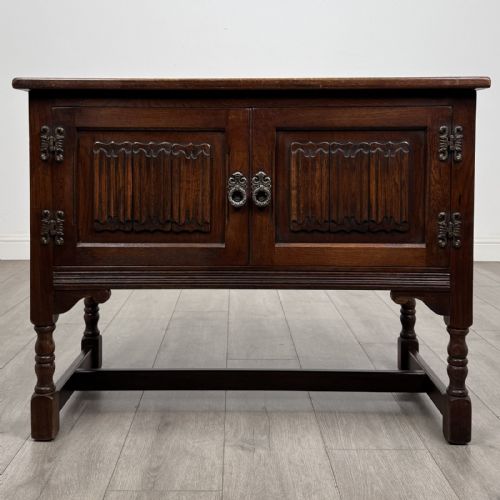
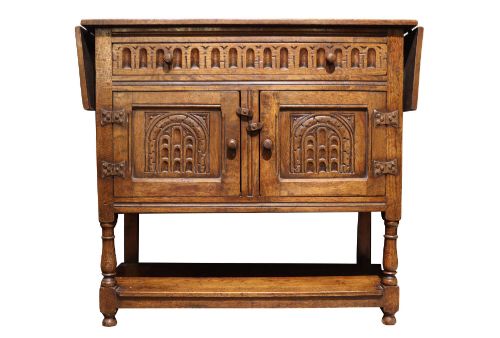
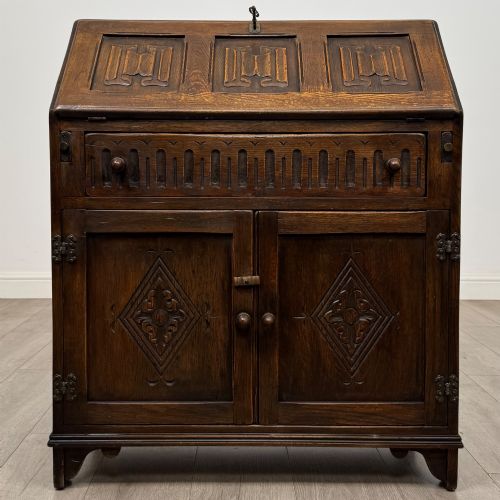
Jacobean Carved Cupboard
A jacobean carved cupboard brings heavy timber and formal carving into a room, offering sturdy storage rooted in seventeenth-century design.
Jacobean Carved Cupboard
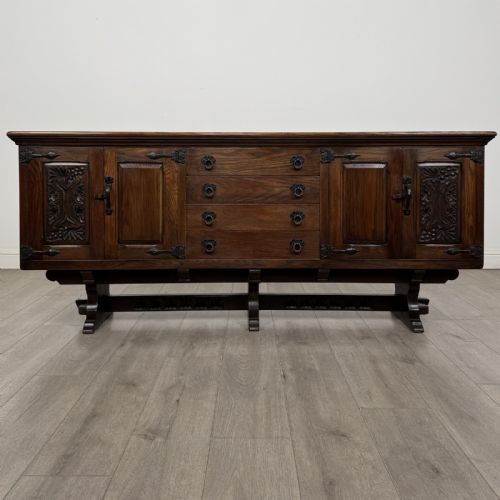
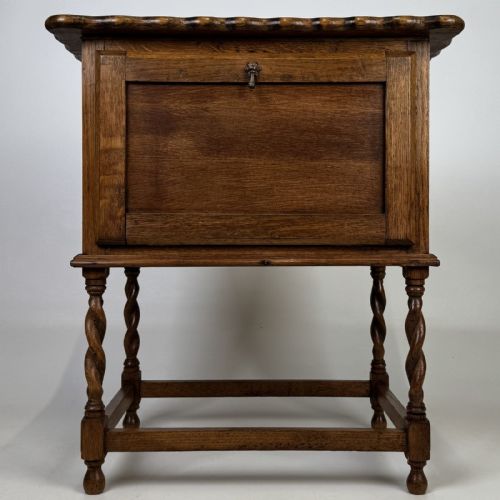
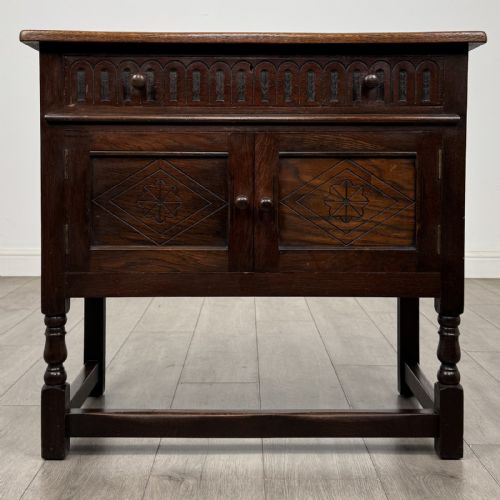
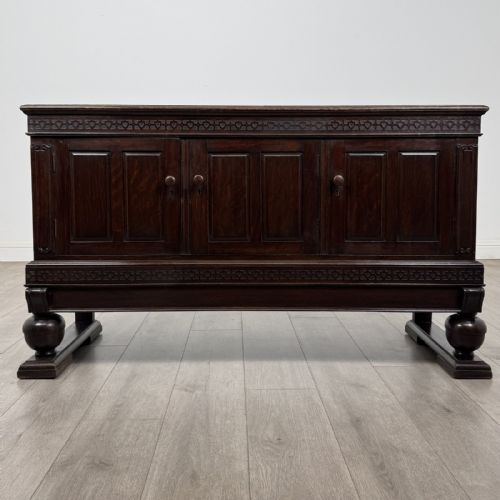
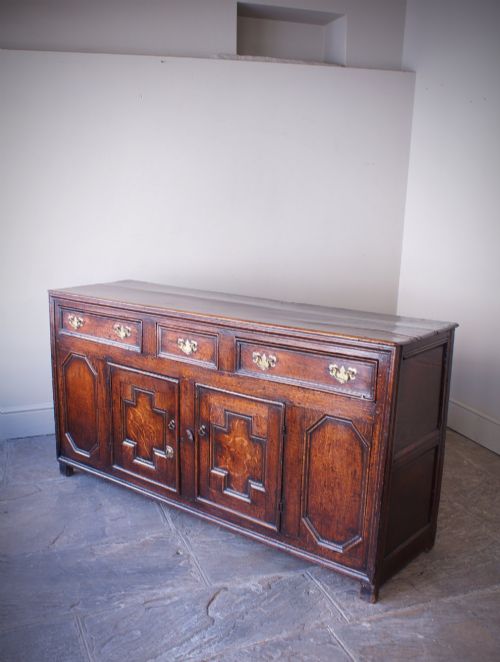
When searching for a jacobean carved cupboard, buyers encounter both authentic seventeenth-century pieces and later revivals from the Victorian, Edwardian, and 1920 periods. The surviving examples range from large court cupboards and press cupboards to smaller wall-hanging cabinets and sideboards.
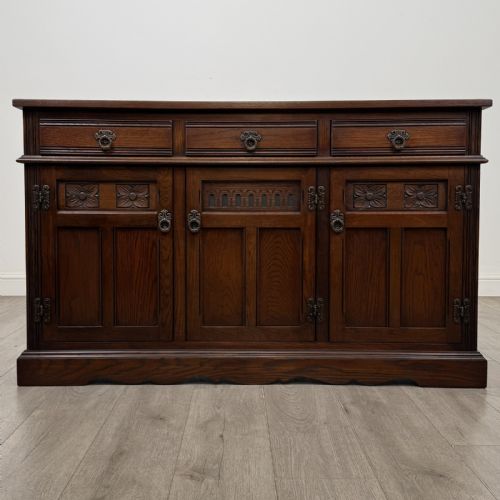
Most pieces met on this page date from the Edwardian era or the 1920s, constructed in the Jacobean style with heavy geometric mouldings and panel work. True seventeenth-century examples appear alongside these revivals, showing authentic joined construction and age-related patination.
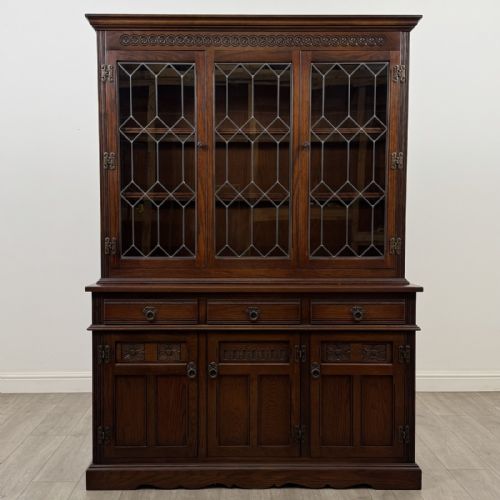
Forms vary from tall wardrobes and sideboards to compact display cabinets and corner units. Oak serves as the primary timber across all periods, shaping the heavy silhouette expected from this tradition.
Distinguishing quality in carved oak
Quality rests in the crispness of the hand-carving and the selection of the oak timber. Pieces with deep, well-defined relief work and properly matched grain stand apart from simpler production items.
The integrity of the original construction separates fine examples from heavily altered ones. Untouched surfaces and original hardware carry more weight than replaced panels or modern fixings.
Listings span from the seventeenth century through to the 1930s, featuring oak timber combined with brass, iron, and glass.
The Jacobean Carved Cupboard Glossary
- Court cupboard
- A heavy oak sideboard or storage cabinet featuring an upper recessed section supported by pillars, originating in the sixteenth and seventeenth centuries.
- Press cupboard
- A large enclosed storage piece with upper and lower cabinet sections used historically for storing linen and garments.
- Linenfold
- A style of wood carving that mimics folded fabric, commonly seen on panels of cupboards and wardrobes from various periods.
- Barley twist
- A type of turning shaped like a spiral, frequently found on the legs and supports of sideboards and cabinets from the seventeenth century and later revivals.
- Joined oak
- Furniture constructed using mortise and tenon joints secured with wooden pegs rather than metal nails.
Jacobean Carved Cupboard: Frequently Asked Questions
What is a court cupboard?
A court cupboard is a traditional enclosed storage unit featuring a stepped design with an upper cabinet recessed behind support pillars.
These pieces were historically used in dining halls and parlours to display plate and store provisions.
How do I spot a reproduction?
Reproductions from the Edwardian period or the 1920s often use machine-cut joints and lighter internal timbers alongside machine-carved panels.
Examining the backboards, interior fixings, and tool marks helps distinguish a seventeenth-century original from a later Jacobean style revival.
Where should I place a cupboard?
These heavy oak pieces suit dining rooms, hallways, or living spaces with sufficient wall space and floor strength to support their weight.
Keep them away from direct heat sources and strong sunlight to protect the solid oak timber and its finish.
What is linenfold carving?
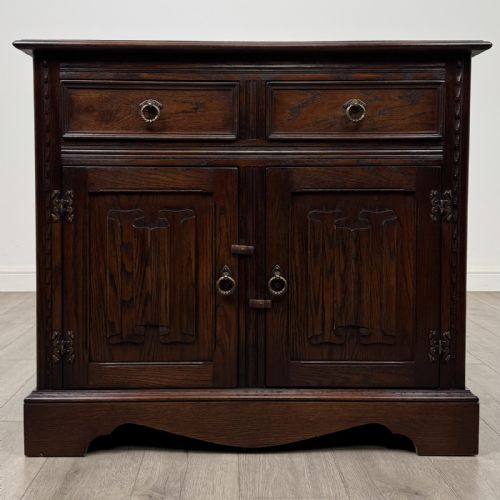
Linenfold is a decorative panel carving technique that resembles stiff cloth folded in vertical vertical pleats.
This motif appears frequently on oak cupboards, bureaus, and cabinets across multiple centuries.