

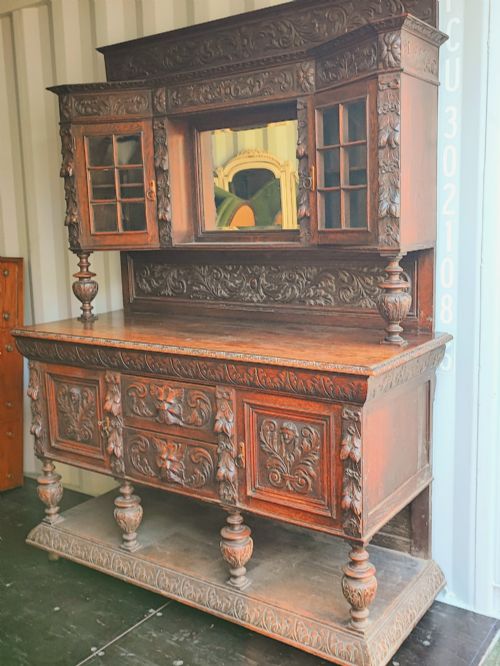
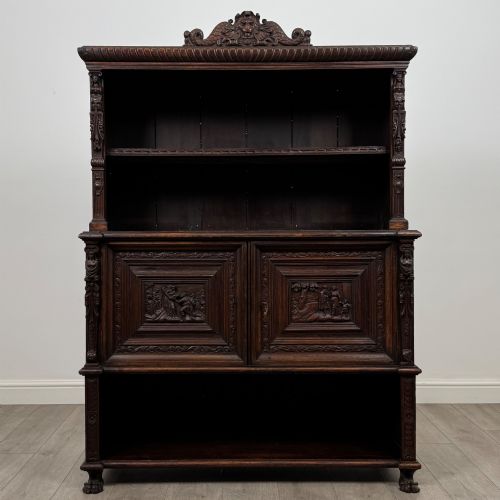

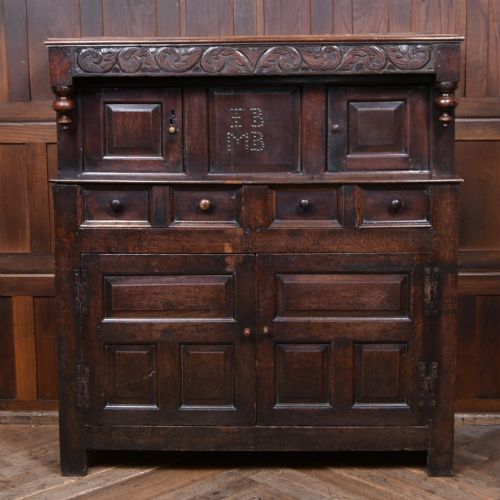

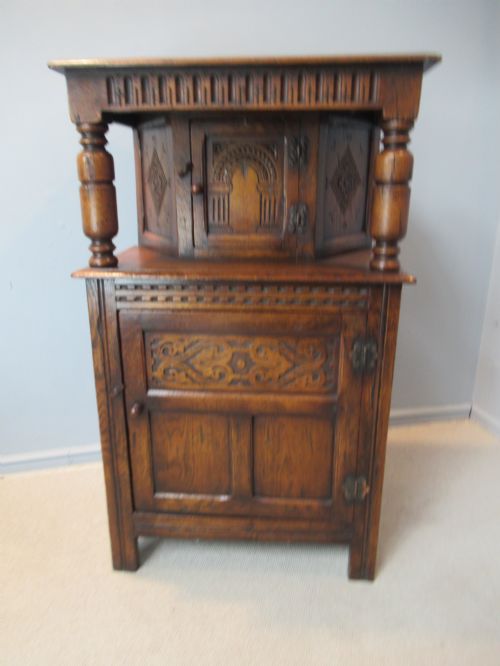




Jacobean Carved Court Cupboard
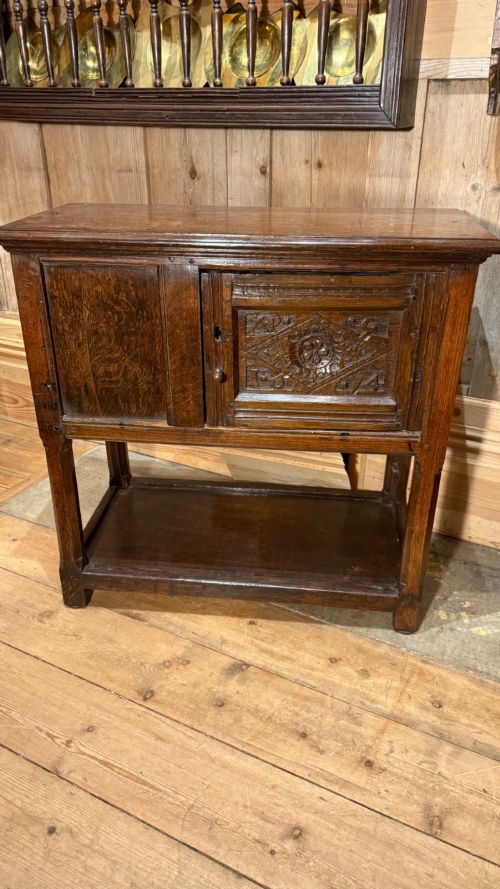
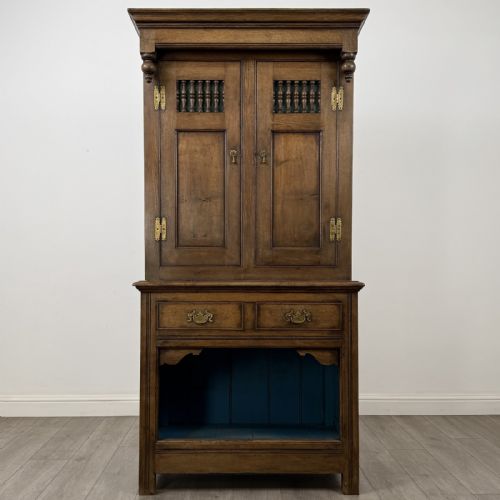
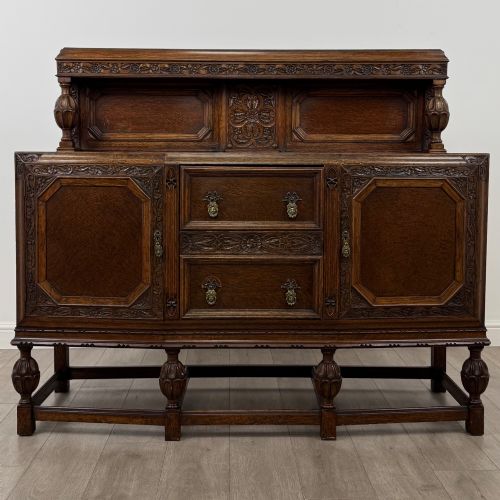
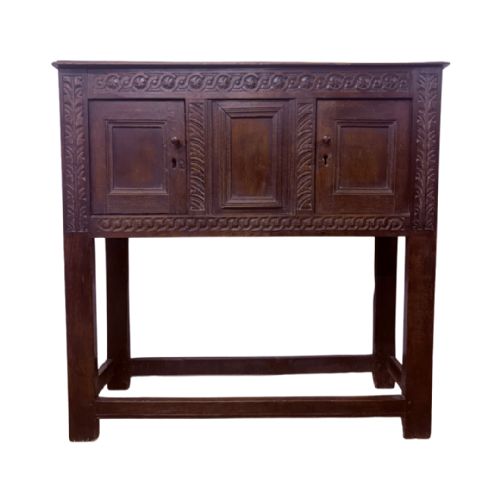
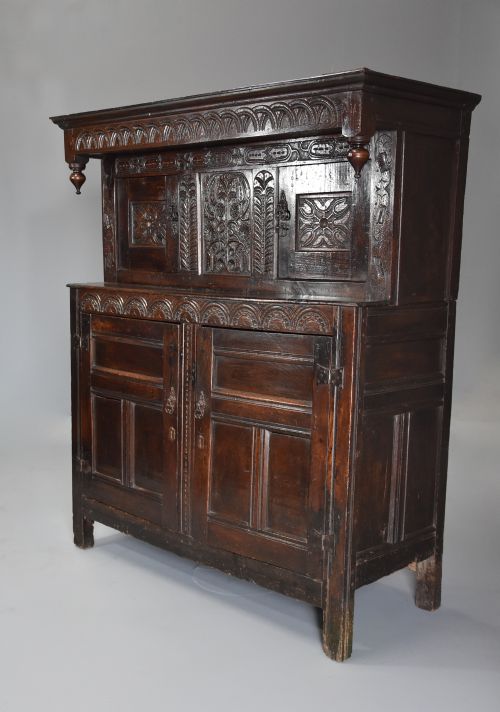
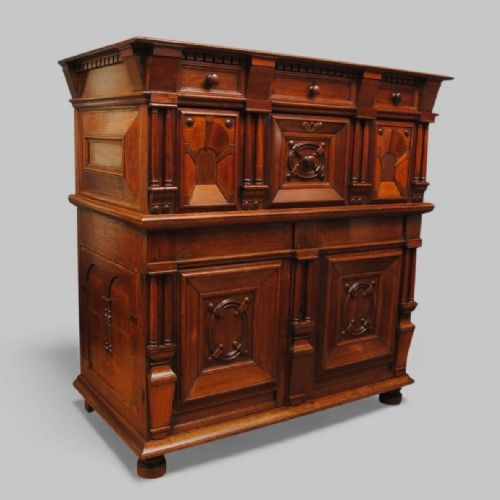
Jacobean carved court cupboards are robust storage pieces displaying deep geometric relief and panel work desired for historic character.
Jacobean Carved Court Cupboard
A jacobean carved court cupboard is a heavy timber storage piece originally designed for displaying plate and storing provisions in great houses. The form typically comprises a recessed upper stage supported on pillars above a larger lower cabinet. Buyers encounter genuine seventeenth-century examples alongside later revival pieces from the Victorian and Edwardian eras.
The survival rate of seventeenth-century English oak pieces is remarkably low, meaning many examples seen today date from later periods employing historical styles. Revival pieces adopt the distinct architectural proportions, heavy cornices, and carved friezes of the earlier period. These later interpretations offer the visual weight and timber texture of sixteenth and seventeenth-century furniture for domestic interiors.
What varies in quality
Quality in a jacobean carved court cupboard rests upon the depth and crispness of the timber carving and the integrity of the original structure. Superior examples retain their joined framework without extensive timber replacement, while lesser pieces suffer from heavy restoration or married parts from different centuries. The presence of untouched surface patination separates exceptional pieces from heavily stripped or over-varnished examples.
Proportion and scale dictate desirability, with smaller cottage cupboards commanding particular attention from buyers with limited wall space. The sophistication of the geometric panels, whether applied mitred mouldings or directly carved rails, indicates the original workshop status. Later revival pieces vary according to whether the carver understood traditional structural depths or merely applied surface decoration.
Jacobean Carved Court Cupboard Retail Price Guide 2026
Typical asking prices for jacobean carved court cupboard among the pieces listed under this phrase on Sellingantiques today, from the lower quarter to the upper quarter. They describe what is for sale here now, not the wider market.
Food court cupboards featured pierced spindles to let cheese breathe while keeping household mice from the supper.
The Jacobean Carved Court Cupboard Glossary
- Court cupboard
- A two-tiered storage furniture form used from the sixteenth century onwards, featuring a recessed upper section above a cupboard base.
- Livery cupboard
- A small ventilated cupboard traditionally used for storing rations of food and candles before sleeping hours.
- Joined oak
- Furniture construction utilising interlocking mortise and tenon joints secured with wooden pegs rather than metal nails.
- Geometric panels
- Raised or sunken wooden mouldings arranged in repeating geometric patterns such as rectangles, lozenges, and triangles.
- Patina
- The surface sheen and colour acquired by ageing timber through oxidation, handling, and wax polishing over generations.
Jacobean Carved Court Cupboard: Frequently Asked Questions
What is a court cupboard?
A court cupboard is an elevated storage cabinet featuring a recessed upper stage supported by pillars above a lower cupboard section.
Originally used in the sixteenth and seventeenth centuries to display plate and store household provisions, these pieces served as central status items in large halls.
How do I date an oak cupboard?
Dating relies on examining construction methods, tool marks, timber shrinkage, and stylistic indicators such as carved friezes and geometric mouldings.
Seventeenth-century pieces show hand-riven oak with pegged frame and panel joinery, whereas nineteenth and twentieth-century revivals display machine-cut timber and standardised hardware.
Where were court cupboards used?
These cupboards were placed in the principal rooms of seventeenth-century homes, including dining halls and parlours, to hold tableware and foodstuffs.
In modern interiors, they function as substantial sideboards or display cabinets in dining rooms and large hallways.
Are revival pieces authentic?
Revival pieces are authentic antiques from the Victorian, Edwardian, or early twentieth-century periods that faithfully copy seventeenth-century designs.
They offer the aesthetic appeal and heavy oak construction of earlier centuries while dating from later historic revivals.
How do I care for antique oak?
Antique oak benefits from occasional applications of traditional beeswax and polishing with a soft cloth to maintain the surface moisture.
Keep these pieces away from direct heat sources and dramatic humidity fluctuations to prevent timber splitting.