
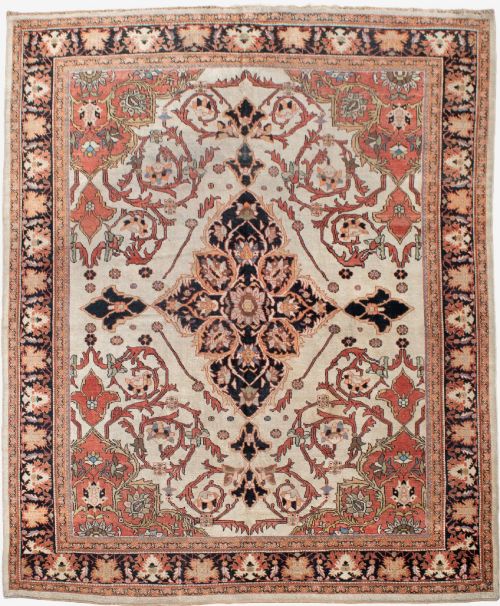
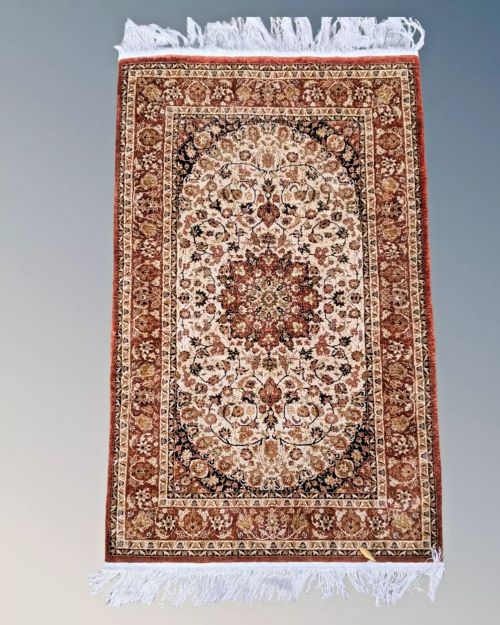
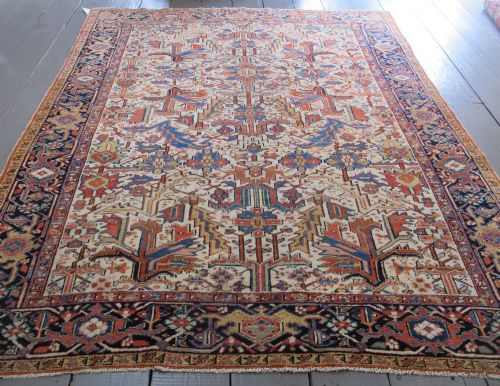
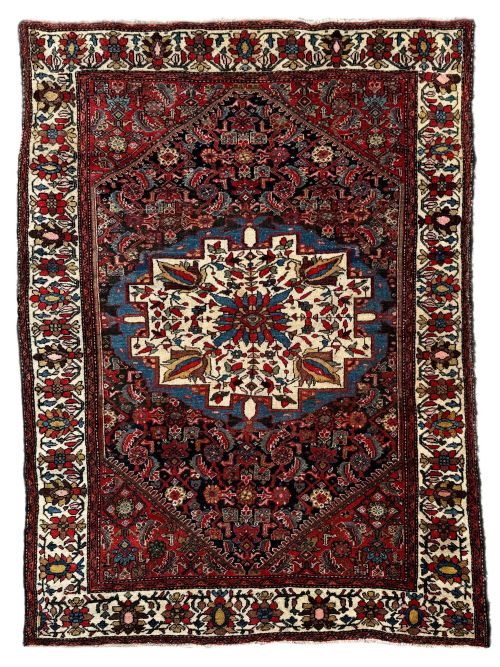
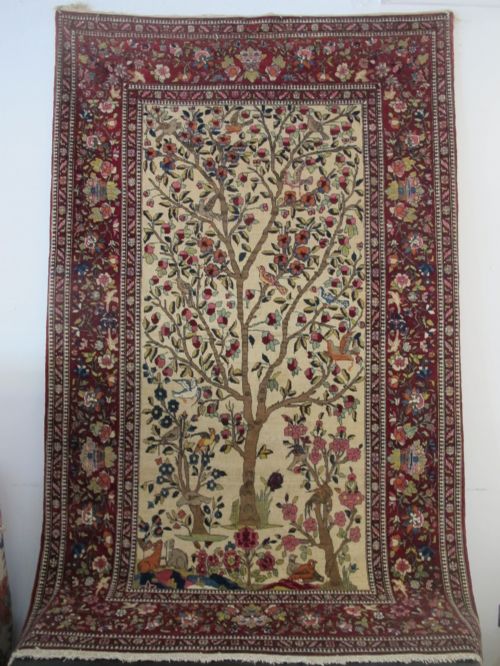


Ivory Persian Area Rug
An ivory persian area rug brings warmth and traditional craftsmanship to a room through dense wool and fine knotting.
Ivory Persian Area Rug
An ivory persian area rug encompasses hand-knotted floor coverings originating from weaving centres across Persia, dating from the late nineteenth century to the early twentieth century. These textiles include room-sized carpets as well as smaller rugs produced by village and tribal weavers.
Buyers seeking this phrase encounter formats ranging from compact hallway rugs to expansive carpets woven for country houses. The palette typically combines ivory fields with deep blues, reds, and soft greens derived from natural sources.
How they were made
The foundation relies upon tightly spun cotton or wool warps and wefts, providing a stable grid for the pile. Weavers knotted hand-spun wool and occasional silk highlights onto this structure by hand, clipping the yarn to an even length.
Dyers utilised natural materials including plant extracts and roots to achieve enduring shades of ivory, madder red, and indigo. These traditional dye methods interact with the wool fibres to develop a soft patina over decades of use.
The listings span nineteenth-century pieces up to the 1930s, featuring wool, cotton, silk, and natural dye materials.
What varies in quality
Knot density dictates the crispness of the drawn motif, separating finely detailed city rugs from coarser tribal productions. Higher knot counts allow for intricate curves and precise floral outlines within the central medallions.
The purity and preparation of the wool directly influence the handle and durability of the pile. Supple, lanolin-rich wool retains its lustre and resilience far better than dry or brittle fleece.
Ahmadi Isfahan·Kirman Laver
The Ivory Persian Area Rug Glossary
- Medallion
- The central ornamental design set into the middle of the rug field. This focal motif often mirrors the corner spandrels in its palette and geometry.
- Warp
- The vertical threads stretched lengthwise on the loom before weaving begins. These visible foundation strands frequently emerge as fringes at either end of the rug.
- Weft
- The horizontal threads passed alternately over and under the warp strings to lock the rows of knots in place. Proper tension here ensures the rug maintains its rectangular geometry.
- Pile
- The upright cut ends of the knotted yarn that form the usable surface of the carpet. The height and density of this layer determine the tactile weight and drape.
- Spandrel
- The triangular corner areas of the rug field, typically decorated to frame the central medallion. They represent a classic layout element in traditional Persian weaving.
Ivory Persian Area Rug: Frequently Asked Questions
How do I clean an old wool rug?
Regular gentle vacuuming without a beater bar removes surface dust before it settles into the foundation. Professional specialist washing remains essential for deep cleaning to protect the natural dyes.
Water exposure should stay minimal during maintenance to prevent dye bleed across the pale ivory ground. Allowing the rug to dry flat ensures the cotton foundation retains its original dimensions.
Where were these woven?
Production took place across urban workshops, village houses, and nomadic camps in Persia. Major centres like Tabriz and Isfahan produced refined city carpets.
Tribal groups including the Bakhtiari and Baluch wove more geometric pieces on portable looms. Each region applied distinct knotting techniques and local wool properties.
Will an ivory rug show dirt?
Pale grounds reveal heavy foot traffic sooner than darker carpets, making placement in low-dirt zones advisable. Regular sweeping prevents grit from cutting into the base of the pile.
Entryways and dining spaces require careful consideration regarding daily wear and potential staining. Protective underlays help cushion the textile and reduce friction against hard floors.
How do I identify a village rug?
Village and tribal pieces display memory-driven geometric patterns rather than precise cartographic layouts from urban workshops. Irregularities in the border symmetry often point to local hand-weaving.
Coarser knot counts and saturated natural dyes provide further clues to country production. These rugs carry a charming rustic character distinct from city-made carpets.