

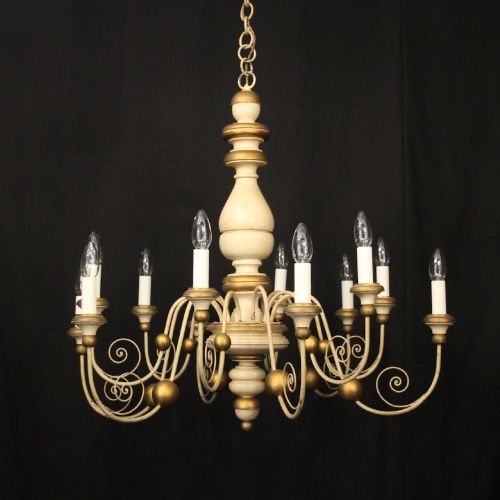


Italian Wood Chandelier
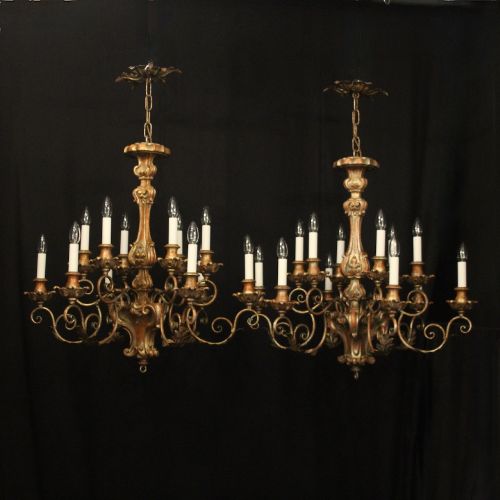
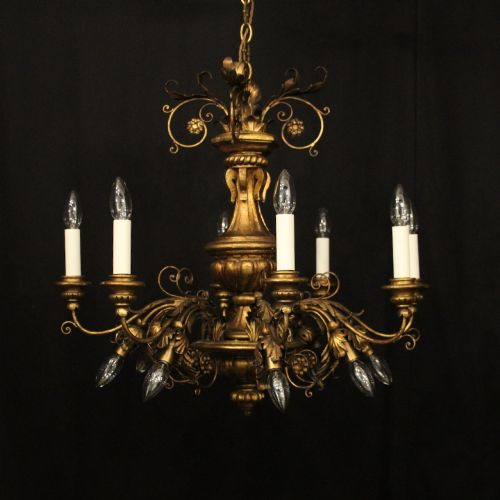
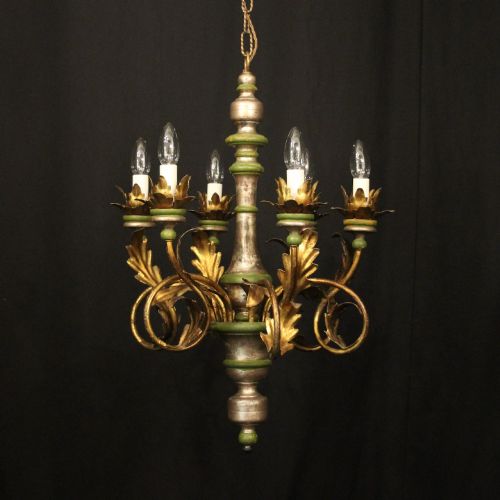
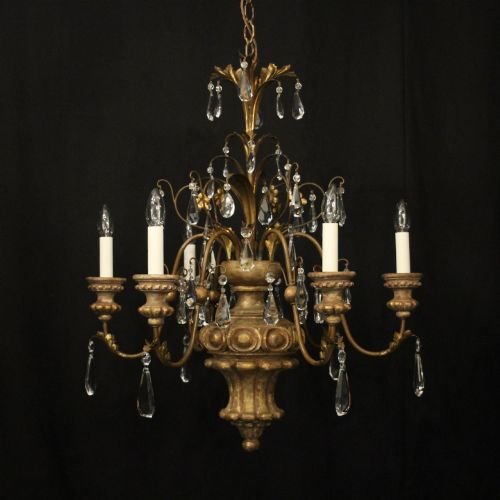
An italian wood chandelier brings warmth and dramatic carving to a high ceiling, drawing the eye with gilt and polychrome finishes.
Italian Wood Chandelier
Buyers frequently encounter multi-light Florentine models dating from nineteen thirty, alongside grand nineteenth-century carved giltwood lanterns. These fixtures combine carved wood elements with wrought iron components, glass drops, and metal arms to support numerous candle or electric lights.
The dominant aesthetic draws heavily on Baroque and Rococo traditions, featuring exuberant acanthus scrolls, polychrome paint, and rich gilding. Alongside the standard multi-light chandeliers, the selection includes hanging lanterns designed for entrance halls and stairwells.
How they were made
Artisans carved the foundational body from soft or hardwoods, applying a layer of gesso to smooth the surface before adding intricate detail. Gilders then laid gold leaf over the prepared gesso, burnishing it to achieve a brilliant reflective quality that caught the candlelight.
Polychrome finishes involved painting directly onto the wood or prepared ground, often combining muted pigments with gilt highlights. Structural strength came from internal metal rods and wrought iron supports, which allowed elaborate carved wooden arms to project outward safely.
Italian Wood Chandelier Retail Price Guide 2026
Typical asking prices for italian wood chandelier among the pieces listed under this phrase on Sellingantiques today, from the lower quarter to the upper quarter. They describe what is for sale here now, not the wider market.
Several pieces squeeze up to sixteen lights onto a single wooden frame, ensuring no corner of the room stays in shadow.
What varies in quality
The finesse of the hand-carving defines the upper tier of these pieces, where crisp acanthus leaves and deep undercut details show superior artisan skill. Lesser examples rely on repetitive, shallow tooling and simpler turned wooden elements.
The richness of the surface preparation also dictates value, distinguishing thick gold leaf and subtle polychrome layering from flat, uninspired paint applications. Furthermore, the structural integration of metalwork and the original harmony of the glass and wood components separate masterworks from assembled pieces.
The Italian Wood Chandelier Glossary
- Giltwood
- Wood that has been coated with gold leaf or gold paint. This technique provides a shimmering surface that illuminates dark interiors.
- Gesso
- A plaster mixture applied to wood to create a smooth surface for gilding or painting. It allows carvers to achieve sharp relief details.
- Polychrome
- Decorated in multiple colours. Artisans used this finish to add naturalistic or decorative hues to carved wooden surfaces.
- Acanthus
- A classical leaf ornamentation heavily used in Baroque and Rococo wood carving. It forms the curling motifs seen on many chandelier arms.
- Florentine
- Pertaining to the artistic style of Florence, known for rich giltwood and ornate scrolling designs. This regional aesthetic dominates the current selection.
Italian Wood Chandelier: Frequently Asked Questions
How do I hang a heavy wooden chandelier safely?
These fixtures require professional installation into ceiling joists or structural timber using rated steel fixings. The substantial weight of carved wood, gesso, and internal metal demands robust load-bearing support.
Consult an electrician to ensure the wiring is safely integrated through the central wooden shaft without compromising the antique structure.
What rooms suit an eighteenth-century carved giltwood chandelier?
High ceilings in formal living spaces, dining rooms, or grand hallways provide the necessary vertical clearance and proportion for these dramatic pieces. The reflective gilt surfaces bounce natural light around the room during the day.
Pairing the chandelier with period architecture allows the intricate scrolls and polychrome paint to stand out against plain walls.
How do I clean and maintain antique giltwood?
Dust the carved surfaces gently with a dry, soft-bristled brush or an ostrich feather duster to remove surface debris. Avoid liquid cleaners, polishes, or damp cloths, which can lift fragile gold leaf and damage the underlying gesso.
Professional conservators should handle any repairs to flaking paint or distressed gilding to preserve the historical integrity of the piece.
How do I tell Florentine and Venetian styles apart?
Florentine chandeliers tend to focus on dense acanthus leaf carving, rich giltwood, and polychrome finishes with a warm, earthy palette. They often feature numerous branching lights arranged in balanced, elegant tiers.
Venetian pieces frequently lean towards monumental proportions, featuring elaborate hanging lanterns and dramatic carving influenced by rich maritime and theatrical traditions.