

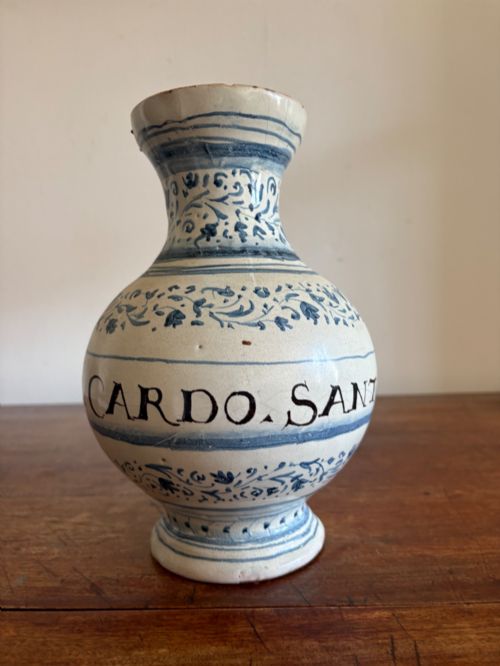


Italian Tin Glazed Pottery
These pieces of italian tin glazed pottery bring centuries of vibrant pigment and earthenware form into domestic spaces.
Italian Tin Glazed Pottery
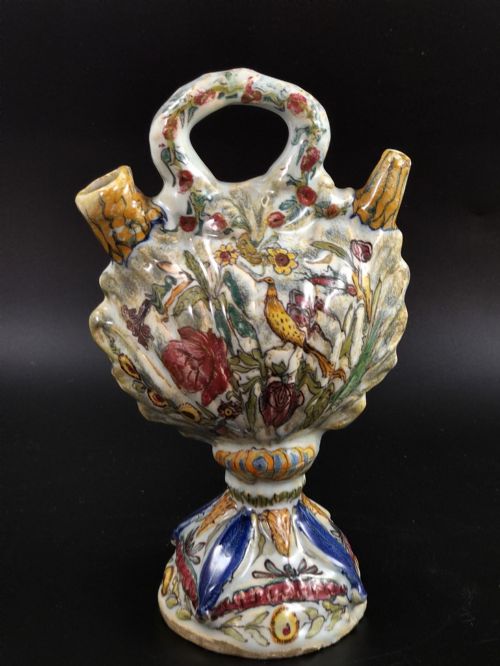
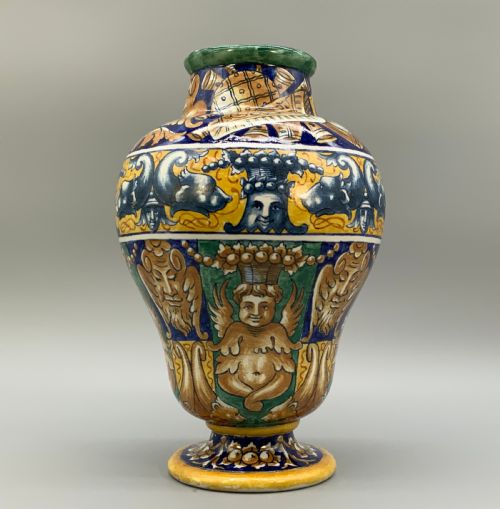
Italian tin glazed pottery encompasses vessels, chargers, and wall art spanning from the seventeenth century through to the early twentieth century. Buyers encounter utilitarian drug jars alongside purely decorative wares created in historic revival styles.
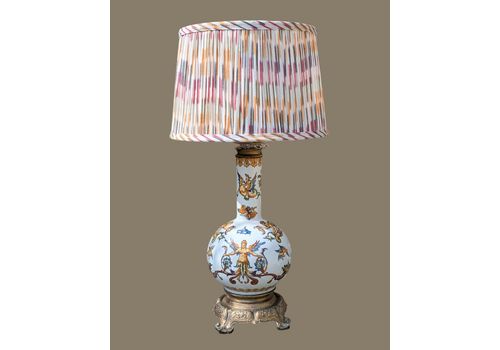
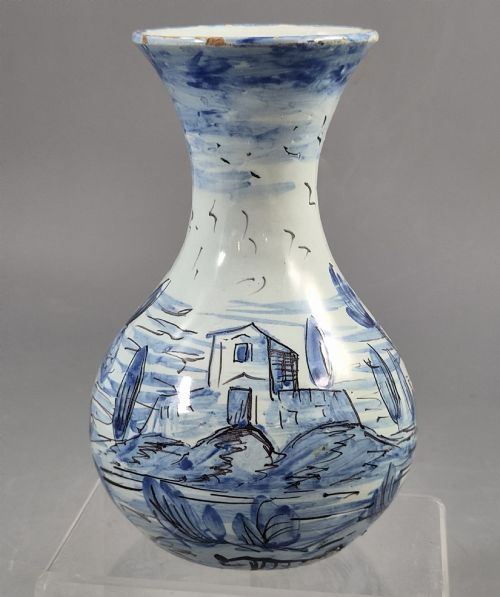
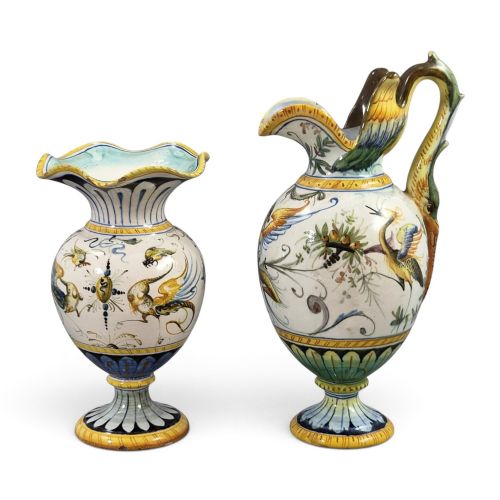
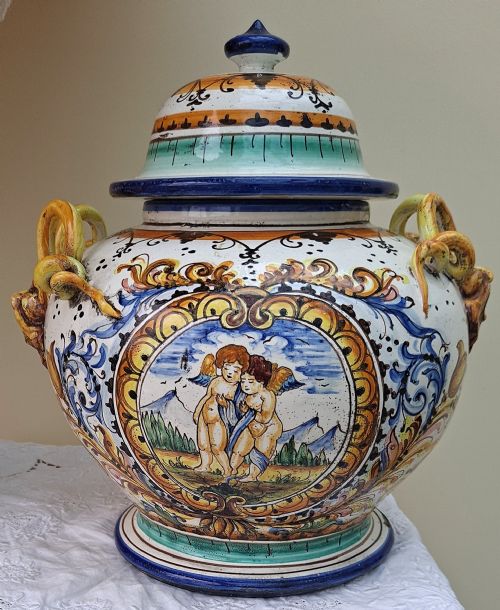
Vases and ewers dominate the forms, rendered in both blue and white palettes and richer polychrome schemes. Domestic devotional plaques and table lamps also appear within the ceramic groupings.
How They Were Made
Makers shaped earthenware bodies from terracotta and ceramic clay, providing a porous base for subsequent decoration. Pigments were applied directly to the raw tin glaze before firing.
The tin glaze technique yielded an opaque white surface that accepted cobalt blue and polychrome mineral pigments. Firing transformed the raw metallic oxides into durable, glossy finishes characteristic of maiolica and faience.
Italian Tin Glazed Pottery Retail Price Guide 2026
Typical asking prices for italian tin glazed pottery among the pieces listed under this phrase on Sellingantiques today, from the lower quarter to the upper quarter. They describe what is for sale here now, not the wider market.
A pair of earthenware dogs stands ready to guard the collection.
What Varies in Quality
Brushwork precision separates accomplished painting from more hurried execution on tin-glazed surfaces. Control over manganese, yellow, and blue pigments determines the visual depth of floral motifs and figurative scenes.
The balance of the earthenware form and the crispness of moulded details dictate overall refinement. Early pots and faithful revival pieces display distinct weight and presence compared to simpler production wares.
Cantagalli·Ulisse Cantagalli·C. Ravier
The Italian Tin Glazed Pottery Glossary
- Maiolica
- Tin-glazed earthenware produced in Italy, known for colourful or blue-and-white painted decoration. It represents the primary tradition underpinning these ceramic works.
- Albarello
- A cylindrical apothecary jar designed to store dry drugs or ointments. These vessels often feature waisted bodies for ease of handling.
- Pilgrim Flask
- A flat-sided vessel with lug handles, originally intended for travellers. Ceramic examples adopted this historic metal shape for decorative display.
- Faience
- Tin-glazed earthenware originating from or styled after European pottery traditions. The term frequently appears alongside majolica in descriptions of these glazed wares.
- Charger
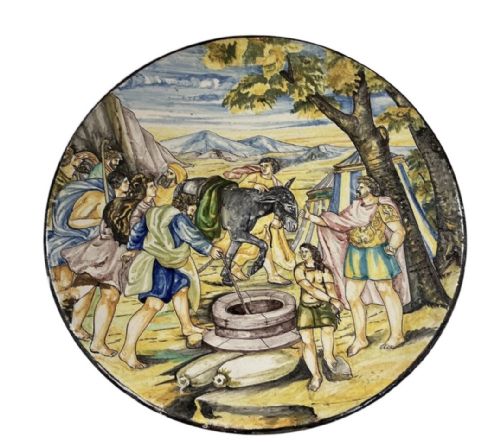
- A large ornamental plate intended for display on walls or sideboards rather than dining use. Potters used the wide surface to paint elaborate narrative scenes.
Italian Tin Glazed Pottery: Frequently Asked Questions
What is an albarello used for?
Albarellos served as pharmacy jars for holding dry drugs, herbal remedies, and medicinal ointments in historic apothecary shops. Their cylindrical shapes allowed pharmacists to line them tightly on shelves.
Over time, these utilitarian drug jars transitioned into decorative cabinet pieces valued for their painted panels and pharmacy labels.
How do I identify a pharmacy jug?
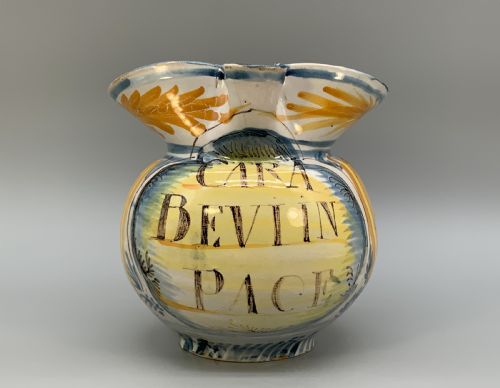
Pharmacy jugs feature spouts and handles designed for pouring liquid medicines and syrups in historical dispensary settings. They often incorporate painted banners or apothecary symbols among their polychrome decoration.
These vessels share the tin-glazed earthenware body of contemporaneous drug jars but prioritize functional pouring elements.
Are these pieces waterproof?
The tin glaze seals the porous earthenware body, making historic vessels suitable for holding water. However, thermal shock and chemical seepage can risk old ceramic surfaces.
Collectors generally treat these antique vessels as decorative objects rather than functional flower vases.
What defines Renaissance Revival style?
Renaissance Revival ceramics borrow decorative motifs, colour palettes, and vessel shapes from fifteenth- and sixteenth-century Italian workshops. Nineteenth-century makers utilised these historic designs to recreate earlier maiolica aesthetics.
These later pieces combine traditional pigment techniques with Victorian manufacturing contexts.