



Italian Tin Glazed Earthenware
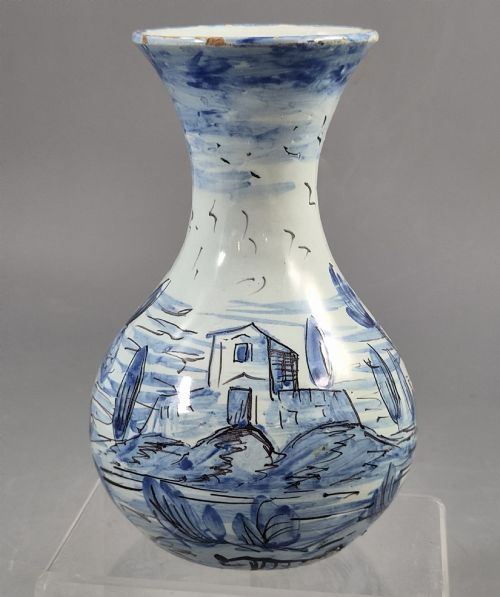
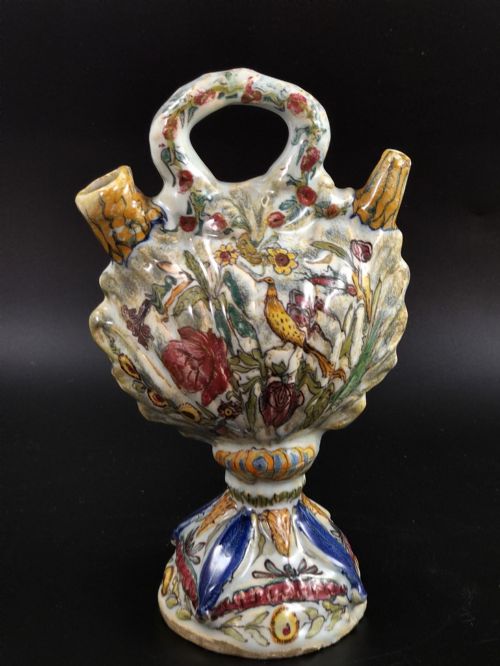
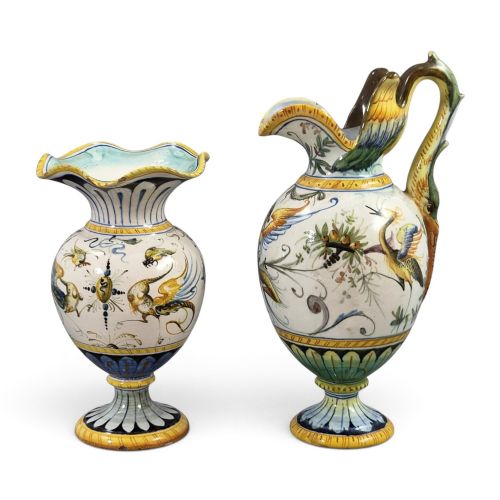
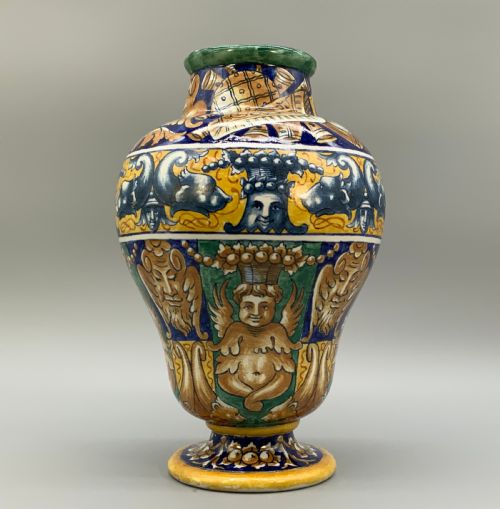
These pieces of italian tin glazed earthenware bring centuries of colour and painterly tradition straight into a room.
Italian Tin Glazed Earthenware
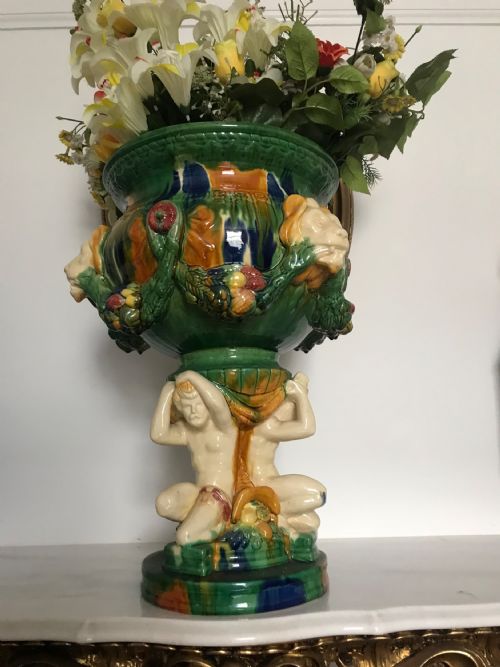
When you search for italian tin glazed earthenware, you examine objects shaped by centuries of ceramic tradition across Italy. The inventory ranges from utilitarian vessels to monumental display pieces created for wealthy households and monastic pharmacies.
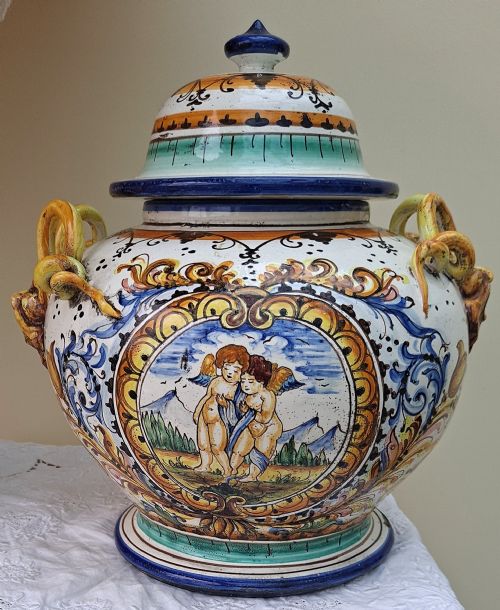
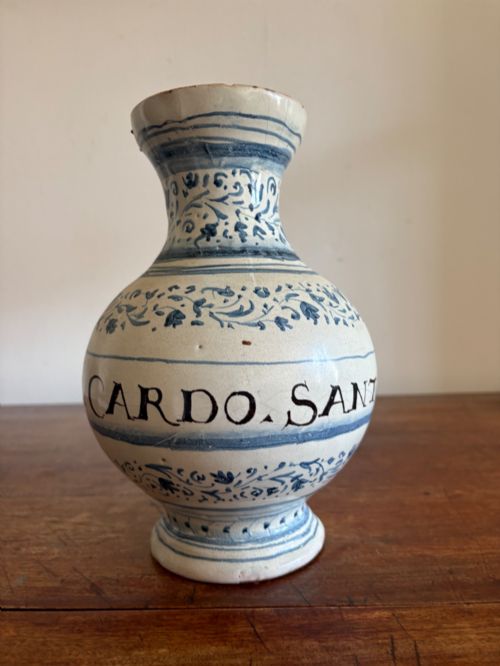
Apothecary jars and albarellos form a substantial part of the selection, alongside large chargers, lidded vases, and pilgrim flasks. Many date from the eighteenth century or reflect later nineteenth-century revivals of earlier Renaissance and Baroque styles.
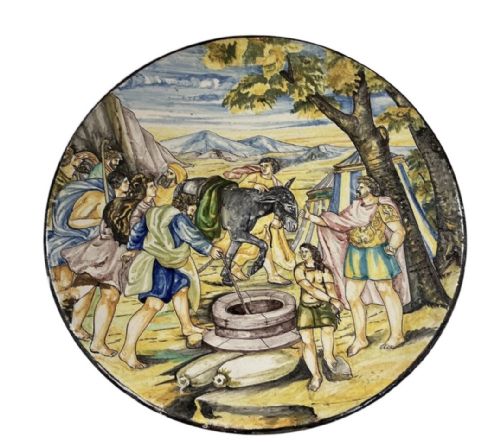
Wall plaques and devotional pieces also appear, often painted with religious scenes or historical subjects. These objects demonstrate how potters combined practical utility with high art across different regions.
Materials and Technique
Potters shaped local earthenware and terracotta into vessels before coating them in an opaque tin glaze that created a smooth white surface for painting. Pigments were applied directly onto this absorbent unfired glaze, demanding immense skill because mistakes could not be corrected.
Once painted, the pieces underwent a high-temperature firing that fixed the metallic oxides into brilliant blues, yellows, oranges, and greens. This technique produced the characteristic glossy finish associated with historic maiolica and faience.
Italian Tin Glazed Earthenware Retail Price Guide 2026
Typical asking prices for italian tin glazed earthenware among the pieces listed under this phrase on Sellingantiques today, from the lower quarter to the upper quarter. They describe what is for sale here now, not the wider market.
Listings feature earthenware and terracotta bodies finished with tin glaze, spanning the eighteenth and nineteenth centuries.
Standard and Expression
Quality rests primarily in the confidence and clarity of the painted brushwork. Master painters executed historical scenes and botanical motifs with dynamic precision, whereas simpler workshops produced rigid or repetitive designs.
The weight of the earthenware body and the evenness of the tin glaze also determine the success of a piece. Finer examples show careful control during the firing process, resulting in vibrant pigments and minimal surface distortion.
Cantagalli·Ulisse Cantagalli·C. Ravier
The Italian Tin Glazed Earthenware Glossary
- Albarello
- A cylindrical pharmacy jar designed to store dry drugs and herbal remedies. These vessels typically feature an waisted shape that allowed pharmacists to grip them easily on narrow shelves.
- Maiolica
- Italian tin-glazed earthenware decorated with colourful pigments on a white opaque glaze. The term covers both Renaissance originals and later revival pieces created in the nineteenth century.
- Charger
- A large ornamental plate intended for display on a sideboard or wall rather than for dining. Potters often used these wide surfaces to paint complex mythological or historical narratives.
- Istoriato
- A style of ceramic decoration where the entire surface functions as a canvas for narrative painting. Artists depicted detailed historical or biblical scenes across the curves of vases and chargers.
- Faience
- A European term for tin-glazed earthenware that is often used interchangeably with maiolica. The method involves coating a clay body with a white glaze containing tin oxide before painting.
Italian Tin Glazed Earthenware: Frequently Asked Questions
What were apothecary jars used for?
Apothecary jars held dried herbs, ointments, and liquid medicines in historic pharmacies and monastic dispensaries. Their distinctive labels and painted designs helped practitioners identify the specific remedies stored inside.
Over time, these utilitarian vessels became decorative items valued for their rich iconography and historical connections to early medicine.
How do I display a charger?
Chargers are wide decorative plates traditionally meant for display on walls or sideboards rather than table use. Sturdy wire hangers or specialised plate stands allow you to exhibit their painted surfaces safely.
Placing them away from direct sunlight preserves the vibrancy of the historical pigments and glaze.
How can I tell an 18th-century piece from a 19th-century revival?
Nineteenth-century revival pieces often display the marks of specific factories like Cantagalli alongside an enthusiasm for Renaissance and Baroque aesthetics. True eighteenth-century examples tend to show the specific wear patterns and subtle variations typical of earlier hand production.
Examining the base and glaze texture helps reveal the manufacturing period.
Are these pieces waterproof?
While these vessels were originally made to hold liquids or dry goods, historic tin-glazed earthenware can be porous. Modern use with water is generally discouraged to prevent moisture from seeping into hairline cracks in the glaze.
Dry display or the use of a hidden inner container protects the antique body from damage.