




Italian Style Chairs
These Italian style chairs bring grand classical form and rich carving into a room, offering both historic presence and enduring seating.
Italian Style Chairs
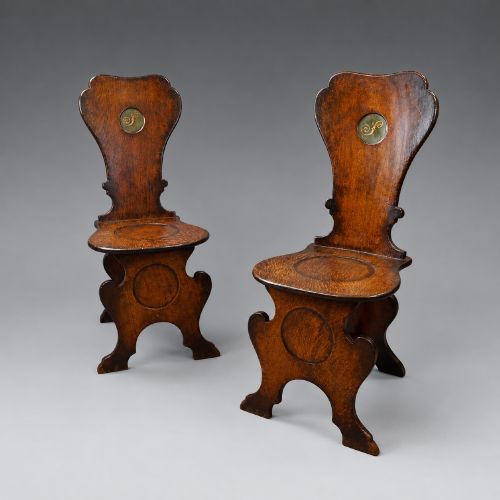
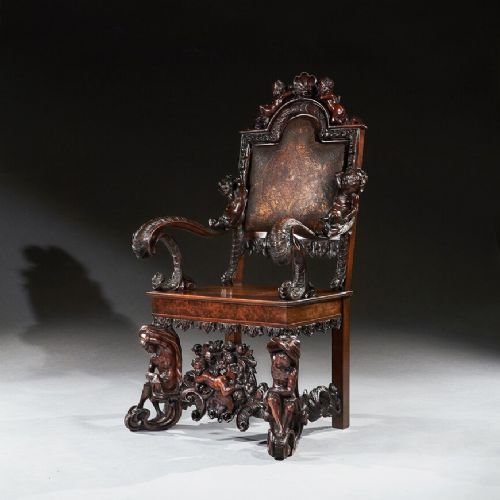
Italian style chairs encompass a varied group of seating inspired by historic periods including the Renaissance, Baroque, Rococo and Neoclassical eras. When searching for Italian style chairs, buyers encounter everything from imposing walnut armchairs to striking hall chairs.
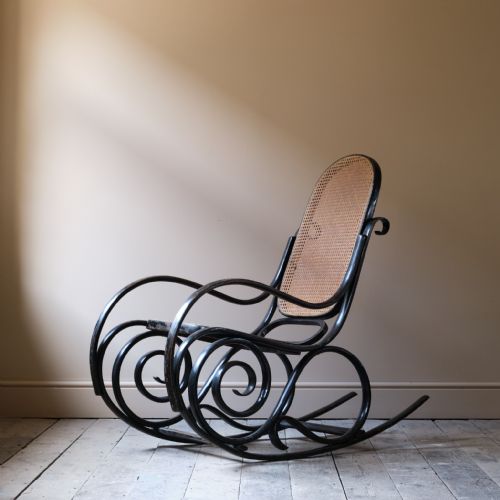
The selection ranges widely across centuries, featuring items from the eighteenth and nineteenth centuries alongside later twentieth-century interpretations. Armchairs, hall chairs, rocking chairs and stools form the core of what appears in this category.
Originating from diverse European workshops, these pieces often utilise rich materials like walnut, carved wood and painted finishes. Buyers are most likely to meet nineteenth-century revival pieces alongside genuine eighteenth-century examples.
How they were made
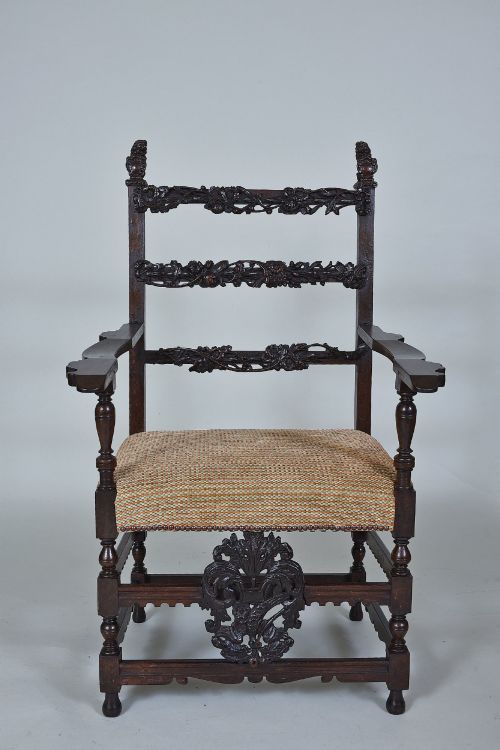
Makers constructed these chairs primarily from solid timbers such as walnut and oak, which provided a stable foundation for deep carving. Artisans shaped the wood using traditional hand tools to create complex silhouettes like X-frames and bobbin-turned supports.
Surface decoration played a central role in the construction process, with craftsmen applying gesso, gold leaf and painted finishes directly to the wood. Upholstery and needlework fabric completed the armchairs, adding texture and colour to the carved frames.
Revival styles span the Renaissance, Baroque and Neoclassical periods, produced primarily throughout the nineteenth century.
What varies in quality
The depth and crispness of the carving distinguish finer examples from simpler production pieces, particularly in revival armchairs where sculptural detail defines the form. Wood selection also dictates quality, with dense, figured walnut commanding greater attention than plain timber.
Original surface treatments, including patinated gilding and period paintwork, elevate a piece above later or heavily restored equivalents. Structural integrity within complex joints and frames separates superior craftsmanship from standard workshop output.
White Allom And Co·Henry Thomas Peters
The Italian Style Chairs Glossary
- Sgabello
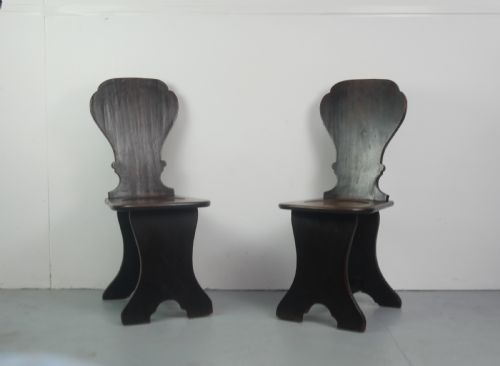
- A type of wooden hall chair featuring a high back and trestle supports instead of standard legs. These sixteenth-century revival forms were typically placed in grand hallways.
- Savonarola
- A folding chair constructed from multiple curved wooden slats forming an X-shape when viewed from the side. This Renaissance design often incorporates carved armrests and intricate crest rails.
- Giltwood
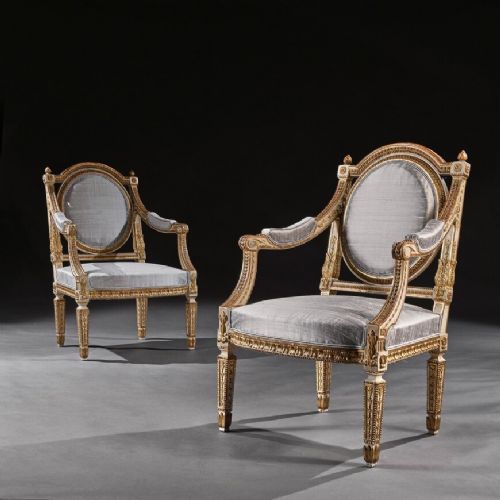
- Timber that has been coated with a thin layer of gold leaf over a prepared gesso ground. This technique creates a brilliant metallic finish seen on grand salon chairs.
- Barocchetto
- An Italian term describing the lighter, more decorative phase of Baroque and early Rococo design. Pieces from this movement often feature fluid carved lines and restrained ornamentation.
- Parcel Gilt
- A decorative treatment where only specific carved details or highlights of a painted wooden frame are gilded. This method creates contrast against the underlying painted or natural wood.
Italian Style Chairs: Frequently Asked Questions
How do I identify a true sgabello chair?
Sgabello chairs are easily recognised by their distinctive structural design, which relies on two sculpted board legs or a trestle base rather than four individual uprights. They frequently feature a narrow wooden seat and an elaborately carved backrest.
Historically, these pieces served as decorative hall furniture rather than comfortable seating for daily lounging. Their upright stance and ornate woodcarving made them ideal for impressing visitors in grand entryways.
What is the difference between baroque and neoclassical styles?
Baroque Italian chairs display heavy, dramatic curves, exuberant carving, and a sense of theatrical motion. They often utilise rich walnut and opulent gilding to project power and grandiosity.
Neoclassical chairs, by contrast, favour symmetry, straight tapered legs, and classical architectural motifs derived from antiquity. Painted and parcel-gilt finishes frequently replace the heavier dark woods of the earlier period.
Are these chairs suitable for daily use?
Many of these historic armchairs and side chairs remain sturdy enough for regular seating if their wooden frames and joints are stable. However, antique upholstery and delicate needlework require careful preservation.
Lighter hall chairs and decorative X-framed stools function best in low-traffic areas or as accent pieces. Placing them away from direct sunlight and extreme humidity helps protect the original wood and finishes.
How can I tell the age of an Italian armchair?
Dating relies on examining the construction methods, tool marks, and wood species visible beneath the frame. Eighteenth-century examples often exhibit hand-cut joinery and period patination that differs significantly from later revival work.
Stylistic cues also point to specific eras, such as nineteenth-century interpretations of Renaissance motifs. Comparing the carving depth and finish against documented pieces from the same period provides further clarity.