

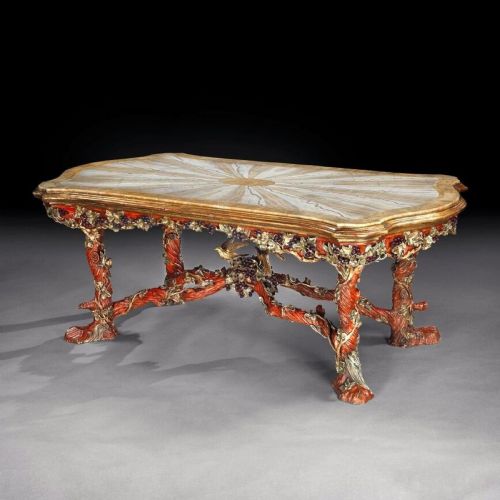


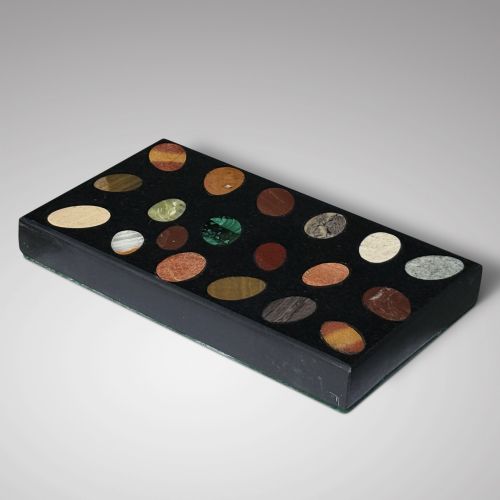


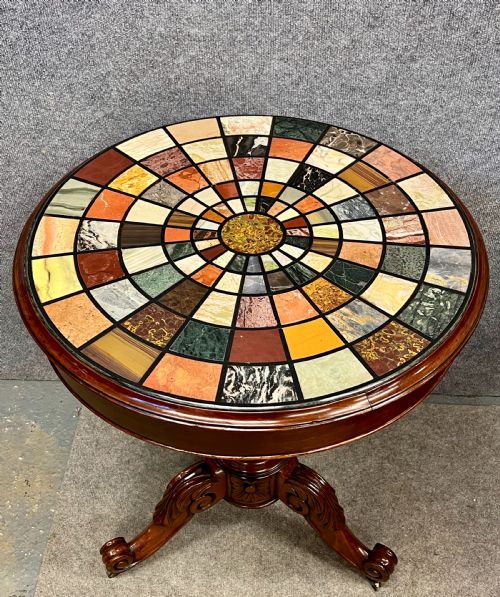


Italian Stone Inlay
Italian stone inlay works bring hardstone artistry into the room, offering layered marble and pietra dura surfaces that capture centuries of craftsmanship.
Italian Stone Inlay
Italian stone inlay encompasses a range of decorative objects and furniture pieces designed around precision-cut mineral compositions. Buyers searching for Italian stone inlay encounter items spanning the nineteenth century, including Grand Tour souvenirs and Victorian decorative arts.
The selections on this page feature practical furnishings alongside decorative items. Centre tables, occasional tables, and coffee tables sit alongside smaller domestic pieces such as paperweights, jewellery caskets, and wall art.
Most pieces date to the nineteenth century, with specific examples referencing Victorian tastes and Florentine Renaissance Revival styles. Material construction relies heavily on marble, specimen marble, and pietra dura panels mounted within wood, brass, or ormolu frames.
Materials and construction methods
Craftsmen built these works using hardstones such as marble, alabaster, slate, and specialised specimen stones cut into exact geometric or pictorial sections. These stone elements fit closely together to form continuous flat surfaces depicting floral motifs, architectural scenes, or abstract patterns.
Metal mounts in brass and ormolu often secure the edges of boxes, caskets, and comports, while structural frames utilise ebonised wood, carved wood, or polychrome supports. Pietra dura panels are integrated directly into table tops, picture frames, and cabinet doors.
Italian Stone Inlay Retail Price Guide 2026
Typical asking prices for italian stone inlay among the pieces listed under this phrase on Sellingantiques today, from the lower quarter to the upper quarter. They describe what is for sale here now, not the wider market.
Listings feature 19th-century works utilising marble, pietra dura, ormolu, and slate across forms like centre tables, paperweights, and jewellery caskets.
Assessing quality and execution
Quality in these works rests upon the tightness of the stone joints and the precision with which individual hardstone segments align. Superior examples display microscopic seams between contrasting mineral colours, whereas simpler items show wider mortar lines or less complex stone selection.
Amleto Bertoni
The Italian Stone Inlay Glossary
- Pietra dura
- An Italian term for the technique of cutting and fitting highly polished coloured stones together to create pictorial or geometric designs. This method produces durable mosaic surfaces that resemble paintings made from stone.
- Specimen marble
- A composite top or panel assembled from numerous distinct varieties of marble and mineral stones. Collectors prize these for their geological variety and colourful display.
- Grand Tour
- A traditional trip of Europe undertaken by upper-class young men of the eighteenth and nineteenth centuries. Travellers frequently returned with portable stone inlay paperweights and plaques as mementos.
- Ormolu
- Gilded bronze used extensively for decorative mounts, feet, and hinges on nineteenth-century caskets and tables. It provides a bright metallic contrast to dark stone and ebonised wood.
- Comport
- A raised decorative dish or bowl used traditionally for serving fruit or display. In stone inlay pieces, these feature shallow marble or alabaster bowls supported by metal or carved pedestals.
Italian Stone Inlay: Frequently Asked Questions
What is pietra dura?
Pietra dura is a mosaic technique where finely sliced coloured stones are fitted together to form detailed images or geometric patterns. Artisans polish the assembled stones until the surface appears completely smooth and continuous.
This method requires immense skill to ensure individual mineral pieces lock together without visible gaps. The resulting panels adorn table tops, caskets, and wall plaques.
How do I care for marble tables?
Stone inlay surfaces require gentle cleaning with a soft, damp cloth and neutral soap formulas. Acidic liquids like citrus juice or vinegar must be kept away from marble to prevent permanent etching.
Pole wax or specialised stone sealants can help protect older surfaces from moisture rings and daily wear. Heavy objects should be placed carefully onto specimen tops to avoid chipping the delicate stone borders.
What is a Grand Tour souvenir?
Grand Tour souvenirs were portable artworks and antiquities purchased by travellers touring European cultural centres during the nineteenth century. Small paperweights, plaques, and inlaid boxes were popular choices because they fit easily into luggage.
These pieces often showcase exceptional lapidary skill, serving as condensed examples of regional Italian stone craftsmanship. Collectors value them for their historical association with nineteenth-century travel.
How can I date an inlay piece?
Dating relies on examining the secondary materials, frame construction styles, and the specific mineral palettes used in the composition. Nineteenth-century works frequently combine ebonised wood or ormolu mounts with classical revival motifs.
Stylistic markers such as Victorian proportions or Art Deco geometric simplification help narrow down the period of manufacture. Unsigned pieces are typically attributed by comparing their assembly techniques and stone types to documented examples.