





Italian Sorrento Table
An italian sorrento table brings intricate marquetry and warm Mediterranean woods directly into a traditional British interior.
Italian Sorrento Table
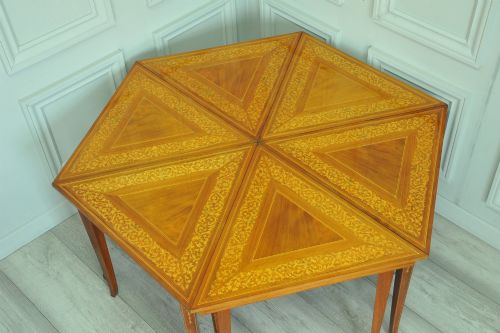
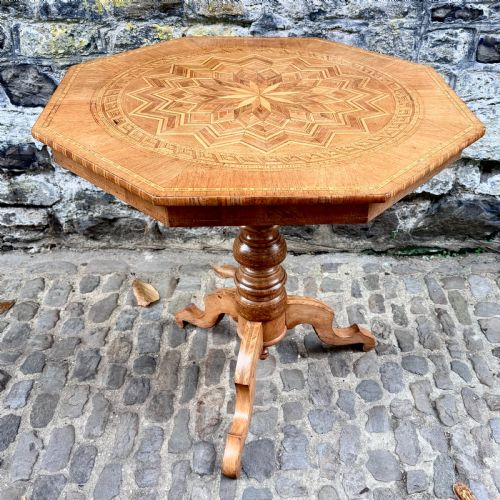
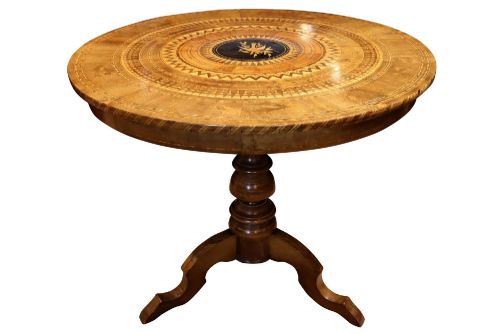
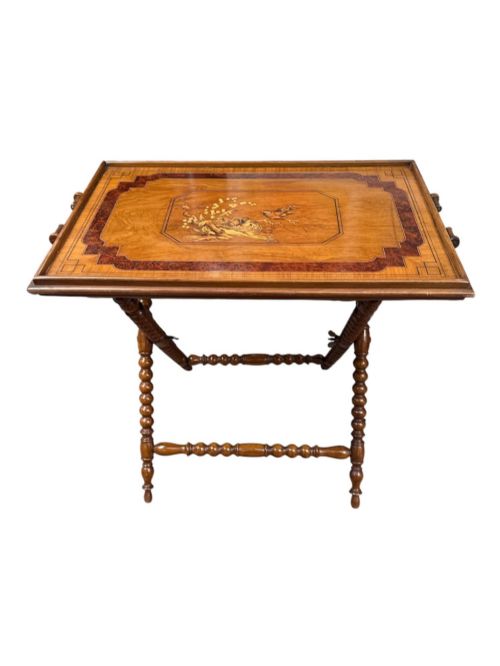
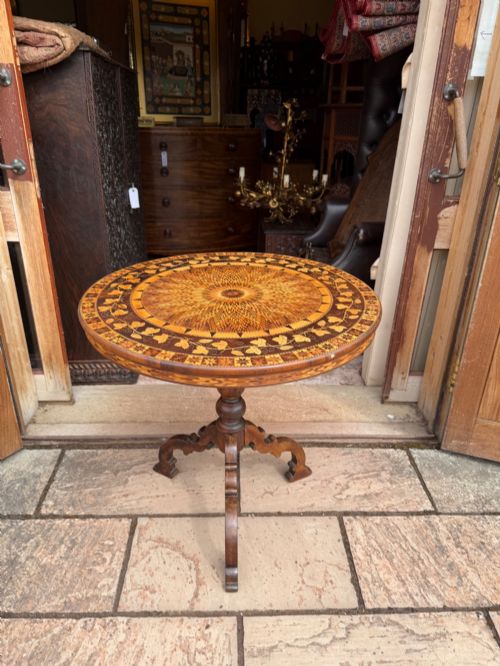
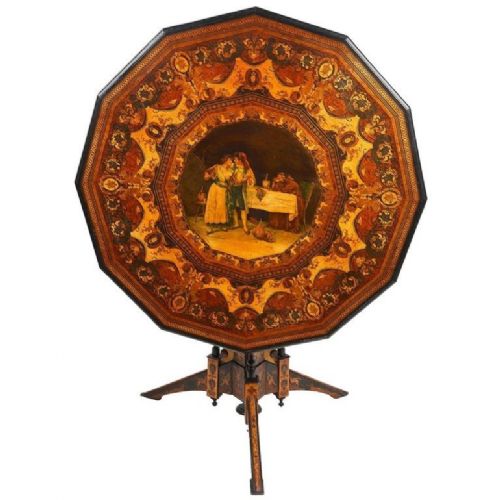
An italian sorrento table showcases the distinctive inlaid woodwork originating from the coastal town of Sorrento in southern Italy during the nineteenth century. These pieces appear primarily as occasional tables, side tables, and butler's tray tables with elaborate floral or geometric surface designs.
The nineteenth century and the Victorian period dominate the examples seen here, often reflecting the tastes of the Grand Tour era. Walnut serves as a common structural timber, while the tops display complex multi-wood compositions.
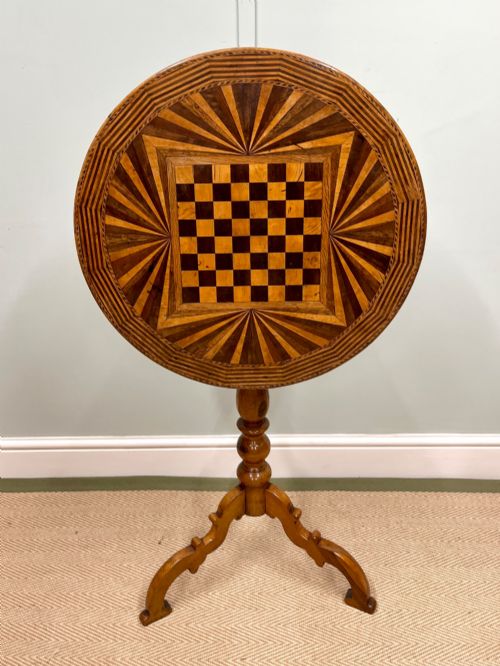
Buyers frequently encounter tilt-top and occasional formats designed for versatile placement in drawing rooms and reception spaces. Each piece relies on decorative surface work rather than heavy carving to create visual interest.
Materials and construction methods
Cabinet makers utilised walnut and mixed hardwood veneers as the structural foundation for these tables. Olive wood and various fruitwoods provided the contrasting tones required for detailed pictorial and geometric inlay.
Marquetry and parquetry techniques allowed artisans to cut and fit hundreds of tiny wood veneers into intricate tabletop patterns. Different natural timbers were selected specifically for their grain and colour to eliminate the need for artificial stains.
Italian Sorrento Table Retail Price Guide 2026
Typical asking prices for italian sorrento table among the pieces listed under this phrase on Sellingantiques today, from the lower quarter to the upper quarter. They describe what is for sale here now, not the wider market.
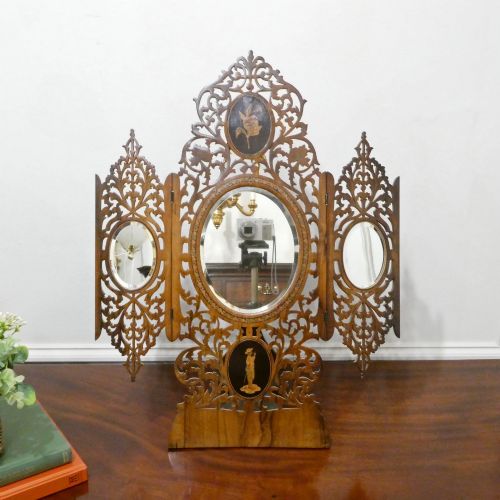
Some travel mirrors fold entirely flat, proving that nineteenth-century tourists packed for style as well as utility.
Distinguishing quality in Sorrento work
Quality rests in the precision of the veneer cutting and the complexity of the pictorial subject matter on the tabletop. Tightly fitted parquetry and crisp marquetry lines separate standard production from superior workshop output.
The choice of timbers dictates the visual depth of the piece, with skilled makers combining olive wood, walnut, and fruitwood inlay for subtle tonal gradation. The structural integrity of the pedestal or folding base must match the intricacy of the top.
Almerico Gargiulo
The Italian Sorrento Table Glossary
- Marquetry
- The art of applying small pieces of veneer to a structure to form decorative patterns and pictures. Makers used various fruitwoods to achieve natural shading in floral motifs.
- Parquetry
- Geometric mosaic woodwork used for repeating patterns on tabletops. This technique creates structured borders around central pictorial scenes.
- Grand Tour
- The nineteenth-century travel tradition where wealthy Europeans collected souvenirs in Italy. Many Sorrento tables were acquired during these extended continental journeys.
- Tilt top
- A table mechanism allowing the surface to pivot vertically for storage or display. This feature appears frequently on nineteenth-century occasional tables.
Italian Sorrento Table: Frequently Asked Questions
What is an italian sorrento table?
These pieces are nineteenth-century occasional and tray tables decorated with intricate inlaid wood veneers. They originate from the Campania region of Italy and reflect regional marquetry traditions.
Craftsmen utilised local timbers like olive wood and walnut to build versatile furniture for the European export market.
How do I date an italian sorrento table?
Dating relies on timber selection, base construction, and stylistic markers associated with the Victorian period and the Grand Tour era. Most surviving examples date from the mid to late nineteenth century.
Archival records and signed works help confirm specific decades of production for pieces from this coastal town.
Were these tables used as daily furniture?
Victorian households utilised these tables for serving tea, displaying ornaments, or holding reading materials in formal reception rooms. Butler's tray formats allowed staff to transport items easily between rooms.
Folding frames and tilt-top mechanisms provided practical solutions for storage in smaller Victorian drawing rooms.
How should I care for olive wood inlay?
Maintenance requires keeping the piece away from direct sunlight and excessive heat sources to prevent the delicate fruitwood veneers from lifting. Regular dusting with a dry, soft cloth preserves the natural finish without chemical polishes.
Maintaining stable room humidity protects the complex timber groundwork from expanding or cracking over time.