


Italian Renaissance Revival Chair
An italian renaissance revival chair brings grand architectural presence into a room through deeply carved woodwork and heavy upholstery.
Italian Renaissance Revival Chair
When you search for an italian renaissance revival chair, you encounter a distinct seating form that draws directly upon historical design motifs from earlier centuries. The pieces collected here span the nineteenth century alongside select earlier examples from the seventeenth and eighteenth centuries, offering both monumental seating and smaller occasional forms.
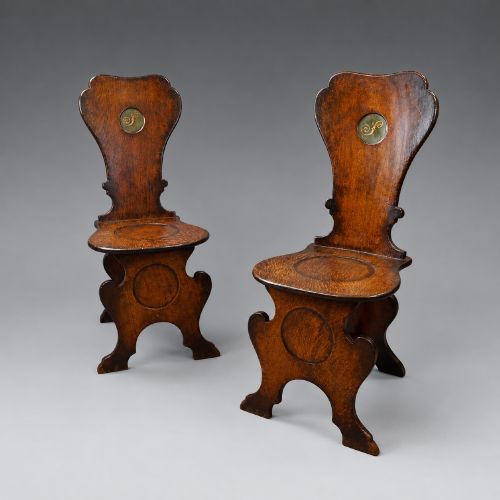
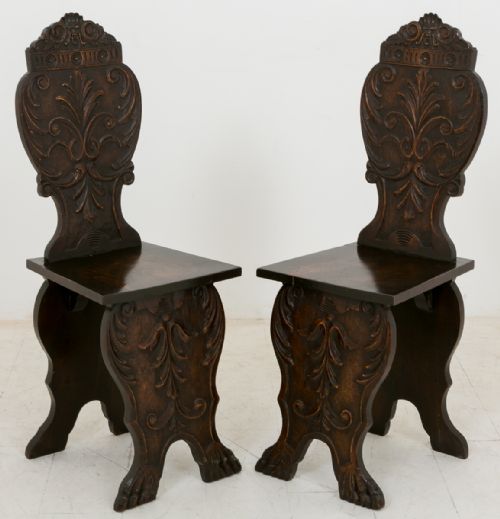
Armchairs, hall chairs, stools, benches, accent chairs and hall benches dominate the available selection. Among these, carved hall chairs and sgabello forms appear most frequently alongside folding X-framed designs such as Savonarola chairs.
Originating largely from Italian workshops, these items adapt classical revival aesthetics into functional furniture. They suit spaces requiring strong historic character, functioning equally well as standalone decorative items or usable seating.
Materials and construction methods
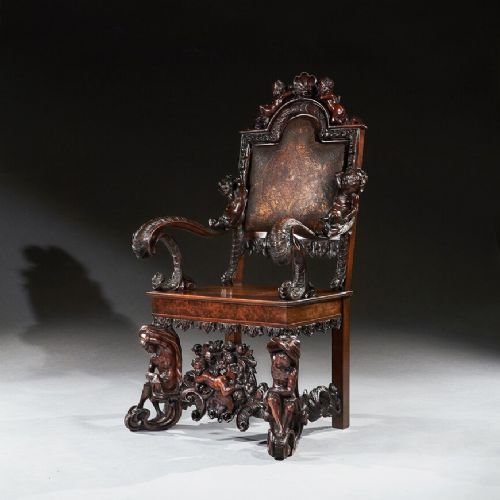
Makers relied primarily on dense hardwoods such as walnut, oak, lime wood and general wood stock to build robust frames capable of supporting heavy carving. Artisans executed intricate relief work directly into the timber, often incorporating figural elements, scrollwork and structural joinery.
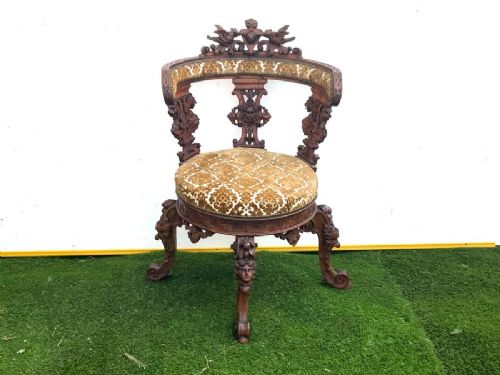
Upholstered elements utilise traditional textiles including leather, velvet, damask and general textile coverings, secured to the wooden frames. Decorative enrichment also extends to specialised techniques such as bone inlay and painted surface treatments.
Listings feature walnut, oak, lime wood, leather, velvet and damask across nineteenth century revival forms.
Assessing quality and execution
The distinction between ordinary and exceptional examples rests on the depth, clarity and ambition of the carved ornament. Master carvers produced figures and foliage with striking three-dimensional relief, whereas lesser pieces rely on shallow, mechanical stamping or flat surface decoration.
Material selection and structural integrity also define the upper tier of the range. Solid walnut and oak frames with tight joinery, original upholstery textiles, and sophisticated details like bone inlay elevate an object far above standard production.
White, Allom & Co.
The Italian Renaissance Revival Chair Glossary
- Sgabello
- A light wooden chair featuring a high back and a base formed of two carved boards rather than conventional legs. This distinct Renaissance form was often placed in hallways for formal reception.
- Savonarola
- A folding armchair constructed from multiple curved wooden slats intersecting in an X-frame. Named after the famous Florentine friar, it collapses for transport or storage.
- X Framed
- A structural design utilising crossing diagonal wooden members to form the base or support of a chair, bench, or stool. This ancient configuration provides considerable strength while maintaining an architectural profile.
- Damask
- A reversible figured fabric traditionally woven on a jacquard loom with patterns formed by contrasting warp and weft threads. It provides a rich, textured surface frequently used for period upholstery.
Italian Renaissance Revival Chair: Frequently Asked Questions
What is a sgabello chair?
A sgabello is a distinct chair type featuring a solid, panel-like base and an upright backboard rather than four legs. These pieces were historically used in grand halls and corridors.
They offer a narrow profile that makes them useful as accent seating or decorative items in tight spaces today.
How do I use a Savonarola chair?
A Savonarola chair is a sturdy folding armchair constructed from interlocking wooden slats that form an X-shaped base. They function well as statement pieces in a study or living area.
Because of their historical folding design, they require careful placement to ensure stability on uneven modern flooring.
What woods were used for these chairs?
Carpenters predominantly worked with dense hardwoods like walnut and oak to achieve the structural strength needed for heavy carving. Lime wood and general timber stock also appear across various pieces.
These materials allowed artisans to carve deep relief patterns and figural motifs that have survived centuries of use.
How do I distinguish nineteenth century revival pieces?
Nineteenth century revival pieces interpret sixteenth and seventeenth century Italian aesthetics using Victorian workshop methods and machinery alongside hand carving. Examining the tool marks, timber ageing and construction joinery helps reveal the true period of manufacture.
Comparing the specific ornamental vocabulary to documented pieces from earlier eras clarifies whether a chair is an original early work or a later revival.