



Italian Gold Jewellery
Italian gold jewellery brings together centuries of meticulous craftsmanship, ranging from Victorian micro mosaics and shell cameos to mid-century modern diamond rings.
Italian Gold Jewellery
When buyers search for Italian gold jewellery, they encounter a diverse array of pieces spanning the nineteenth century through the mid-twentieth century. The selection on this page most frequently highlights intricate brooches, pendants, and bracelets created in distinct regional styles.
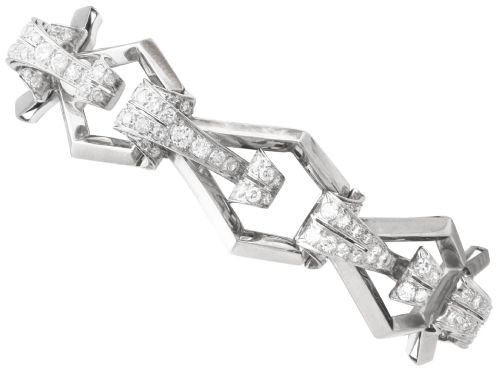
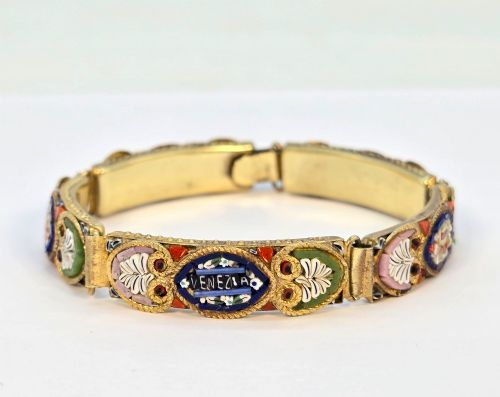
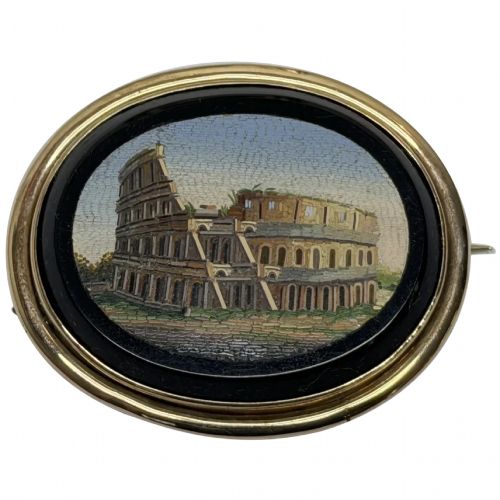
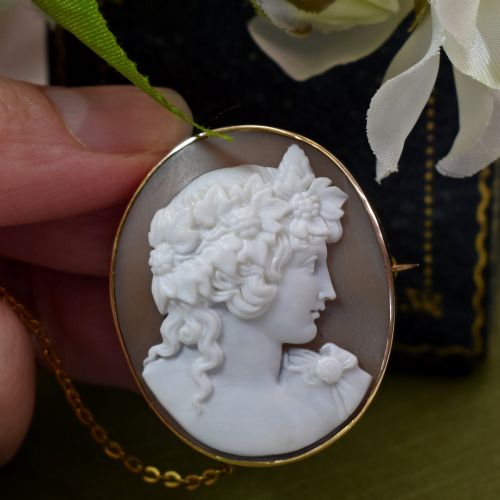
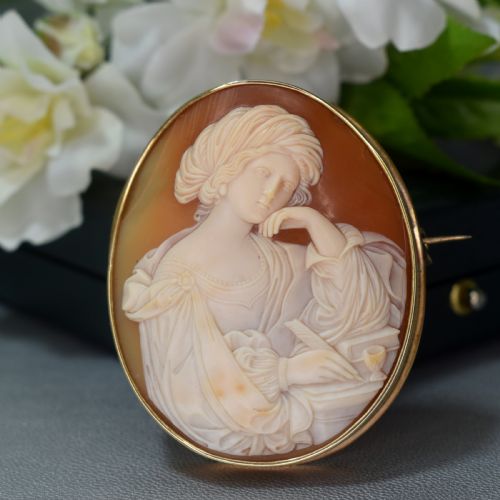
Victorian examples often feature micro mosaics depicting classical architecture or shell cameos carved with mythological portraits, set within yellow gold frames. Mid-century items showcase bold geometric forms, wide tank bracelets, and combinations of 18ct gold with onyx, diamonds, and sapphires.
The assortment moves fluidly from Grand Tour souvenirs of Venice and Rome to vintage Italian modernism and military-inspired charms. Each object reflects the specific aesthetic preoccupations of its decade, whether the romantic historicism of the 1800s or the sculptural abstraction of the 1950s.
Materials and construction
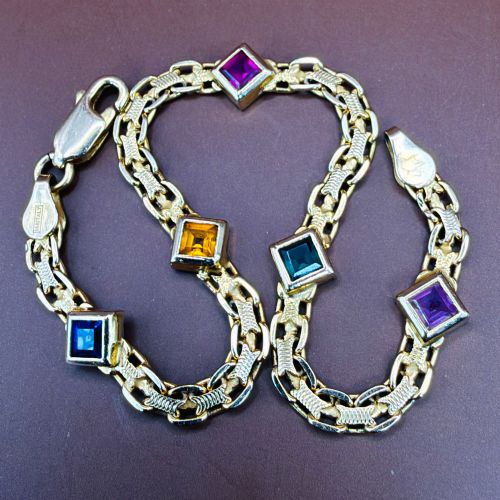
The construction of these pieces relies heavily on high-purity yellow and white gold, frequently marked at 18ct or 14ct alongside lower gold standards and gilt metal. Artisans combined precious metals with natural materials such as layered shell for carved cameos, hardstones for pietra dura plaques, and microscopic glass tesserae.
Specialised techniques define the visual character of the work, including meticulous hand-carving in shell and agate, precise stone-setting for diamonds and multi-gem clusters, and delicate enamelling on gold charms and pendants. Ormolu mounts and secure bezels frame pictorial inlays with structural durability.
The integration of organic stones with worked metal demonstrates advanced bench skills, where open-work scroll clusters and heavy tank links provide a robust architecture for fragile decorative elements like glass micro mosaics and layered shell.
Italian Gold Jewellery Retail Price Guide 2026
Typical asking prices for italian gold jewellery among the pieces listed under this phrase on Sellingantiques today, from the lower quarter to the upper quarter. They describe what is for sale here now, not the wider market.
Listings feature items from the nineteenth century through the mid-twentieth century, utilising 18ct gold, shell, onyx, and glass tesserae.
Markers of distinction
Quality in these items is determined by the precision of the lapidary work and the fineness of the metal execution. Superior shell cameos exhibit deep relief, anatomical accuracy, and careful consideration of the shell's natural colour layers to create contrast.
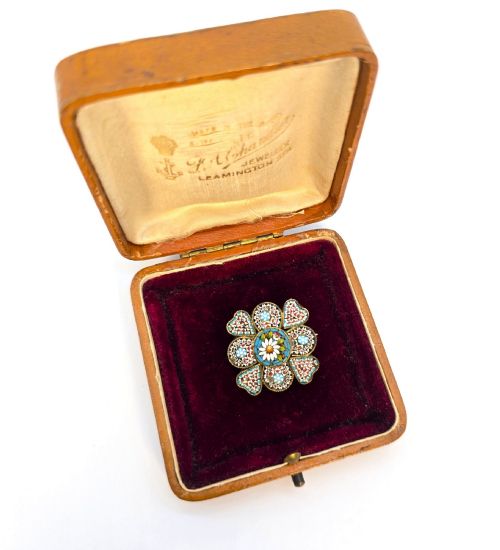
In micro mosaics, the density and regularity of the glass tesserae dictate the refinement of the image, where smaller tiles and tighter grout lines achieve greater pictorial detail. Metalwork quality is visible in the crispness of chased details, the weight of solid gold frames, and the secure integration of clasps and settings.
Kria Gioielli·Chiappe·R.Pernice·Le-Gi Italy
The Italian Gold Jewellery Glossary
- Micro mosaic
- A decorative technique utilising thousands of tiny coloured glass rods, known as tesserae, fused together to create pictorial scenes. These were popular keepsakes during the Grand Tour.
- Pietra dura
- An artistic method involving the inlay of cut and fitted polished coloured stones to form geometric or pictorial designs. It appears frequently in nineteenth-century Italian boxes and pendants.
- Shell cameo
- A relief carving produced on the outer layers of a marine shell, typically contrasting a white figure against a dark brown or orange background. Master carvers exploited the natural shell gradients to achieve depth.
- Tank bracelet
- A bold, structured bracelet style popular in the mid-twentieth century, characterised by heavy, interlocking gold links that mimic the treads of military vehicles.
- Tessera
- An individual microscopic piece of coloured glass used in the creation of mosaic artwork. The tinier the tessera, the more painterly the resulting miniature image.
Italian Gold Jewellery: Frequently Asked Questions
What is a Grand Tour Italian micro mosaic?
A Grand Tour micro mosaic is a small decorative item, such as a brooch or bracelet, purchased by travellers visiting Italy during the nineteenth and early twentieth centuries. These pieces typically depict famous Roman landmarks, classical ruins, or Italian flora using microscopic glass tiles.
They serve as portable snapshots of cultural travel, mounted in gold frames to be worn as personal adornments.
How do I care for antique shell cameos?
Antique shell cameos require gentle handling because the material is a natural organic substance susceptible to moisture and acid damage. Clean them only with a soft, dry cloth and avoid exposing them to harsh chemical dips or ultrasonic jewellery cleaners.
Store them flat in lined boxes away from direct sunlight to preserve the natural colour contrast of the shell layers.
What distinguishes mid-century Italian gold jewellery?
Mid-century Italian gold jewellery moves away from historical revival styles towards bold, sculptural forms and heavier gold weights. Pieces from this era often utilise textured 18ct yellow gold combined with modern gemstones like diamonds, onyx, and sapphires.
Designs include wide tank bracelets, abstract cluster rings, and matching necklace sets that emphasise industrial strength combined with fine goldsmithing.
How can I tell a pietra dura piece from a mosaic?
Pietra dura is made from precision-cut slabs of hardstone fitted together like a jigsaw puzzle to form a smooth, polished stone surface. Micro mosaics are composed of thousands of individual fused glass rods that present a slightly textured surface under magnification.
Running a clean fingertip lightly across the piece reveals the hard, cool uniformity of stone versus the granular texture of glass tiles.