



18ct Gold Cuff Bracelet
An 18ct gold cuff bracelet is a wrist ornament of substantial metal weight, often set with gemstones, representing periods from the Victorian era to the mid-century.
18ct Gold Cuff Bracelet
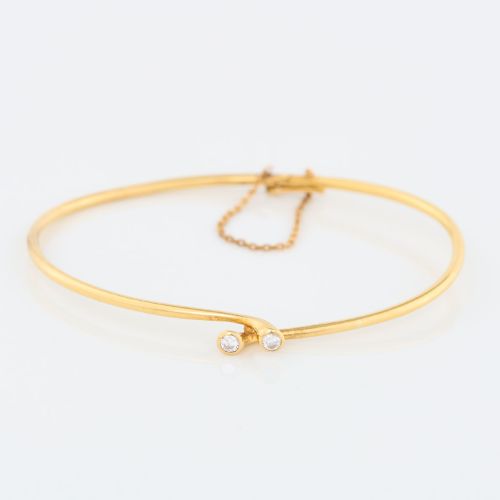
An 18ct gold cuff bracelet is a wrist ornament of solid or hollow metal construction, often featuring gemstones such as diamond, ruby, sapphire, pearl, amethyst, and moonstone. When searching this phrase, a buyer encounters rigid bangles, hinged cuffs, and flexible link bracelets set in yellow, white, or rose gold.
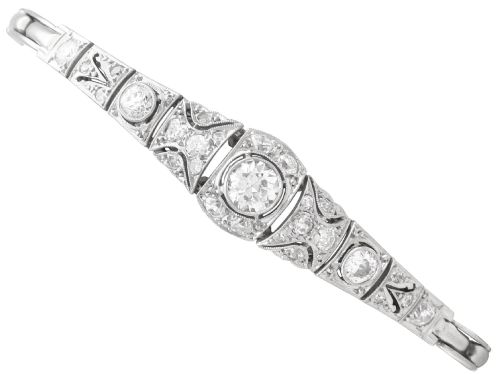
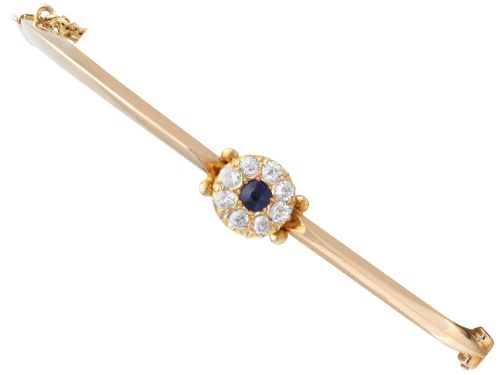
The pieces appearing on this page span the Victorian era, the Belle Epoque, the Edwardian period, the Hellenistic Revival, the Retro 1940s, and Italian Modernism. The Victorian examples frequently include boxed pearl cuffs and amethyst designs, while later mid-century works showcase Italian modernist jewellery sets and Hellenistic Revival forms.
How they were made
These bracelets are constructed primarily from 18ct gold, utilising yellow, white, and rose colour variations to frame the mounted stones. Goldsmiths shaped the metal through casting, forging, and hollow-forming techniques to create rigid bangles and flexible bracelet links.
Gemstones including diamonds, rubies, sapphires, pearls, onyx, and moonstones are integrated into the gold structures using traditional setting methods. Enamel work also appears on select pieces from the late nineteenth century to add colour detail to the metal surface.
18ct Gold Cuff Bracelet Retail Price Guide 2026
Typical asking prices for 18ct gold cuff bracelet among the pieces listed under this phrase on Sellingantiques today, from the lower quarter to the upper quarter. They describe what is for sale here now, not the wider market.
Materials documented across the inventory include 18ct yellow, white, and rose gold paired with diamonds, rubies, sapphires, pearls, moonstones, amethysts, onyx, and enamel.
What varies in quality
Quality in these pieces is dictated by the precision of the goldsmith's work and the grade of the materials utilised. The weight of the 18ct gold structure and the selection of matched gemstones differentiate standard examples from exceptional ones.
The artistic execution of period styles, such as French Belle Epoque millegrain work or Hellenistic Revival granulation, determines the distinction between ordinary manufacture and master craftsmanship. Original packaging, such as fitted presentation boxes, further enhances the integrity of surviving period items.
Kria Gioielli·Ilias Lalaounis
The 18ct Gold Cuff Bracelet Glossary
- 18ct gold
- An alloy containing seventy-five percent pure gold by weight. This composition balances durability with the rich colour required for fine jewellery.
- Bangle
- A rigid bracelet that slips over the hand or fastens with a hinge. Many examples in this category utilise this closed or semi-flexible structure.
- Belle Epoque
- A period of French design spanning the late nineteenth and early twentieth centuries. This style is characterised by light, garland-motif platinum and gold work often set with diamonds and rubies.
- Hellenistic Revival
- A nineteenth-century design movement inspired by ancient Greek ornamentation. Pieces in this style typically feature textured 18ct gold and classical motifs.
- Millegrain
- A jewellery technique involving a line of tiny metal beads along the edges of a setting. It creates a soft, textured border around gemstones.
18ct Gold Cuff Bracelet: Frequently Asked Questions
How do I wear an 18ct gold cuff bracelet?
These bracelets are designed to be worn as standalone statement pieces on the wrist. Their solid metal structure makes them suitable for formal evening wear or significant daily occasions.
Care should be taken to avoid exposing softer mounted gems like pearls and moonstones to hard impacts or household chemicals during wear.
Are these bracelets solid or hollow?
Construction methods vary between pieces, with some utilising heavy solid 18ct gold and others employing hollow or semi-hollow techniques to achieve a larger visual presence without excessive weight.
Gram weights, where recorded, help indicate the physical substance of the metal used in the construction.
How do I identify a Victorian piece?
Victorian bracelets often feature characteristic motifs such as natural seed pearls, amethysts, and dense yellow gold work. Many survive alongside their original fitted presentation boxes.
Stylistic conventions of the nineteenth century dictate the heavy bezels and ornate surface decoration typical of this period.
What is mid-century Italian jewellery?
Mid-century Italian pieces reflect the post-war design movements of the nineteen-fifties and sixties. These items frequently combine textured 18ct gold with contrasting materials like onyx.
Works from this era often form part of matched suites, including coordinating necklaces and bracelets by specific Italian ateliers.