


Italian Florentine Chandelier
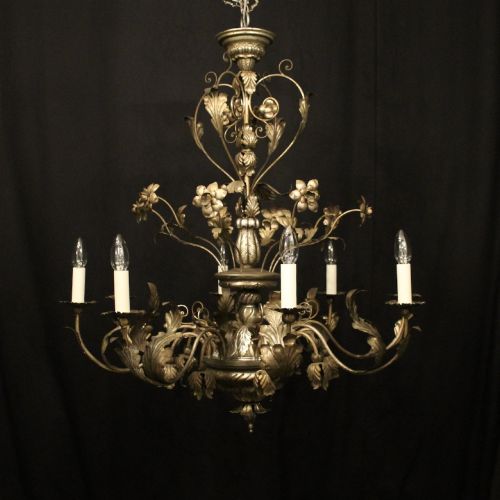
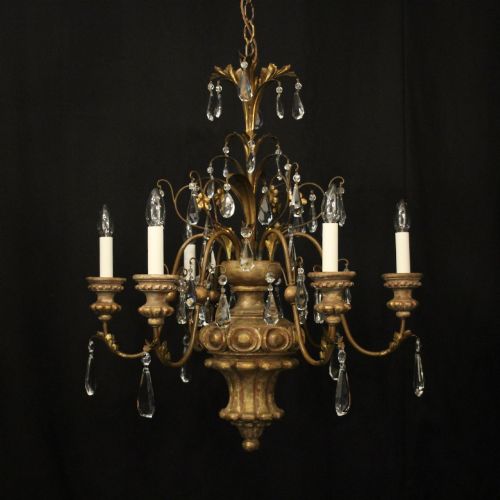
An italian florentine chandelier brings distinct regional craftsmanship and ornate botanical carving into a room, offering warm illumination through layered metallic finishes.
Italian Florentine Chandelier
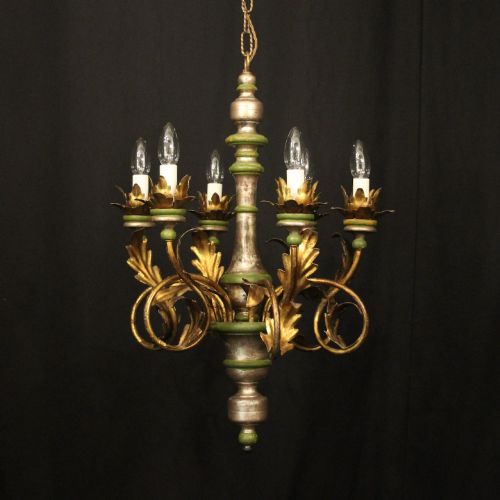
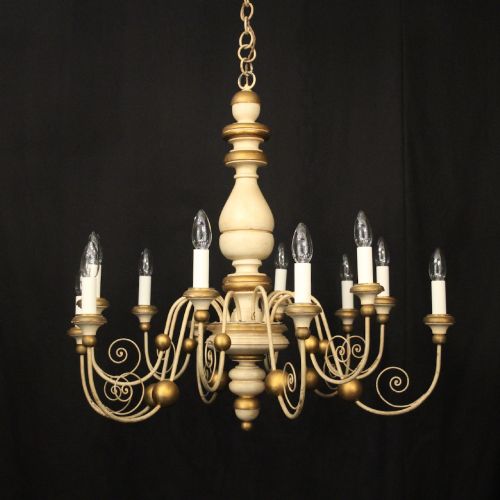
An italian florentine chandelier is a lighting fixture defined by its ornate regional design, drawing heavily on styles such as Florentine Baroque and Italian Rococo. These pieces frequently manifest as multi-light pendants, ranging from compact three-light configurations to expansive twenty-four light double-tiered structures.
The objects appearing across the archive and current listings span from the eighteenth century through to the early decades of the twentieth century. Earlier examples lean towards carved giltwood construction, while twentieth-century pieces incorporate diverse metallic frameworks and polychrome decoration.
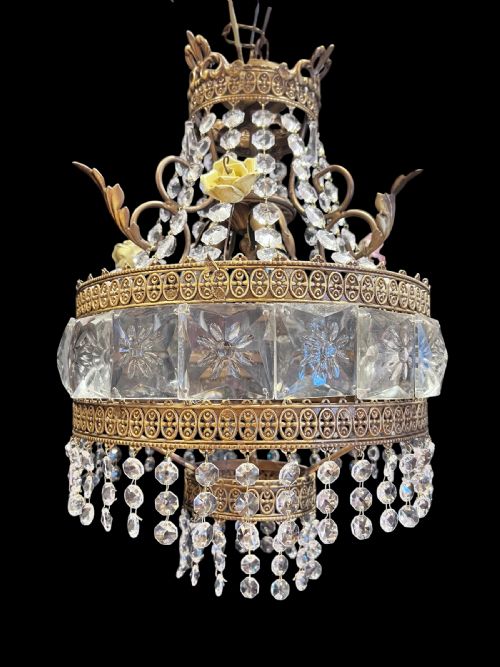
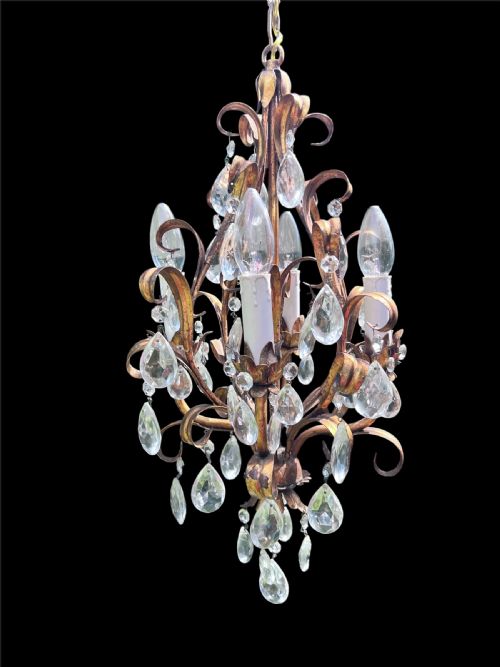
Buyers encountering this selection will frequently find versions featuring six, eight, or twelve lights, often adorned with carved wooden leaves, porcelain flowers, or hanging crystals.
Materials and Construction Techniques
The structural framework relies predominantly on carved timber, gesso, and gilt metal, bringing together gilded wood and wrought iron. Artisans applied gold leaf, silver gilding, or polychrome paint directly onto carved wooden elements shaped into foliage, scrolls, and floral motifs.
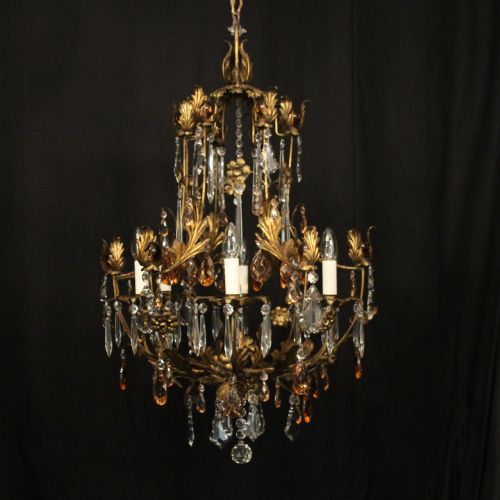
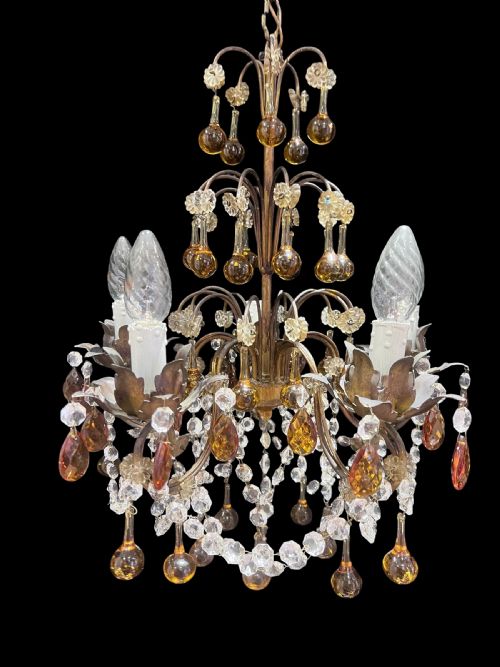
Visual complexity is heightened through the integration of glass and crystal components, including coloured drops, glass beads, and fruit-shaped pendants. Certain configurations incorporate porcelain flowers and delicate metal wirework to secure individual crystal strands.
Listings feature periods spanning from the eighteenth century through to the 1930s, utilising giltwood, crystal, and wrought iron.
Factors Distinguishing Quality
Quality diverges notably in the depth and precision of the manual carving upon the wooden components, distinguishing finely hand-modelled leaf and floral work from simpler moulded forms. The finesse of the gilding process, whether utilising gold leaf or silver gilt, dictates the reflective nuance and durability of the surface.
The extent of original ornamentation - such as the inclusion of intact crystal drops, polychrome detailing, and porcelain elements - shapes the internal consistency and visual richness of the fixture.
The Italian Florentine Chandelier Glossary
- Giltwood
- Timber treated with a thin layer of gold leaf or gold paint applied over a prepared gesso ground. This technique creates a luminous, reflective surface characteristic of antique decorative fixtures.
- Polychrome
- The practice of decorating architectural elements or wooden carvings in multiple colours. In these fixtures, paintwork frequently highlights floral details and carved leaves.
- Gesso
- A plaster mixture applied to wood surfaces as a smooth base for gilding and painting. It allows artisans to carve intricate relief patterns before applying metallic leaf.
- Cage Chandelier
- A lighting form where the metal or wooden frame resembles an open framework enclosing the central stem and arms. This structural layout often supports dense arrangements of glass drops.
- Crystal
- High-clarity glass used to refract light across multiple cut facets. These hanging elements amplify the illumination produced by the candle arms or internal bulbs.
Italian Florentine Chandelier: Frequently Asked Questions
How do I clean an antique chandelier?
Maintenance requires gentle dusting using a soft brush to protect delicate gilt surfaces and hanging glass drops. Avoid harsh liquid cleaners that might strip historic metallic finishes or dislodge fragile crystal components.
For thorough care, individual crystal elements can be wiped carefully with a damp cloth while supported by hand. Keeping the wiring and structural joints free from excessive moisture preserves the integrity of the original construction.
What ceiling height do these fixtures need?
These chandeliers require adequate vertical clearance to accommodate multi-tiered structures and substantial drop lengths. Rooms with standard ceiling heights suit smaller three to six-light configurations.
Larger double-tiered designs carrying twelve or more lights demand high ceilings to allow proper spatial proportion. Placing them centrally over dining tables or in open hallway spaces prevents obstruction while maintaining correct visual balance.
How do I identify the period of a piece?
Dating relies on observing construction materials, framing techniques, and stylistic markers such as Rococo revival curves or simpler early twentieth-century metalwork. Eighteenth and nineteenth-century examples typically feature heavier carved giltwood frames and hand-wrought iron components.
Later pieces from the early twentieth century often display machine-rolled metal elements alongside pressed glass and factory-produced porcelain flowers. Examining the base gesso and the wear patterns on the gilding helps confirm the age of the wooden armature.
Can modern bulbs be used safely?
Original lamp holders often require professional rewiring to meet modern electrical safety standards and accommodate contemporary candle-style bulbs. Electricians can update internal wiring without altering the exterior appearance of the historic frame.
Utilising low-heat LED alternatives prevents thermal stress on fragile antique components like gesso and painted polychrome surfaces. Ensuring the fitting is certified by a professional protects both the wiring and the surrounding antique materials.