






Italian Etched Mirror
An italian etched mirror brings deep Venetian glasswork and dramatic nineteenth-century lighting into a room.
Italian Etched Mirror
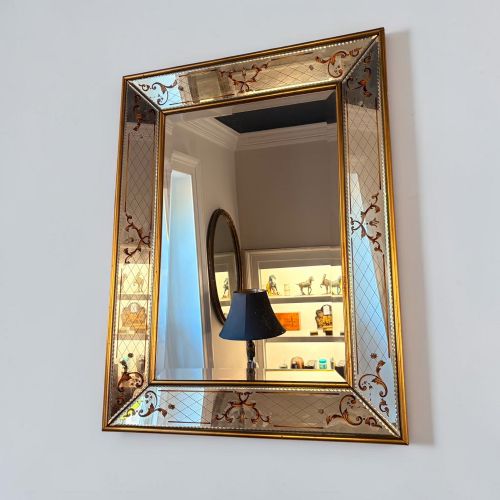
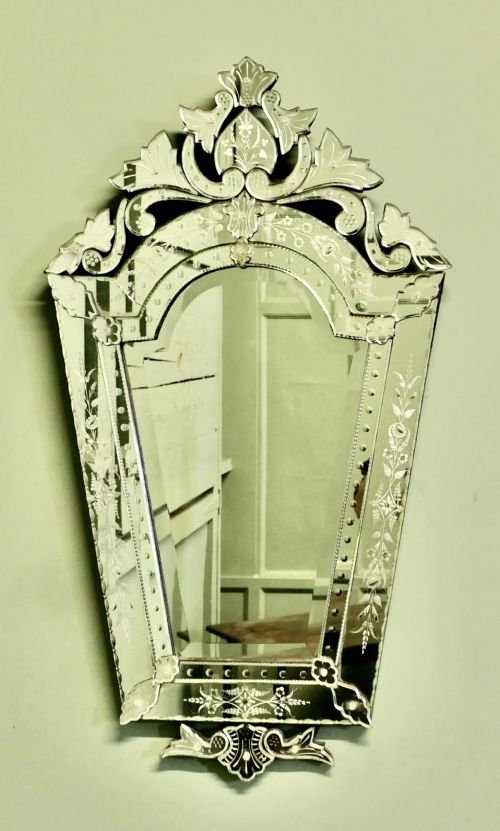
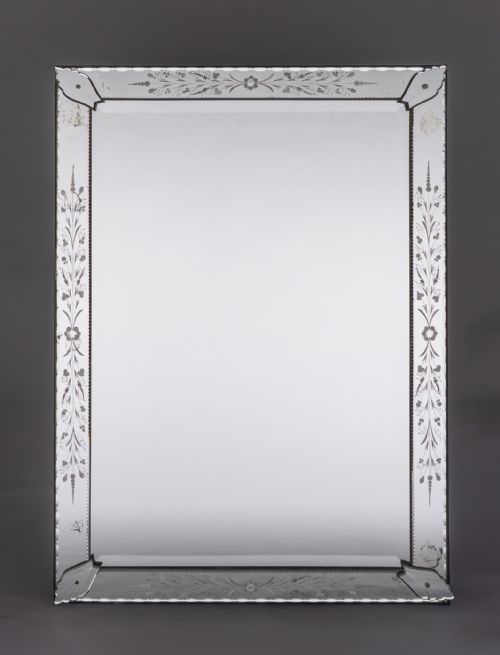
When searching for an italian etched mirror, you are looking at decorative wall mirrors and trays originating mainly from Venice and broader Italy. The examples seen on this page span from the eighteenth century through to the mid-twentieth century, capturing enduring styles like Rococo and Art Deco.
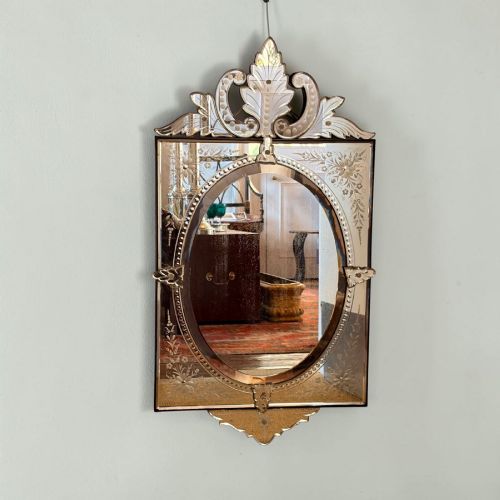
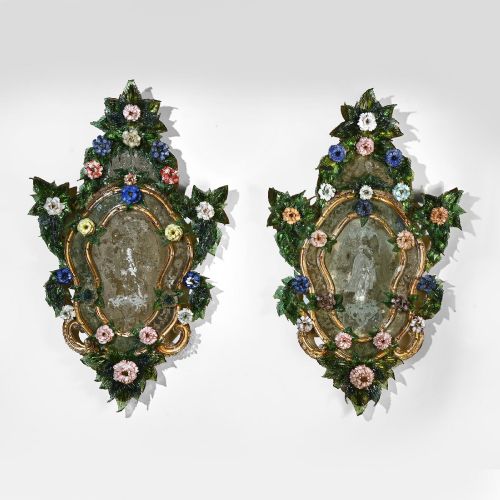
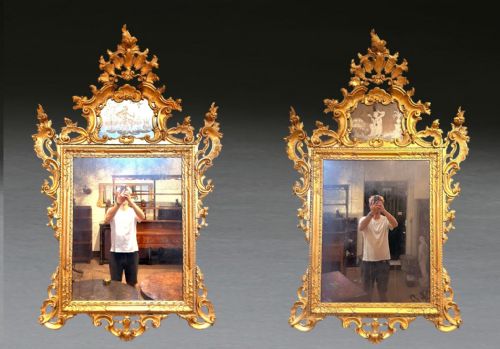
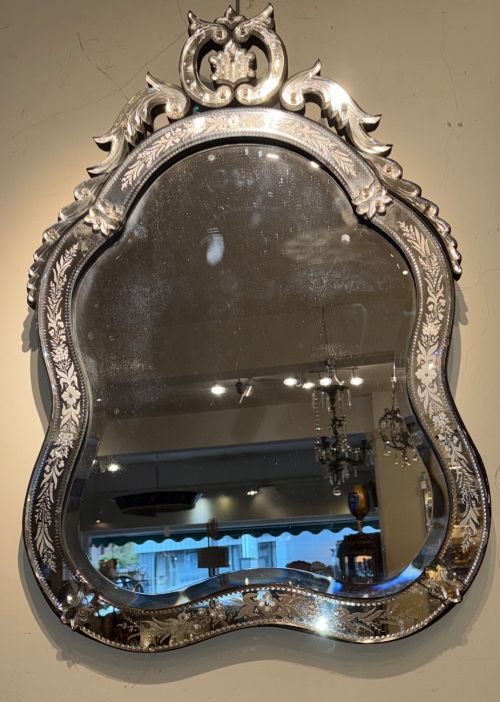
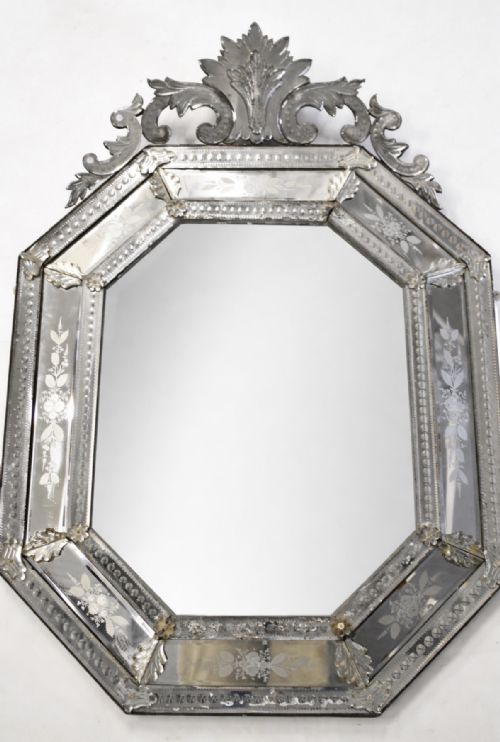
You are most likely to meet nineteenth-century and early twentieth-century Venetian cushion mirrors, often framed in cut and etched glass or carved gilt-wood. These pieces range from simple wall mirrors to large overmantle designs and matched pairs.
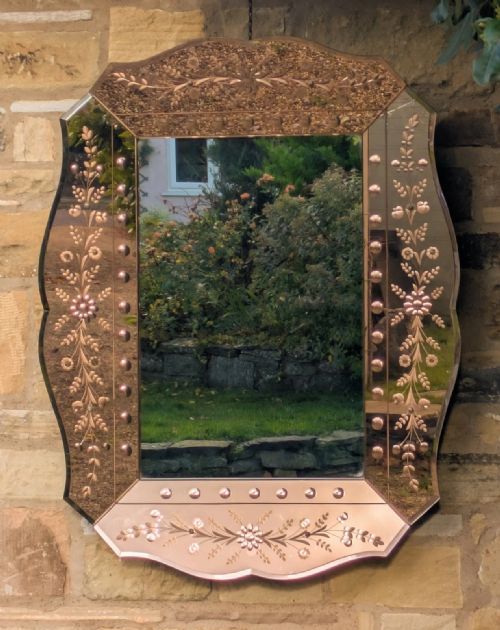
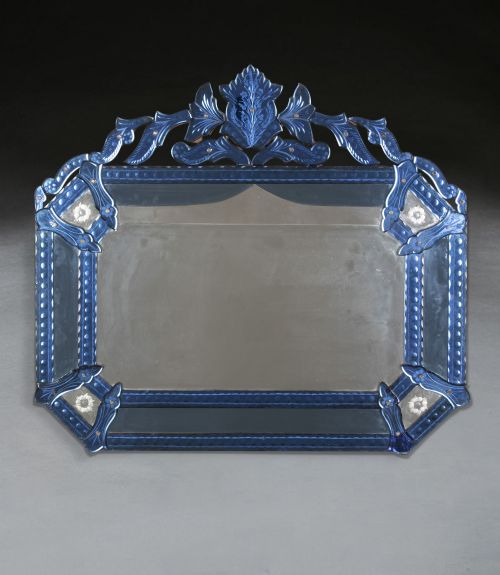
The selection also includes coloured glass variants featuring peach, blue, or ruby red borders alongside carved gilt-wood frames in the Italian Rococo taste. Wall mirrors dominate the offerings, supported by occasional serving trays executed in the same glass-working tradition.
Materials and Construction
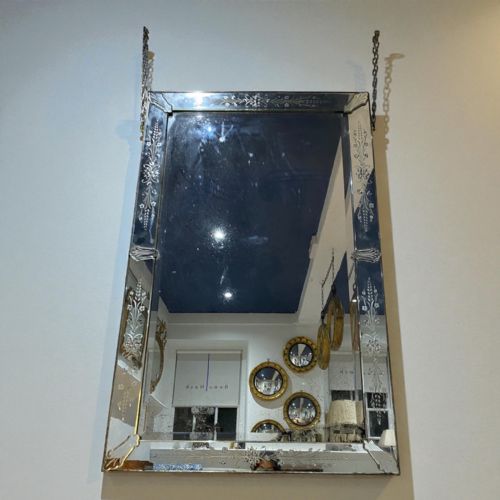
These pieces are constructed using glass, mirrored glass, and silvered glass plates set within wooden or gilt-wood frames. Many incorporate cut and etched glass borders that surround the central reflecting plate.
Makers utilised carved gilt-wood and polychrome decoration alongside metal elements to structure the grander wall mirrors. Cushion mirrors utilise shaped glass sections secured over wooden carcases to create a rounded, dimensional profile.
Italian Etched Mirror Retail Price Guide 2026
Typical asking prices for italian etched mirror among the pieces listed under this phrase on Sellingantiques today, from the lower quarter to the upper quarter. They describe what is for sale here now, not the wider market.
Several pieces feature ruby red borders, proving that historic Venetian glassmakers loved a dramatic splash of colour just as much as we do.
Assessing Quality
Quality in these mirrors rests upon the depth and clarity of the hand-engraving on the glass plates. Finer examples display crisp, intricate etching that holds sharp detail across both the central mirror and the surrounding glass frame sections.
The construction of the underlying frame also dictates standard, with hand-carved gilt-wood exhibiting superior relief and gilding compared to simpler wooden mounts. The preservation of original silvered glass and coloured borders further separates standard decorative items from exceptional collector pieces.
The Italian Etched Mirror Glossary
- Cushion mirror
- A mirror with a convex profile where the outer frame sections are made of angled glass plates. This design creates a multifaceted surface that catches light from multiple angles.
- Giltwood
- Timber, commonly gesso-coated and carved, that has been covered in thin gold leaf. It forms the opulent frames seen on many Italian wall mirrors.
- Overmantle mirror
- A large horizontal mirror designed specifically to hang above a fireplace mantel. These pieces often dominate the wall space of a principal reception room.
- Silvered glass
- Glass treated with a reflective metallic coating on the rear surface to form a mirror. Older pieces display natural ageing and foxing within this reflective layer.
- Girandole
- A wall mirror featuring attached candle sconces designed to reflect and multiply candlelight. The evidence shows these configured as etched glass sconce mirrors.
Italian Etched Mirror: Frequently Asked Questions
How do I date an old Italian mirror?
Dating relies on examining the frame construction, the type of wood used underneath, and the characteristics of the glass plate itself. Hand-beveled edges, mercury silvering, and older cut-glass techniques point towards eighteenth and nineteenth-century origins.
Stylistic cues also help determine the period. Rococo Revival pieces often feature elaborate polychrome and carved gilt-wood, whereas later twentieth-century examples lean towards cleaner Art Deco lines.
Where should I hang a large wall mirror?
Large wall mirrors work effectively above drawing-room fireplaces as overmantles or centred on principal reception room walls to amplify natural light. Their decorative glass frames mean they function as standalone pieces of wall art.
Ensure the wall structure can support the substantial weight of carved wood and heavy glass plates typical of these antique pieces.
How do I clean antique etched glass?
Clean antique glass gently using a soft, dry microfibre cloth to remove dust without disturbing vulnerable silvering or aged surfaces. Avoid harsh modern chemical sprays that can seep behind old glass plates.
If moisture is necessary, use a barely damp cloth with mild soap, drying the surface immediately to protect the antique backing and wooden frames.