



Italian Burr Walnut
Italian burr walnut pieces bring rich, swirling grain patterns and striking continental form into a room.
Italian Burr Walnut
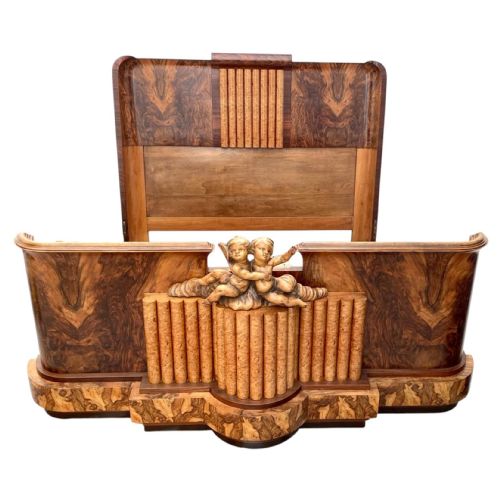
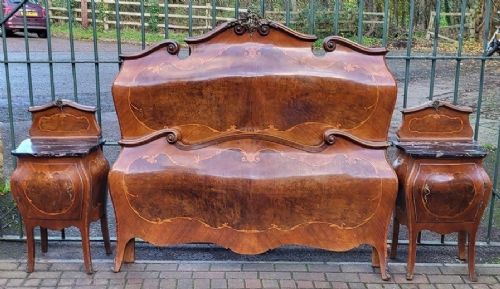
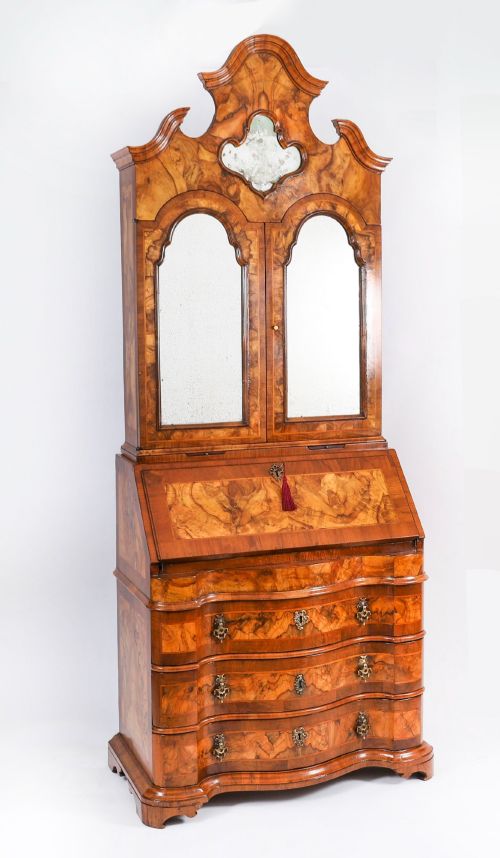
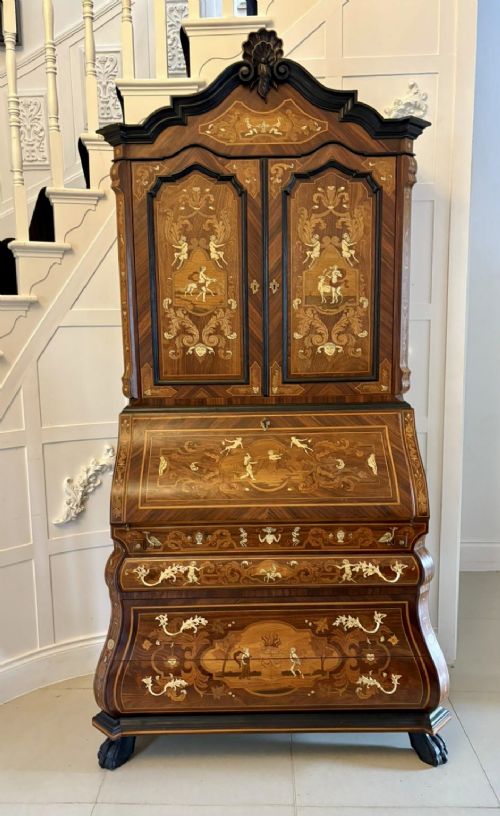
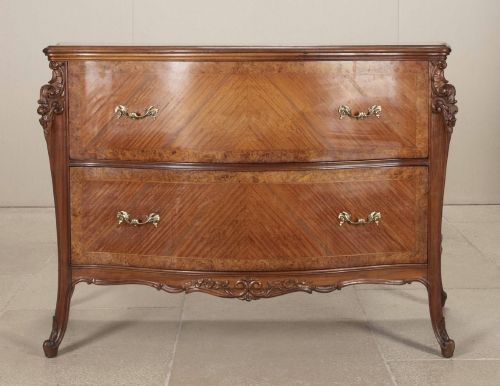
When you search for italian burr walnut, you encounter a distinct variety of continental furniture spanning from the eighteenth century through the art deco period. Bureau bookcases and serpentine bedside chests appear frequently alongside larger commodes, sideboards and bed frames.
The eighteenth-century examples lean towards elaborate bureau bookcases and commodes with curved bombe profiles. Later pieces from the early twentieth century often take the form of streamlined art deco cabinets, drum-shaped bedside tables and matching bed sets.
Venetian and general Italian origins dominate the styling, frequently incorporating rococo flourishes or crisp modernism depending on the decade. These items serve practical storage roles while displaying decorative timber surfaces.
How they were made
Cabinet makers utilised highly figured burr walnut veneers applied over solid timber carcases to create complex grain patterns. Marquetry inlay, satinwood detailing and ebonised wood accents often frame the primary walnut surfaces.
Structural elements frequently include brass hardware, glass panels and marble tops, particularly on bedside cabinets and commodes. Giltwood carved components appear on specific Venetian pieces to accentuate the scrolling contours.
Italian Burr Walnut Retail Price Guide 2026
Typical asking prices for italian burr walnut among the pieces listed under this phrase on Sellingantiques today, from the lower quarter to the upper quarter. They describe what is for sale here now, not the wider market.
Several bedside chests arrive in matching pairs, ensuring your alarm clock rests on symmetrical burr walnut.
What varies in quality
The visual impact depends largely on the symmetry and depth of the burr walnut figuring across large expanses like bureau falls and commode drawer fronts. Master craftsmen selected veneers that matched symmetrically across central divisions to form coherent patterns.
Execution of the serpentine curves and bombe shapes dictates the sculptural success of each piece. Finer examples maintain crisp lines in their carved details and marquetry, whereas lesser items rely solely on the timber pattern without refined shaping.
The Italian Burr Walnut Glossary
- Burr walnut
- A figured timber derived from the growth excrescences of walnut trees, yielding intricate swirling patterns. Cabinet makers slice this wood into thin veneers for decorative furniture surfaces.
- Bombe
- A swelling, outward-curving profile characteristic of continental furniture fronts and sides. This bulging contour demands advanced woodworking skill to veneer successfully.
- Marquetry
- The art of applying pieces of veneer to a structure to form decorative patterns and pictures. Craftsmen combine contrasting timbers like satinwood and walnut to achieve pictorial depth.
- Serpentine
- A shape featuring a curved line that bends inward centrally and outward at the ends. This undulating contour appears frequently on commode and sideboard fronts.
- Bureau bookcase
- A dual-purpose piece combining a sloping desk flap with upper shelving enclosed by doors. These tall cabinets often feature fitted interior compartments.
Italian Burr Walnut: Frequently Asked Questions
What periods do these pieces come from?
The selection spans from eighteenth-century items up to the early twentieth century, including art deco designs from around nineteen thirty.
Eighteenth-century examples often display baroque or rococo influences, while later decades favour streamlined forms.
How do I care for burr walnut furniture?
Keep wooden surfaces away from direct sunlight and excessive temperature changes to protect the delicate veneer.
Regular dusting with a dry cloth maintains the finish without moisture damage.
Where were these items manufactured?
Originating in Italy, many pieces reflect regional styles such as Venetian cabinet making.
Workshops across the country produced everything from grand commodes to compact bedside cabinets.