

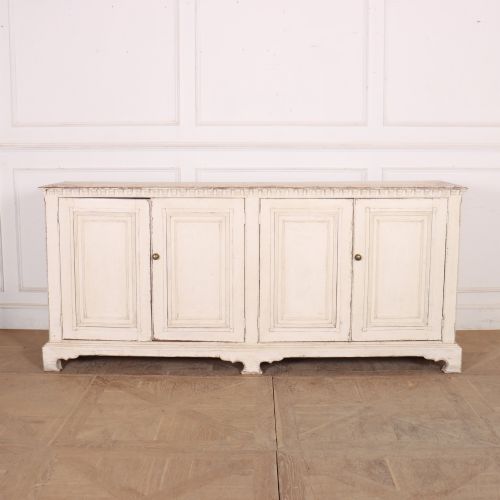


Italian Buffet Cabinet
An italian buffet cabinet brings architectural weight and painted charm to a room, offering generous storage wrapped in centuries of craftsmanship.
Italian Buffet Cabinet
An italian buffet cabinet combines practical storage with striking regional design, spanning grand walnut sideboards to delicately painted Venetian pieces. Buyers seeking this phrase encounter formats ranging from monumental enfilades and commodes to compact side cabinets and cabinets on stands.
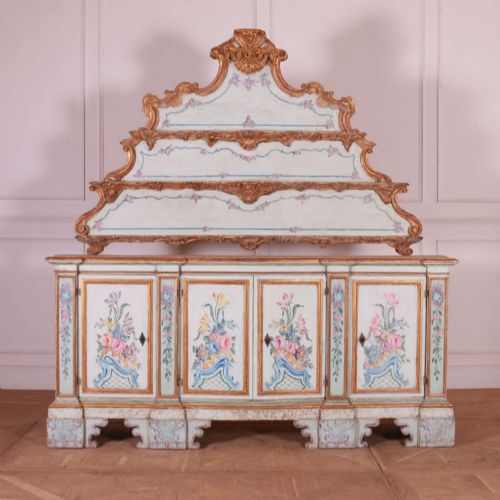
The pieces on this page emerge primarily from the eighteenth and nineteenth centuries, alongside select seventeenth-century examples and later twentieth-century interpretations. Regional variations include the dramatic curves of Venetian rococo, the disciplined lines of Italian neoclassicism, and rustic provincial styles.
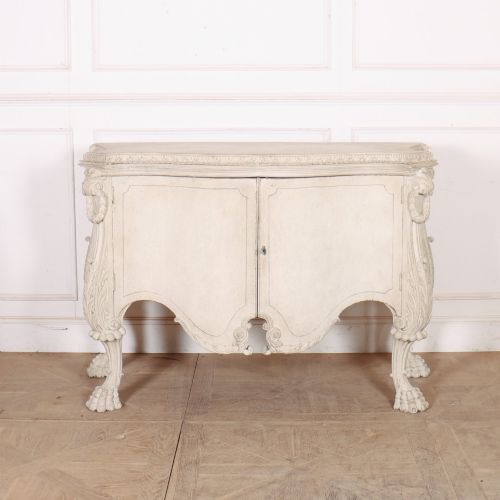
Form follows function across sideboards, credenzas, and linen cupboards, each piece designed to anchor a dining room or hallway. Walnut and painted wood dominate the selection, offering either the rich warmth of polished grain or the decorative flourish of historical pigments.
Materials and Construction
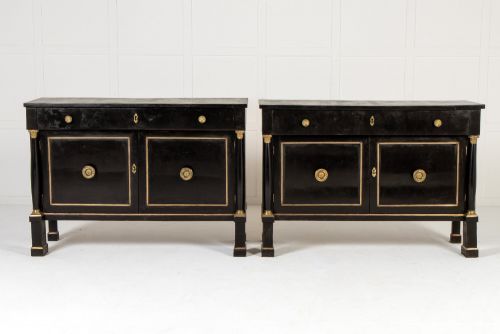
Walnut serves as the structural backbone for many of these cabinets, carved deeply with classical motifs or finished with intricate marquetry and mahogany highlights. Artisans also utilised softwood and ebonised wood to form robust carcasses capable of supporting heavy tops and substantial doors.
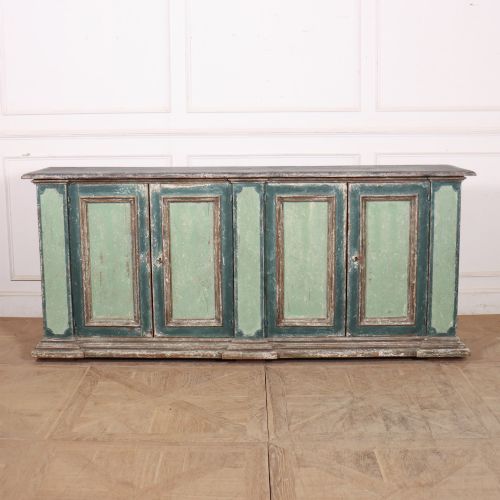
Painted finishes define a distinct subset of these pieces, utilising layered pigments on wood to achieve the aged patinas seen on Venetian buffets. Giltwood and brass accents frequently appear on finer items, providing metallic contrast to dark woods or polychrome surfaces.
Italian Buffet Cabinet Retail Price Guide 2026
Typical asking prices for italian buffet cabinet among the pieces listed under this phrase on Sellingantiques today, from the lower quarter to the upper quarter. They describe what is for sale here now, not the wider market.
One extraordinary fantasy buffet carries the sculpted hand of wood carver Valentino Panciera Bessarel, proving craftsmen once let their imaginations run riot.
Judging Quality
Quality rests in the crispness of the carved ornamentation and the integrity of the timber selection, where dense walnut displays tight, consistent grain. Painted examples derive their value from the depth and survival of the original pigment layers rather than later decorative touch-ups.
Construction methods dictate longevity, marked by traditional joinery in the drawers and carcass that keeps heavy doors hung true. The sophistication of the silhouette - whether serpentine fronts or architectural pediments - separates standard utility furniture from high-status artistic commissions.
The Italian Buffet Cabinet Glossary
- Enfilade
- A long suite of cabinets or a grand sideboard with multiple matched doors designed to furnish formal dining spaces. This format provides continuous storage while presenting a unified decorative facade.
- Marquetry
- The art of applying small pieces of veneer to a structure to form decorative patterns or pictorial scenes. It transforms plain cabinet fronts into complex visual displays using contrasting timbers.
- Commode
- A low chest of drawers or cabinet raised on legs, frequently serving a functional storage role in reception rooms. The form developed sophisticated serpentine and bow fronts during the eighteenth century.
- Giltwood
- Timber that has been coated with a thin layer of gold leaf or powder to simulate solid gold. This technique highlights carved mouldings and architectural details on formal Italian furniture.
- Serpentine
- A furniture front curved with a convex centre flanked by concave ends, creating a flowing wave effect. This shape demands precise woodworking and signals a higher grade of design complexity.
Italian Buffet Cabinet: Frequently Asked Questions
Where should an italian buffet cabinet go?
These substantial cabinets find their natural home in dining rooms, large hallways, or spacious living areas where their length and height balance the proportions of the room. They serve effectively as serveries during meals while concealing dinnerware and linens within deep cupboards.
Positioning the piece away from direct heat sources protects historical wood and painted surfaces from drying and splitting. Pairing the cabinet with a complementary mirror or painting above creates a traditional focal point.
How do I care for painted wood?
Painted surfaces require gentle dusting with a dry, soft cloth to prevent abrasive particles from scratching the historic pigment. Avoid liquid cleaners, modern polishes, and silicone sprays that can soften or lift fragile aged finishes.
Maintaining stable indoor humidity levels prevents the underlying softwood or hardwood from expanding and contracting, which protects the paint layer from cracking. Professional conservation remains the safest route for addressing any structural or surface deterioration.
What is the difference between a buffet and a commode?
A buffet is typically a longer, taller piece designed for dining rooms to store tableware and serve food. Commodes are generally lower chest formats originally intended for bedrooms or drawing rooms.
Buffets often feature a combination of cupboards and drawers, whereas commodes focus primarily on stacked drawer configurations. Both forms showcase regional Italian styles like Venetian rococo or neoclassical symmetry.
How do I identify a neoclassical italian piece?
Neoclassical Italian furniture displays straight lines, symmetry, and classical architectural motifs inspired by ancient excavations. Look for fluted legs, restrained carving, and architectural pediments rather than the exuberant curves of the preceding rococo period.
Walnut and mahogany frequently appear in these cleaner designs, sometimes accented with subtle marquetry or parcel gilt details. The overall effect prioritizes geometric balance over theatrical movement.