

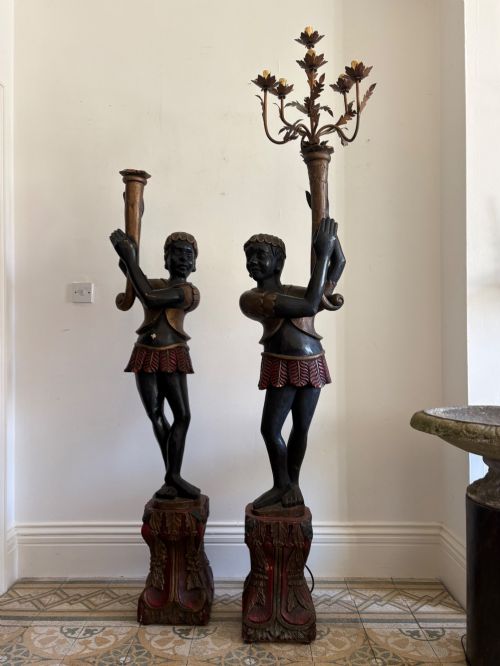


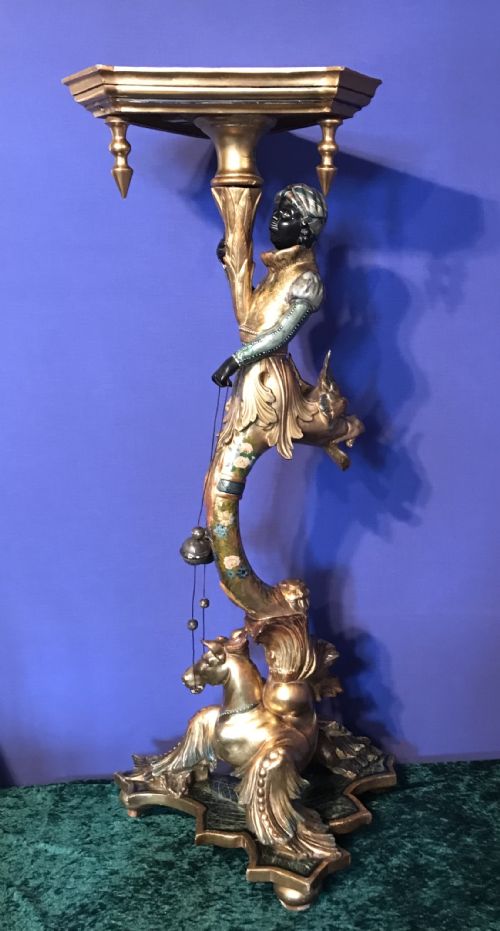
Italian Blackamoor Figure Stand
These italian blackamoor figure stand examples combine carved wood with gold leaf and polychrome paint to form striking decorative furnishings.
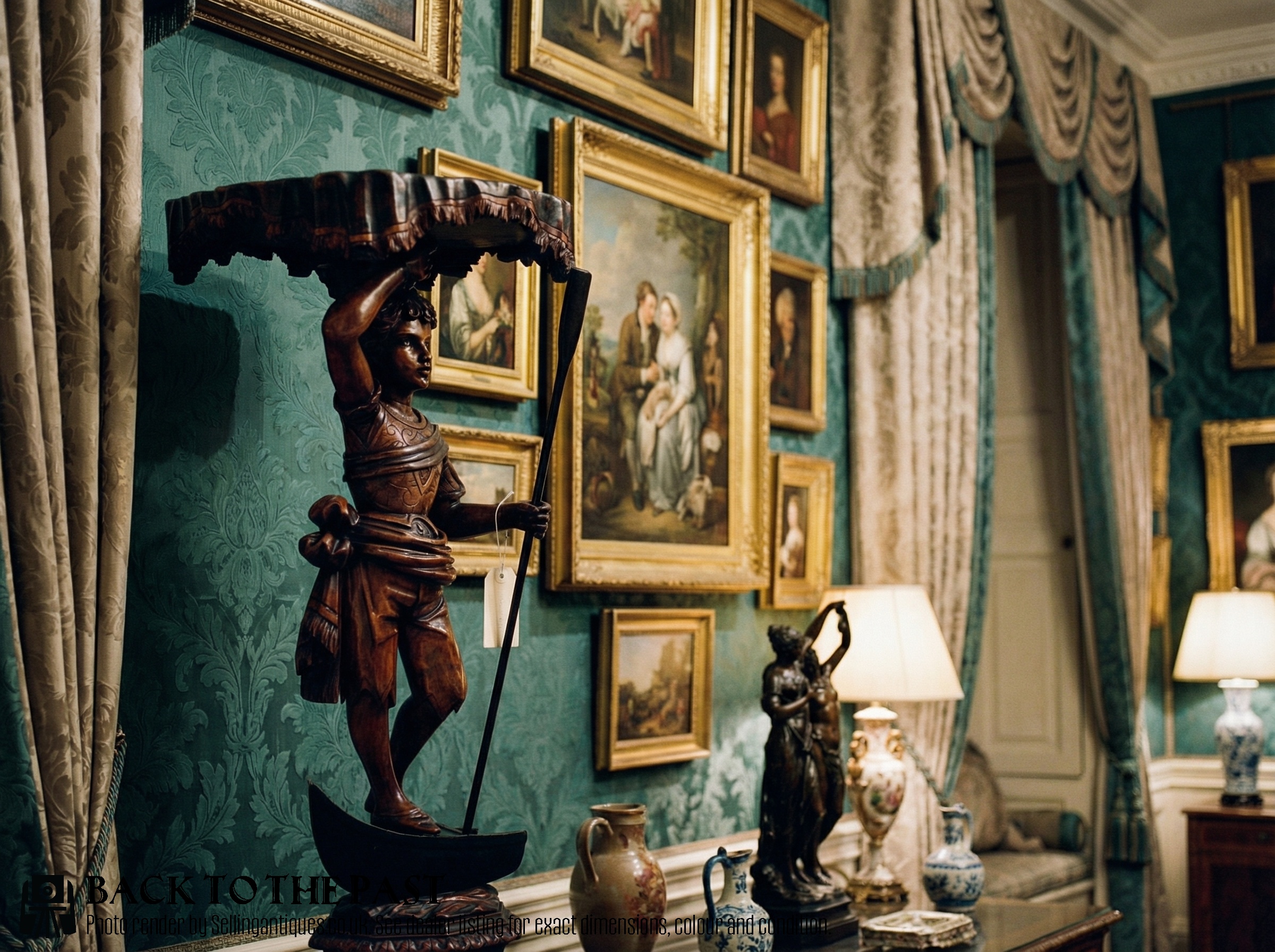
Italian Blackamoor Figure Stand
An italian blackamoor figure stand takes the form of carved human figures holding trays, pedestals, or torcheres, originating primarily from Venetian traditions. These pieces serve functional roles as side tables, floor lamps, plant stands, and torchere stands within interior spaces.
Most examples found on this page date from the nineteenth century, including Victorian periods up to around nineteen hundred and twenty. The forms range from simple candlesticks and small statues to substantial pedestals and tables.
The style heavily draws on Venetian Baroque and Venetian Rococo revivals, expressing ornate craftsmanship through sculpted figures dressed in detailed historical attire.
How they were made
Makers shaped these stands primarily from carved wood and ebonised wood, building solid foundations for the complex sculptural forms. Artisans then applied polychrome paint and original gilt polychrome to bring vibrant colour and texture to the figures and their garments.
Many items incorporate gold leaf and parcel-gilt details to highlight decorative trims, drapery, and architectural elements of the stand. Some specialised pieces also integrate cast brass components, particularly in smaller candlestick configurations.
Italian Blackamoor Figure Stand Retail Price Guide 2026
Typical asking prices for italian blackamoor figure stand among the pieces listed under this phrase on Sellingantiques today, from the lower quarter to the upper quarter. They describe what is for sale here now, not the wider market.
Listings feature items spanning the nineteenth century, including Victorian examples alongside pieces from the early twentieth century up to nineteen twenty.
What varies in quality
The preservation and execution of the original polychrome paint and gold leaf surface treatments heavily influence the visual impact. Finer items retain vibrant, carefully layered pigments and gilding that complement the underlying carved wooden structure.
The Italian Blackamoor Figure Stand Glossary
- Polychrome paint
- Decoration utilising multiple colours on the surface of wood or other materials. This technique adds realistic tones to the carved figures and their garments.
- Torchere
- A tall ornamental stand designed to hold a light or candle. These architectural supports often take the shape of standing figures.
- Ebonised wood
- Timber treated with a finish to imitate expensive ebony wood. This dark surface creates a sharp contrast against gilt and polychrome highlights.
- Parcel-gilt
- A decorative method where only specific parts of an object are gilded with gold leaf. This technique emphasises particular details such as hems, jewellery, or trays.
- Venetian Baroque
- An ornate artistic style originating in Venice characterised by dramatic movement and rich ornamentation. It heavily influences the posture and dress of these figures.
Italian Blackamoor Figure Stand: Frequently Asked Questions
What is an italian blackamoor figure stand used for?
These decorative objects function as functional furniture and sculptural art within a room. They frequently support lamps, plants, trays, or candles while serving as a bold visual centrepiece.
Historically, they inhabited grand entrance halls, reception rooms, and parlours to display light sources or hold calling cards.
How do I date an italian blackamoor figure stand?
Dating relies on examining the construction methods of the carved wood, the wear patterns on the gold leaf, and the style of the polychrome paint. Most examples span the nineteenth century, reflecting Victorian tastes and Venetian revival movements.
Specific design cues, such as whether the piece is a freestanding torchere, a table, or a candlestick figure, help align the object with known nineteenth-century production periods.
Where were these stands made?
The majority of these pieces originate from Venice and surrounding Italian regions. The local craft tradition specialised in ornate carved wood sculptures finished with rich paint and gilding.
Venetian workshops produced various forms ranging from gondolier figures to elaborate pedestal torchere stands intended for export and domestic elite interiors.
How should I care for a painted wooden stand?
Protect the delicate surfaces of carved wood, gold leaf, and polychrome paint by keeping the stand away from direct sunlight and fluctuating humidity. Dust gently with a soft, dry cloth without applying modern liquid cleaning products.
Careful handling of the painted and gilded areas preserves the historic finish and structural integrity of the carved timber underneath.