






Italian Baroque Seat
An italian baroque seat brings dramatic seventeenth and eighteenth-century craftsmanship into a room through carved walnut, rich gilding, and robust upholstery.
Italian Baroque Seat
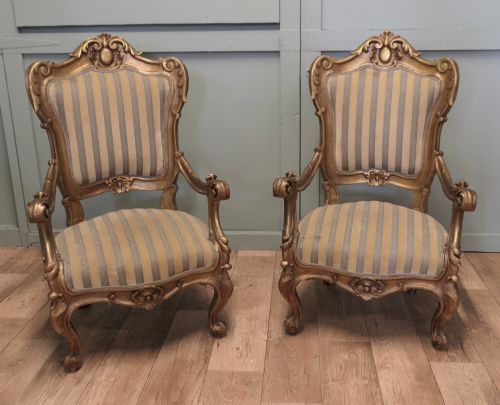
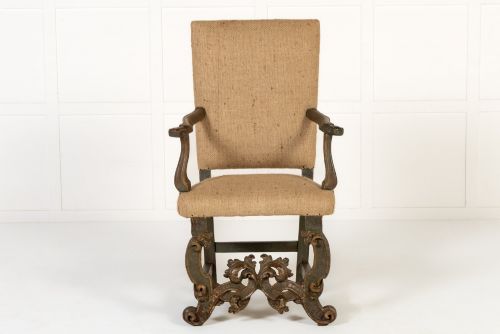
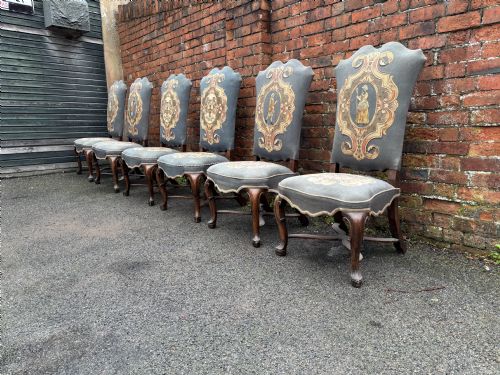
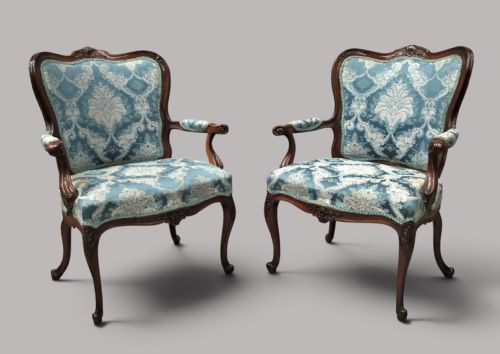
An italian baroque seat encompasses armchairs, dining chairs, benches, and stools originating from seventeenth and eighteenth-century Italy, alongside nineteenth-century revival interpretations. The forms are substantial, defined by structural presence and historic character rather than delicate proportions.
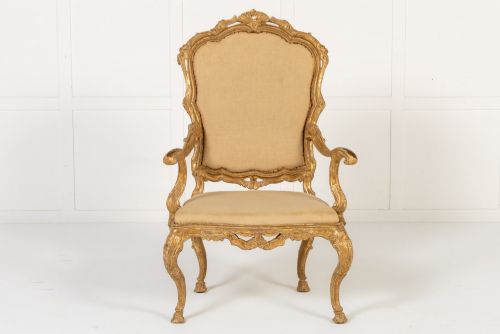
Armchairs dominate the selection, frequently constructed from walnut or finished in giltwood, paired with period fabrics or leather upholstery. Makers also produced distinct regional forms such as Venetian gondola chairs and folding Savonarola chairs.
The materials and construction reflect centuries of European craftsmanship, moving from original seventeenth-century pieces through eighteenth-century developments and nineteenth-century revivals. Each object displays the regional woodworking traditions and decorative ambitions of its specific period.
Materials and Construction
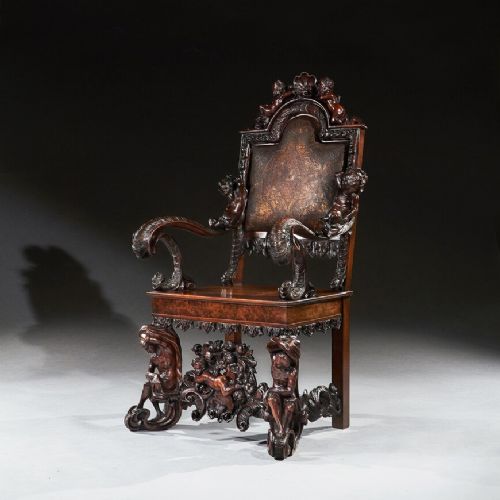
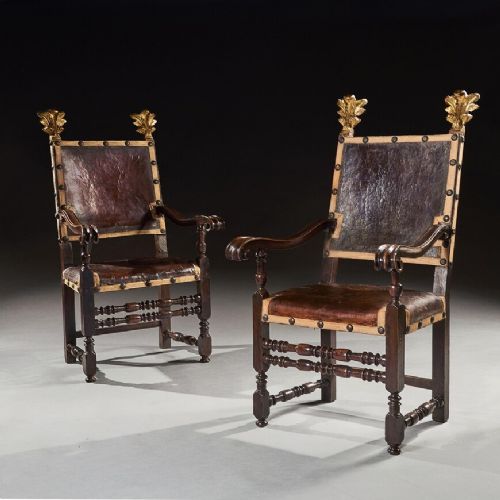
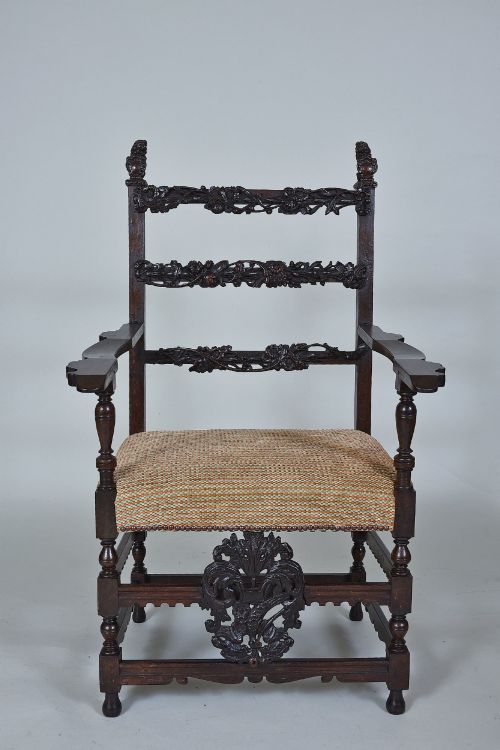
Cabinetmakers relied heavily on solid walnut, carving structural frames with deep relief work, scrollwork, and turned elements like bobbin styles. These wooden carcasses provided the heavy load-bearing strength required for formal domestic and ceremonial seating.
Surfaces were frequently enhanced with gold leaf, giltwood, or painted finishes applied over carved wood, creating reflective highlights suited to grand interiors. Upholstery utilised traditional textiles and leather, secured to the frames with brass detailing.
Italian Baroque Seat Retail Price Guide 2026
Typical asking prices for italian baroque seat among the pieces listed under this phrase on Sellingantiques today, from the lower quarter to the upper quarter. They describe what is for sale here now, not the wider market.
Marble lions occasionally sneak into the seating category.
Assessing Quality and Execution
The depth and clarity of the hand-carving separate standard regional output from exceptional exhibition pieces produced by master workshops. Crisp undercut foliage, figural work, and balanced proportions indicate superior artistic ambition.
The integrity of the original timber frame, the retention of genuine early gilding or patinated walnut surfaces, and the authenticity of construction methods determine the historical value of each seating form.
Andrea Brustolon
The Italian Baroque Seat Glossary
- Giltwood
- Wood that has been coated with a thin layer of gold leaf or gold paint for decorative effect. This finish was favoured for grand ceremonial furniture.
- Walnut
- A dense, dark hardwood commonly utilised by historical Italian cabinetmakers for structural stability and fine carving. It develops a rich patina over centuries.
- Bobbin turned
- A method of woodturning that creates a series of rounded, spool-like shapes along the length of a furniture leg or stretcher. This technique appears on revival armchairs.
- Savonarola chair
- A type of folding chair constructed from interlocking wooden curves, forming an X-shaped frame. It is named after the famous fifteenth-century Dominican friar.
- Parcel-gilt
- A decorative treatment where only specific carved details or raised portions of an object are highlighted with gold leaf. The remaining areas display the natural wood finish.
Italian Baroque Seat: Frequently Asked Questions
What periods do these seats cover?
The inventory spans authentic seventeenth and eighteenth-century items alongside nineteenth-century revival pieces.
Craftsmen across these periods utilised traditional woodworking techniques to maintain consistent stylistic language.
How do I identify a revival piece?
Nineteenth-century revival works often emulate earlier seventeenth and eighteenth-century motifs with distinct regional craftsmanship.
Detailed examination of the timber ageing and tool marks helps differentiate original historical production from later interpretations.
What woods were used?
Walnut is the primary timber seen across the listings, valued for its strength and suitability for intricate carving.
Other examples incorporate painted wood finishes or extensive giltwood applications over the underlying wooden frame.
Were these chairs meant for everyday use?
Historical Italian seating of this scale was typically designed for grand halls, formal reception rooms, and palaces rather than casual lounging.
Today, placing them in modern interiors requires balancing their substantial structural presence with everyday comfort.