



Italian Architectural Salvage
These pieces of italian architectural salvage bring centuries of historic craftsmanship straight into modern interiors.
Italian Architectural Salvage
When buyers search for italian architectural salvage, they are looking for historic elements rescued from buildings, ranging from panels to columns. These fragments carry the distinct character of past centuries and provide authentic decorative impact for modern spaces.
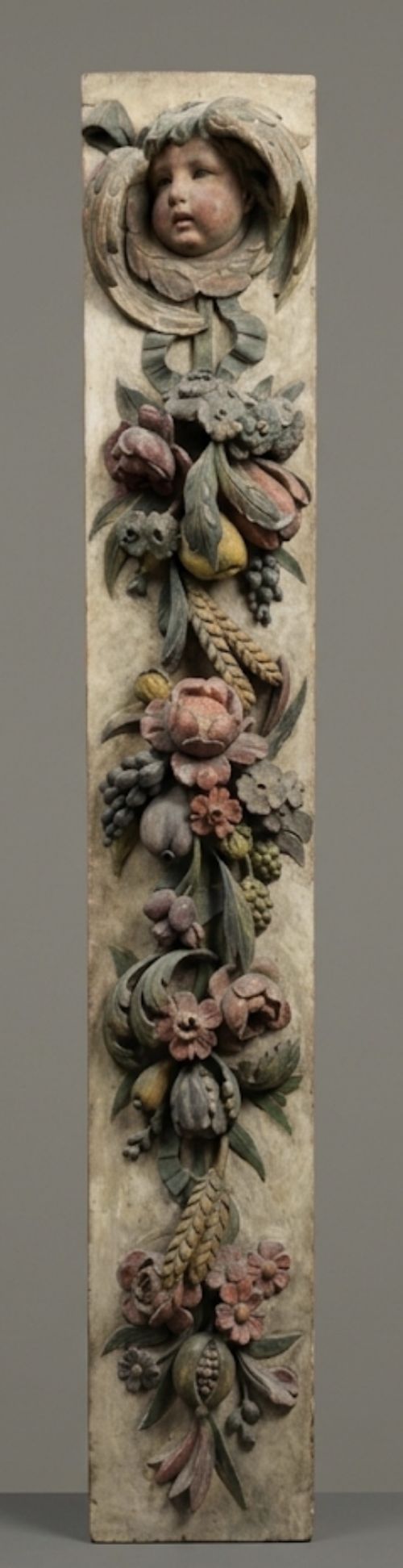
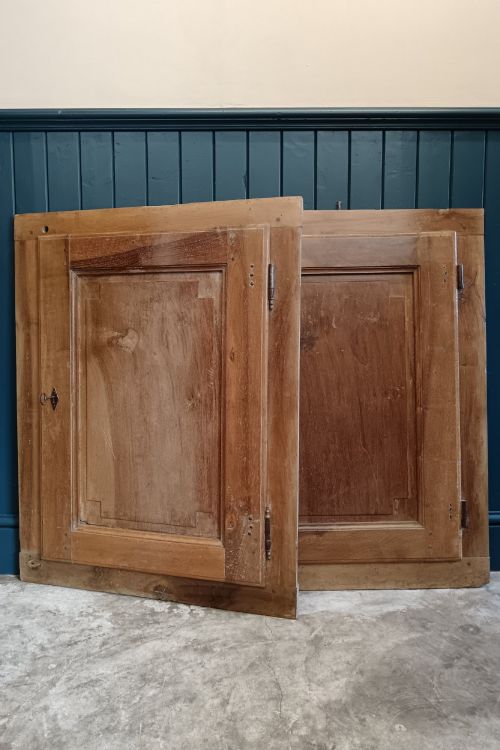
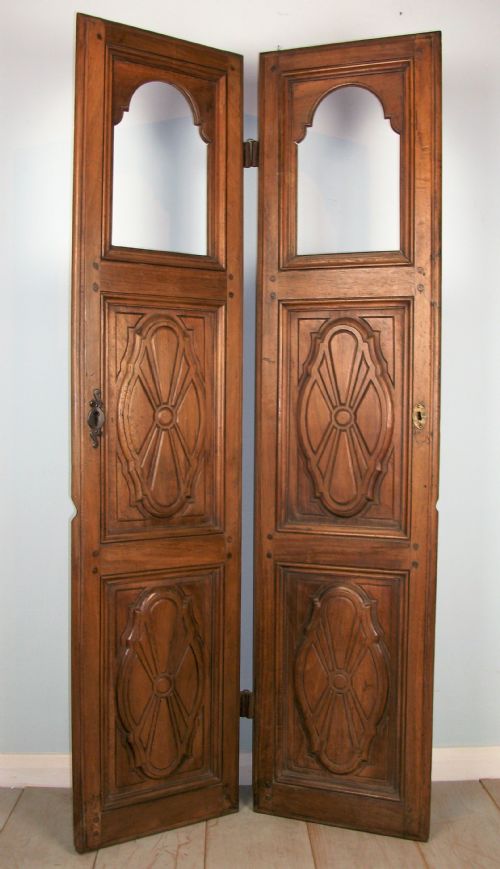
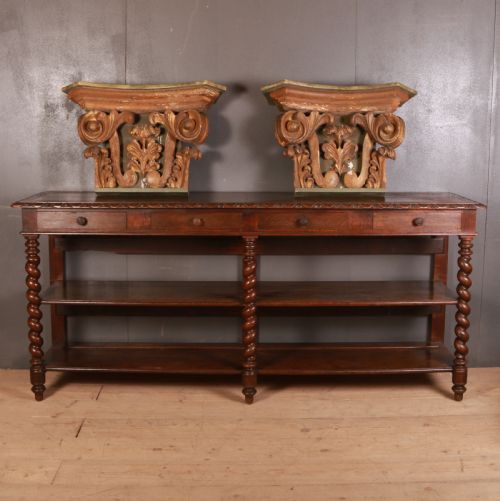
The pieces on this page most commonly include walnut cupboard doors, arched door frames, carved wooden panels, and painted capitals. Buyers frequently encounter items spanning the eighteenth and nineteenth centuries, reflecting classical and baroque traditions.
Many examples showcase grand scales and specialised finishes, such as polychrome wood, silver leaf, and parcel gilt highlights. Such items suit interior schemes that benefit from sculptural woodwork and stonework.
Materials and construction
Makers shaped these architectural elements primarily from timber, utilising solid walnut, carved wood, and timber frames. Artisans applied sophisticated surface treatments including gesso, gold leaf, silver leaf, and polychrome pigments to enrich the wood.
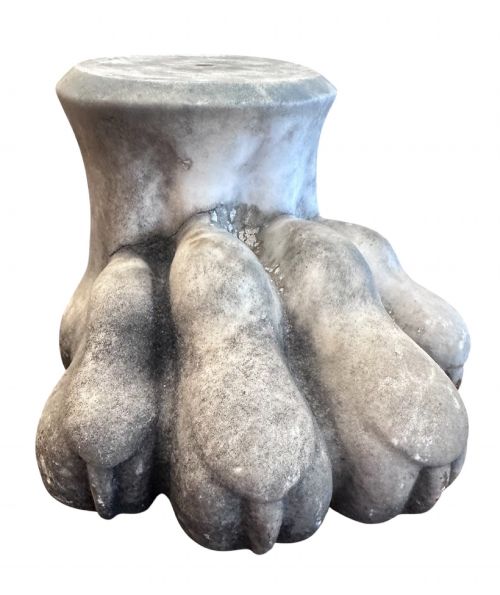
Stone elements such as Carrara marble appear in sculptural forms like lions paws, demanding precise masonry techniques. Woodcarvers utilised traditional hand tools to execute deep relief carvings, arched profiles, and classical capitals.
Listings feature items spanning the eighteenth and nineteenth centuries, constructed from walnut, timber, iron, and Carrara marble.
Judging quality
Quality rests upon the depth and finesse of the hand carving, seen in the crispness of acanthus leaves on capitals and pediments. Pieces with original surface treatments, such as genuine polychrome wood or silver leaf, hold greater visual integrity.
Scale and completeness also separate standard items from exceptional survivals, particularly in matched pairs of large doors or grand scale painted columns. The quality of the underlying timber, especially seasoned walnut, dictates the longevity and stability of the salvaged element.
The Italian Architectural Salvage Glossary
- Pediment
- A decorative architectural crowning feature placed above doors or panels, often carved with classical motifs and finished in silver leaf.
- Capital
- The uppermost member of a column, sitting directly above the shaft and frequently decorated with carved foliage in the classical style.
- Polychrome
- A method of painting wood in multiple colours, frequently found on historic carved panels to enhance decorative depth.
- Carrara marble
- A type of white or blue-grey marble quarried in the city of Carrara in Italy, utilised for sculptural architectural details.
- Parcel gilt
- A surface decoration technique where selected areas of an object are highlighted with applied gold leaf over a gesso base.
Italian Architectural Salvage: Frequently Asked Questions
What is italian architectural salvage?
It comprises historic fragments and structural elements rescued from Italian buildings, including doors, panels, columns, and carved capitals.
These pieces showcase traditional craftsmanship from the eighteenth and nineteenth centuries, utilising materials like carved wood, walnut, and marble.
How were these architectural elements used?
Original buildings incorporated these components as functional doors, structural supports, and decorative wall reliefs or pediments.
Today, interior designers utilise them as statement decorative objects, architectural wall art, or focal points within modern restoration projects.
How do I care for wooden salvage?
Historic timber and delicate surfaces like gesso or silver leaf require stable indoor humidity away from direct heat sources.
Gentle dusting with a dry cloth preserves the original patinated finishes without stripping away centuries of accumulated character.
How can I tell eighteenth century pieces apart?
Eighteenth century items frequently exhibit baroque or rococo stylistic traits, deeper hand carving, and authentic period timber construction.
Comparing the joinery methods and surface preparations like gesso and gold leaf helps distinguish older works from nineteenth century revivals.