

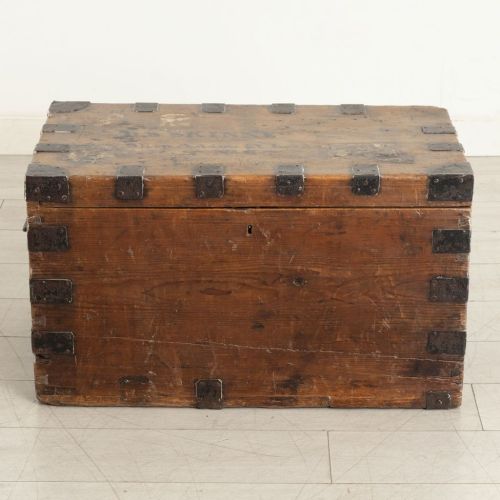
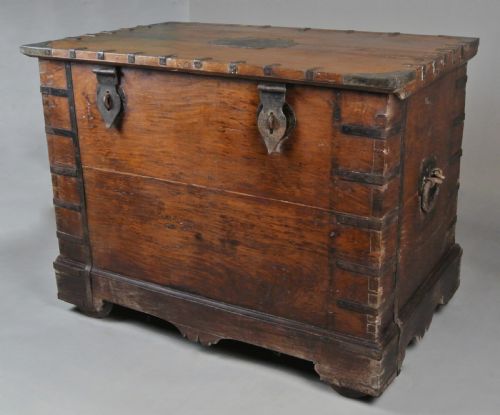
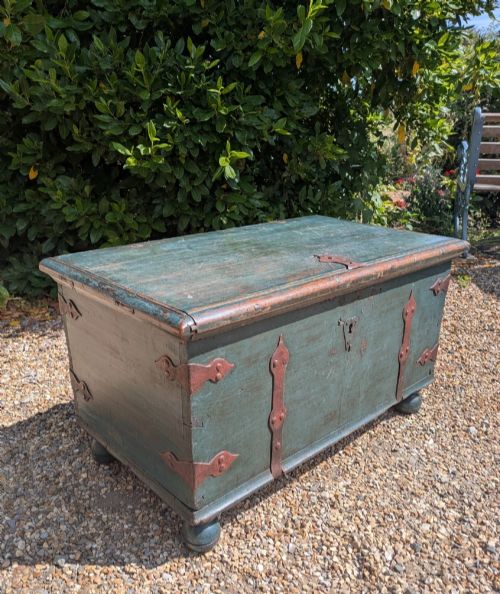
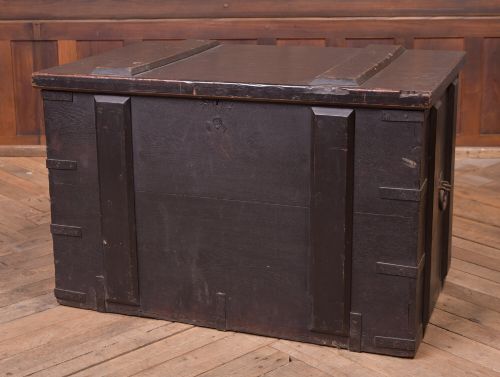

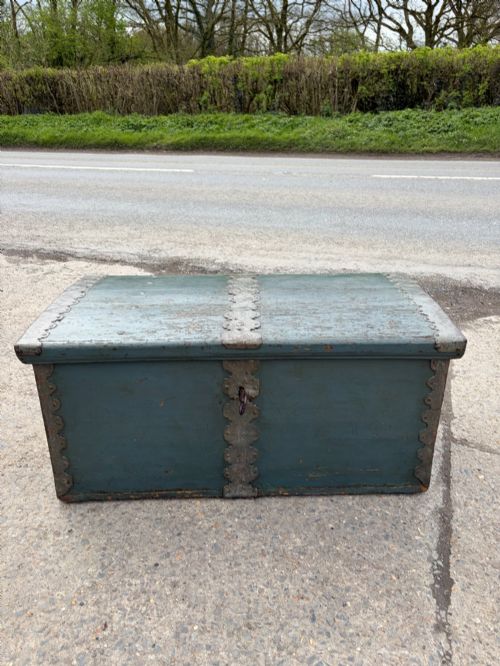

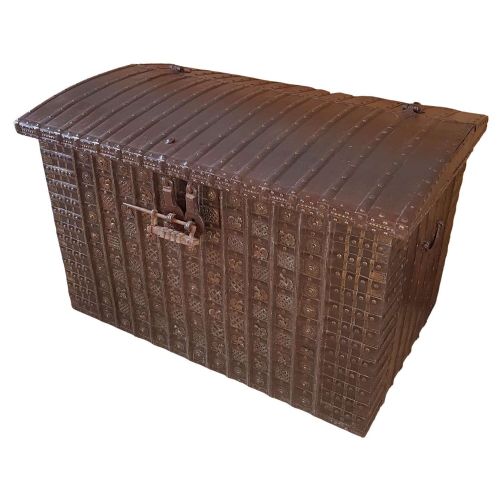


Iron Strapped Wooden Box
An iron strapped wooden box provides sturdy utility, uniting timber construction with protective metal bands across centuries of practical storage.
Iron Strapped Wooden Box
An iron strapped wooden box combines structural timber panels with exterior metal reinforcement designed for transport and security. These pieces range from compact tabletop caskets to large domestic coffers and travel trunks.
The selection on this page leans heavily toward nineteenth-century examples alongside seventeenth-century and eighteenth-century specimens. Common regional forms include Scandinavian painted pine chests and Anglo-Indian hardwood storage pieces.
Materials and construction methods
Carpenters constructed the primary bodies from pine, oak, teak, walnut or elm, joining panels with dovetails or simple lap joints. Artisans then secured the corners and lids with hand forged iron straps, bands and hasps.
Many storage chests retain original surface treatments such as dark finishes, folk art paint or natural patination. Protective metal elements often include side lifting handles and working locks with integrated hasps.
Iron Strapped Wooden Box Retail Price Guide 2026
Typical asking prices for iron strapped wooden box among the pieces listed under this phrase on Sellingantiques today, from the lower quarter to the upper quarter. They describe what is for sale here now, not the wider market.
Listings feature items spanning the 16th century through the Edwardian period, utilising pine, oak, teak, walnut, and elm.
Judging quality and character
Boxes retaining original paintwork or documented provenance carry distinct historical weight compared to later utilitarian replacements. The balance between the timber body and the weight of the iron fittings governs the overall presence.
The Iron Strapped Wooden Box Glossary
- Cofer
- A large wooden chest traditionally used for storing valuables or clothing. These vessels frequently utilise heavy iron banding for secure transport.
- Dome top
- A curved lid construction designed to shed water during travel. This profile appears frequently on nineteenth-century Scandinavian and American trunks.
- Damchiya
- A traditional Indian dowry chest fitted with internal compartments and robust iron bands. These storage units often display intricate panel work and secure locking mechanisms.
- Hasp
- A slotted metal plate that fastens over a staple and is secured with a pin or padlock. This hardware is central to the security of early strong boxes.
Iron Strapped Wooden Box: Frequently Asked Questions
What is an iron strapped wooden box used for?
These boxes served primarily for secure storage and the transport of valuables, documents, and personal belongings across domestic and international routes.
Today they function as robust storage furniture, coffee tables, and decorative focal points within modern interiors.
How do I date an iron strapped wooden box?
Dating relies on observing timber species, construction methods, and the style of the forged iron hardware.
Earlier pieces from the sixteenth to eighteenth centuries often display hand sawn boards and archaic lock mechanisms, while Victorian examples utilise machine sawn timber.
Are these boxes waterproof?
While dome top variants and tightly fitted joints offered protection against weather during transit, they were not sealed to modern standards.
Over centuries, wood movement and gaps mean they suit dry indoor storage rather than exposure to the elements.
What woods were commonly used?
Pine, oak, and teak form the primary structure of most surviving pieces depending on the region of origin.
European examples frequently employ native pine or oak, whereas pieces originating from tropical regions utilise durable hardwoods like teak.