
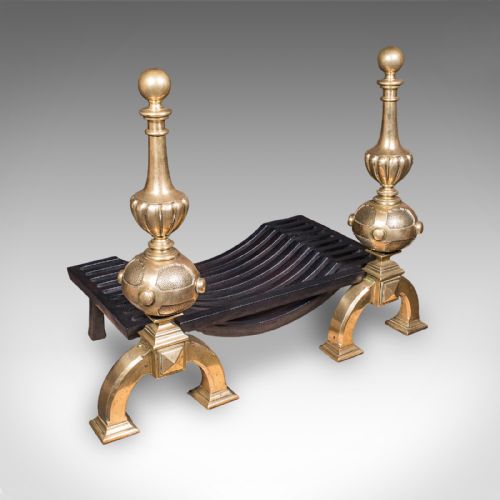
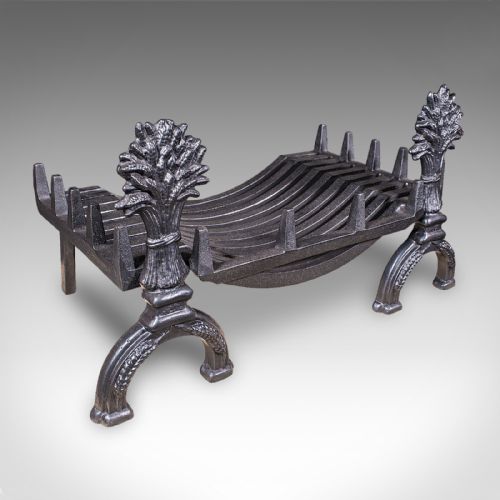
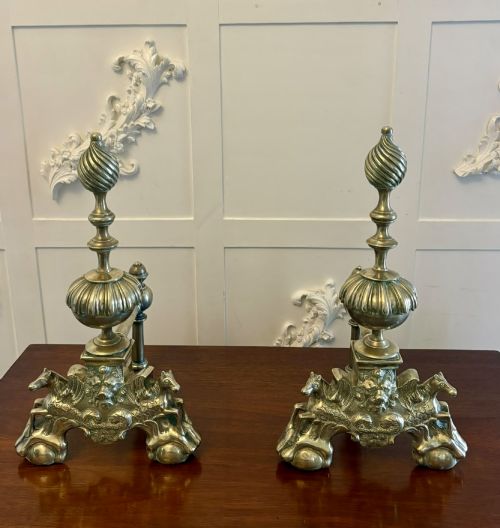
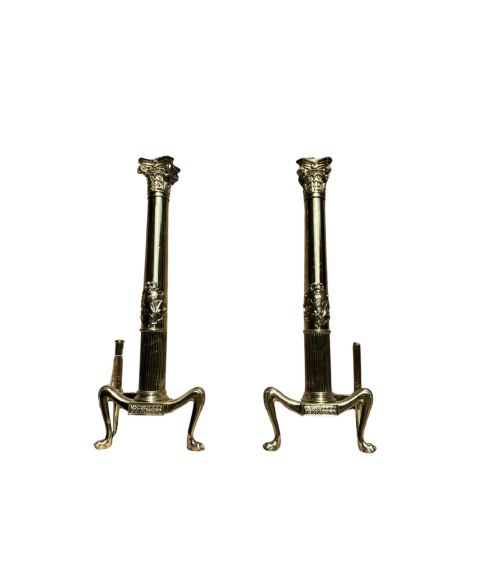
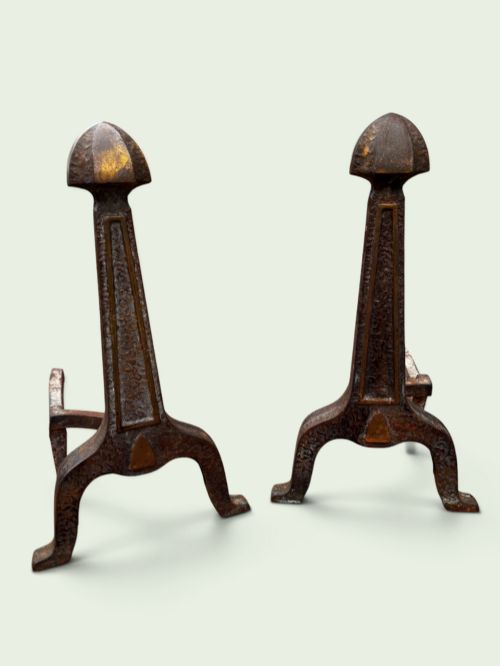
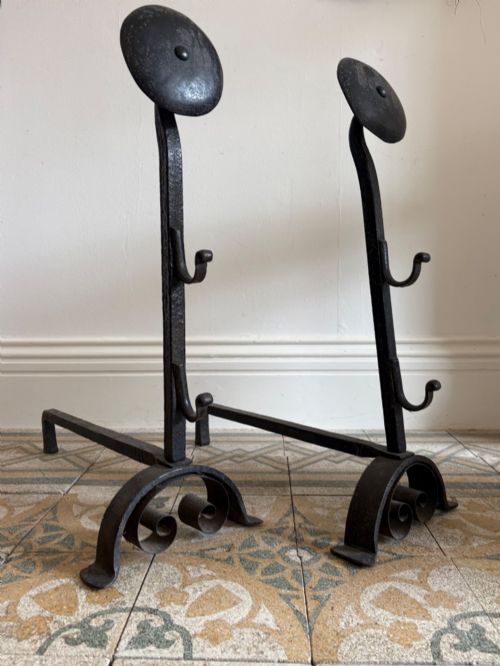
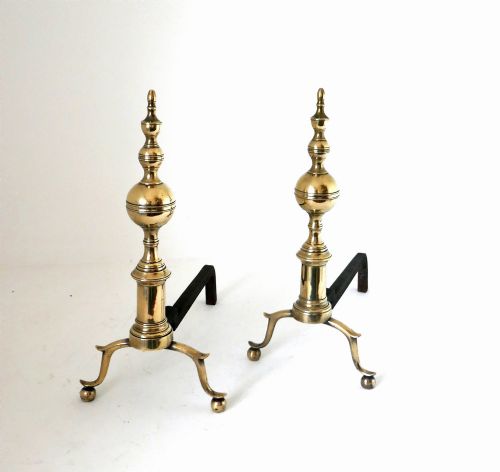
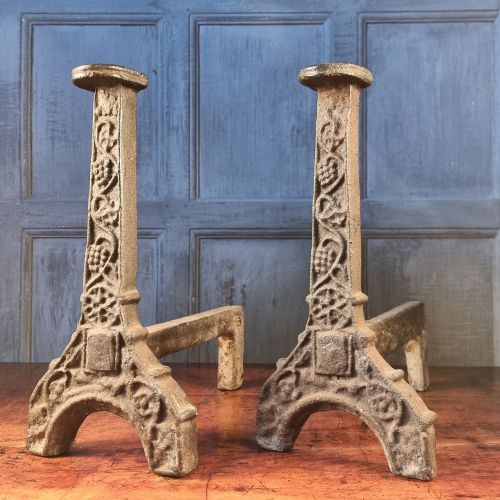
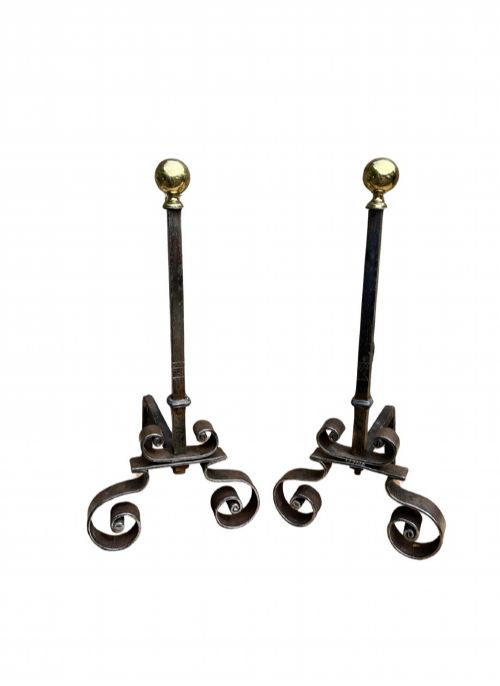

Iron Firedogs and Andirons
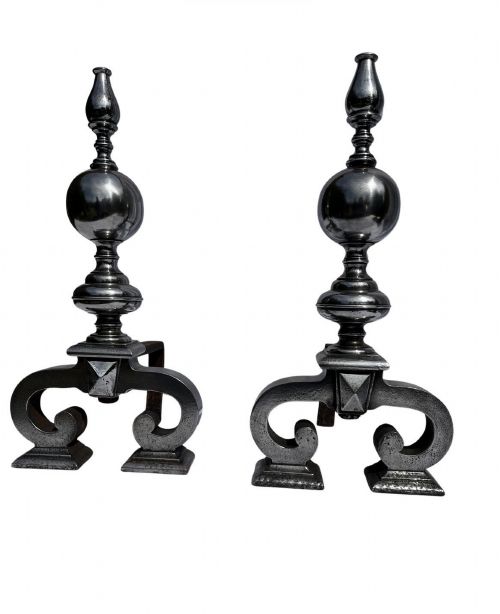
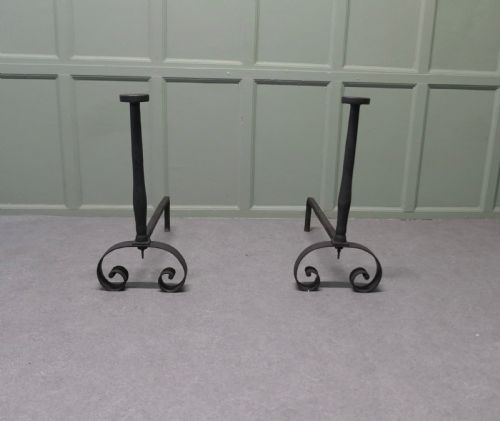
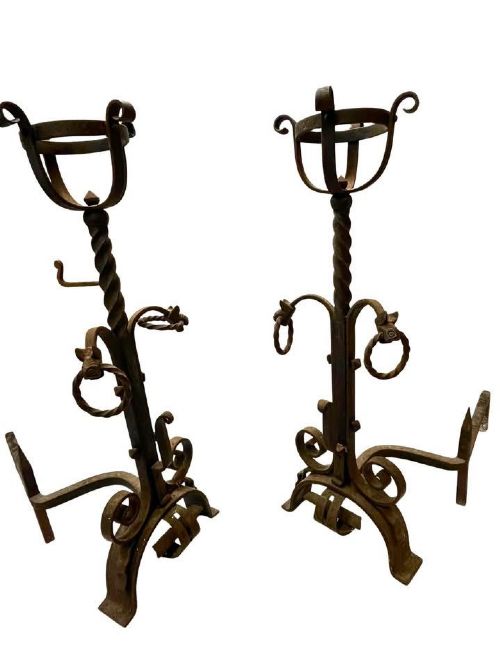
Iron firedogs and andirons anchor the hearth, supporting logs for an open fire while bringing metalwork and period style into the room.
Iron Firedogs and Andirons
When you search for iron firedogs and andirons, you look at utilitarian hearth furniture designed to hold burning wood logs above the hearth floor for better airflow. The selection ranges from robust nineteenth-century Victorian pieces to lighter domestic examples.
Most items you meet here date from the nineteenth century, including Victorian, Georgian, and Arts and Crafts iterations. Alongside standalone pairs, you find complete fireplace sets that include matching grates, tool suites, or fire baskets.
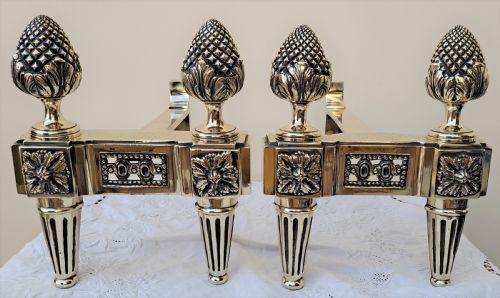
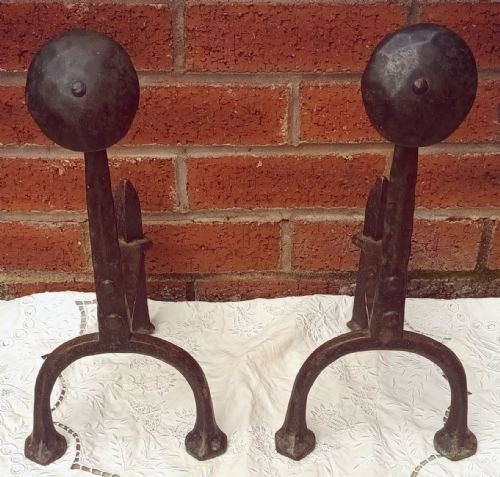
Makers produced these functional supports in various forms, from simple wrought iron bars to heavily ornate cast designs. Some examples incorporate brass details, copper mounts, or even bronze and ormolu decoration.
Materials and construction
Smiths formed the primary structural elements using cast iron and wrought iron, hammering and shaping the hot metal over an anvil. Wrought iron provided fibrous strength for forged scrollwork, while cast iron allowed for intricate moulded details and substantial weight.
Many pairs combine iron bodies with applied brass or bronze fronts to catch the hearth light. Artisans used riveting, welding, and bolted joints to secure the decorative vertical standards to the horizontal log bars.
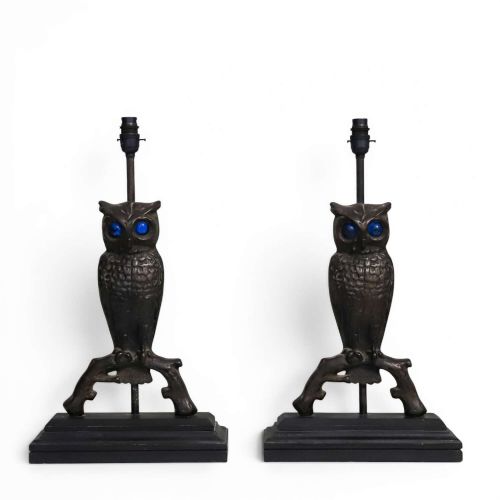
Some nineteenth-century andirons found a second life when resourceful owners wired them into quirky table lamps.
Distinguishing quality
Quality rests in the heaviness of the metal and the crispness of the casting or forging. Superior examples show purposeful hand-finishing on the ironwork, with balanced proportions and stable, heavy bases that support massive logs without tipping.
Lesser items display crude casting seams, thin metal sections that warp under heat, or loose joints where the vertical billet bar meets the horizontal support. The refinement of the brass mounts and the integrity of the original fixings separate standard utility pieces from finer decorative examples.
James Cartland & Sons
The Iron Firedogs and Andirons Glossary
- Andiron
- A horizontal iron bar supported on legs, with an upright pillar at the front, used to support logs in an open fireplace. Also known as a firedog.
- Firedog
- An alternative term for an andiron, originating from the medieval practice of shaping the upright terminal into animal or human forms.
- Chenet
- The French term for an andiron, frequently applied to decorative brass or bronze firedogs dating from the eighteenth and nineteenth centuries.
- Fire basket
- A metal grate designed to hold coal or wood, often utilised in conjunction with andirons or integrated into a wider hearth set.
- Inglenook
- A large recessed fireplace space, often requiring heavy, robust andirons and grates to heat the surrounding room.
Iron Firedogs and Andirons: Frequently Asked Questions
What is the difference between firedogs and andirons?
There is no functional difference between iron firedogs and andirons, as the terms describe the exact same hearth support. Regional preferences and historical periods dictated which word makers and buyers used.
Over time, 'firedog' occasionally referred to pieces with animal or figural motifs at the front, while 'andiron' remained the general term for the structural support.
How do I measure for andirons?
Measure the depth of your fireplace hearth to ensure the horizontal log bar fits safely inside the opening without protruding. You must also check the height of the upright front standard against your fireplace opening to clear the mantel or basket.
Consider the scale of the room, as very heavy nineteenth-century iron pairs require substantial hearth space to balance the visual weight.
Can I use antique andirons in an active fireplace?
Most solid iron and wrought iron examples were built for daily utility and tolerate regular fires well. You should inspect the metal thickness and joints to ensure the heat will not compromise weakened historic welds.
Brass-fronted or ormolu-mounted pairs from the Victorian period demand more care, as intense direct heat can discolour or warp the decorative mounts.